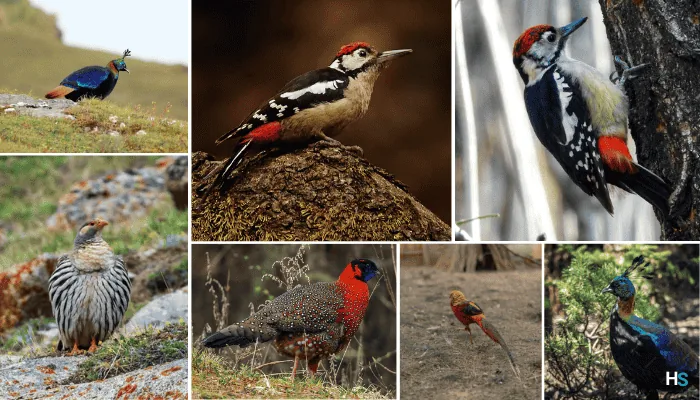
The Ultimate Himalayan Bird Watching Guide
Himalaya is home to several species of birds and animals. There are 15 species that are endemic in the Himalayan region, and around 980 species of birds are spotted in the Himalayas, many of which are extraordinary. While trekking Himalayas, you can do bird watching, if not, but still the voices of hidden birds will refresh your mind.
Here is a birdwatching guide for the top birds in the Himalayas. So in your next adventure, you will be aware of birds.
1. Himalayan Monal
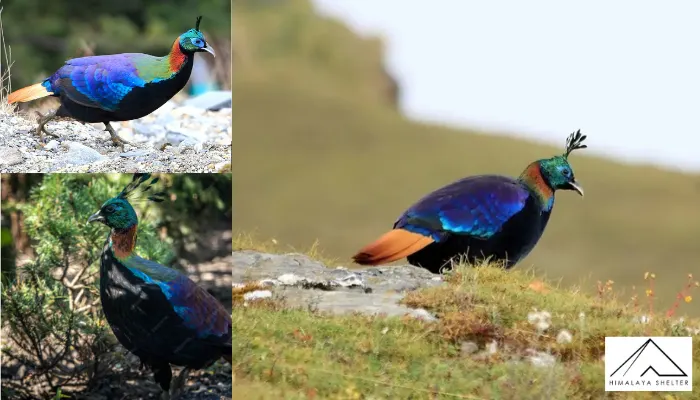
The Monal lives in the high forests of the Himalayas. They live at a high altitude. They are found from the western Himalayas to the central Himalayas. Monal is the state bird of Uttarakhand.
They are found in heights of 6,900 feet to 14,800 feet. According to the season, they shift higher altitude in summer and a lower one in winter.
- Body Feature: They are very colorful and shine from afar, which makes them attractive. The shade of blue and violet is on its back, and orange is on its neck.
- Where to Find Them: They always get to see on high Himalayas and on treks like Chopta Chandrashila, Kuari Pass, Brahmatal, Dayara Bugyal, and Kedarkantha in Uttarakhand.
2. Satyr Tarpagon
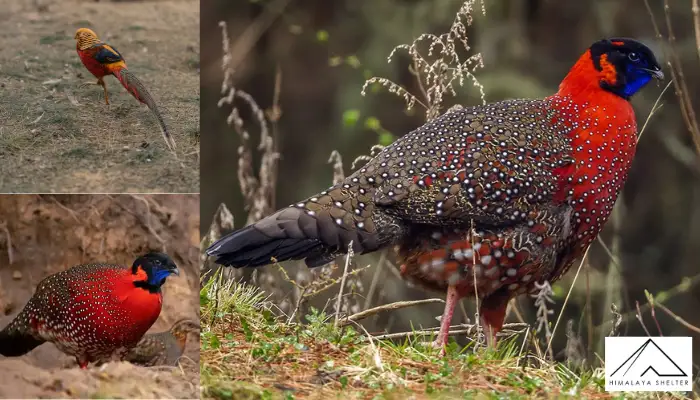
The Satyr Tragopan is a rare bird. It is a shy wild bird that lives high in the Himalayas. It is also called a crimson bird because of its appearance.
They love to live in dense forests of rhododendron and forests of bamboo. They are very shy in nature. They live in the hidden slopes of the thick forests of the eastern Himalayas. They live at a height of about 7,900 to 13,800 feet in the summer. This bird descends to around 6,000 feet in the winter.
- Body Feature: Satyr Tarpagon has patterns and colours on its feathers. The male has red color with white spots. And if they want to find mates or attract females, they grow blue horns.
- Where to Find Them: In the Eastern Himalayas: West Bengal and Uttarakhand. In the trek Dzongri Gochea, la you can find it.
3. Himalayan Black Bulbul
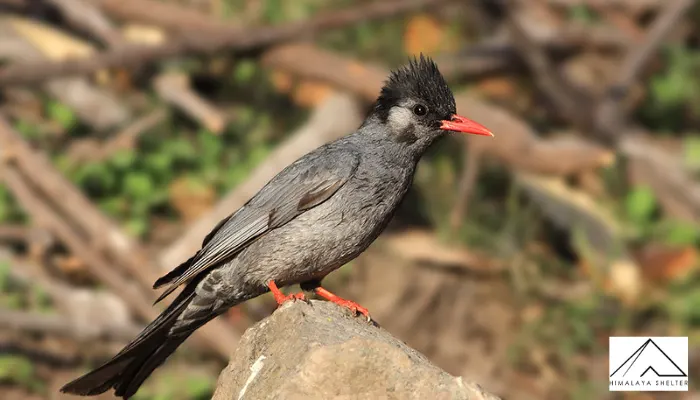
The Himalayan black bulbul is known for its echoing, melodious sound. Whether it is visible or not, its flute sound can gather all attention.
They live at heights from 3,300 feet - 9,800 feet. In summer, they shift to high altitude, and in winter, they shift to lower altitude.
- Body feature: They have a grey-colored body and white cheeks with a black-colored head. The beak is deep red.
- Where to Find Them: They are found from the eastern Himalayas to the western Himalayas. They love to live in forest edges where filtered sunlight comes. And plenty of fruits were found.
You will be able to see them in many forests of the Himalayas and in treks such as Har ki Dun, Chopta Tungnath region, Chandrakhani Pass, Kedarnath Wildlife Sanctuary, national parks of Uttarakhand, Himachal, and Sikkim.
4. Himalayan Ruby throat
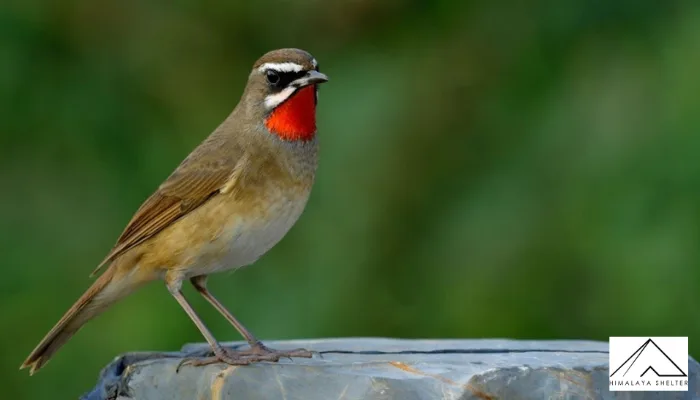
The Himalayan Rubythroat is a tiny singing bird that lives in the Himalaya region.
They live in forests that have all four seasons, such as the temperate forests of the Himalaya. In Bushes and thick grasslands as well as in rhododendron forests.
- Body features: They have small bodies. And its throat is orange in colour, and the whole body is a shade of grey, and the head side is black.
- Where to Find Them: In many Himalayan treks that go from deep forests such as Brahmatal, Kuari pass, Dayara Bugyal, Aancha Top, Triund, and many more.
5. Himalayan woodpecker
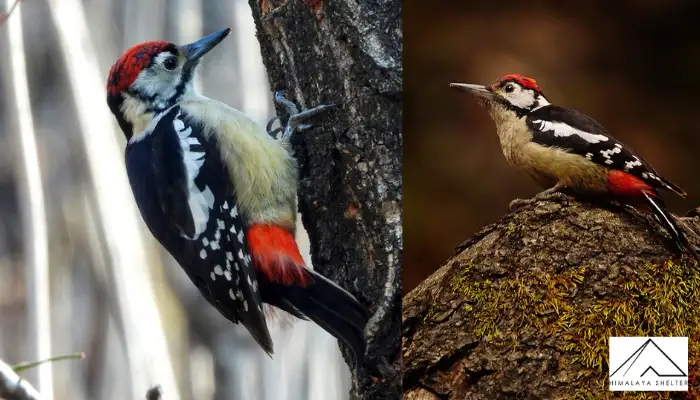
The Himalayan woodpecker is a bird that pecks the wood in rhythm in search of insects. The sound of wood pecking can be heard from some distance.
They only strike the trees of oak, pine, and deodar. So they are only found in these forests and are from 4,900 feet to 11,500 feet.
- Body features: This Himalayan woodpecker is different in appearance from the woodpecker we see at low altitudes. They are in the colours of red, white, and black. The shoulder with white strips and the head with red color.
- Where to Find Them: They always get to see in forests of oak, deodar, and pine. And treks that pass through these forests, such as Dayara Bugyal, Chopta Chandrashila, Har ki Doon, etc
6. Himalayan Griffon Vulture
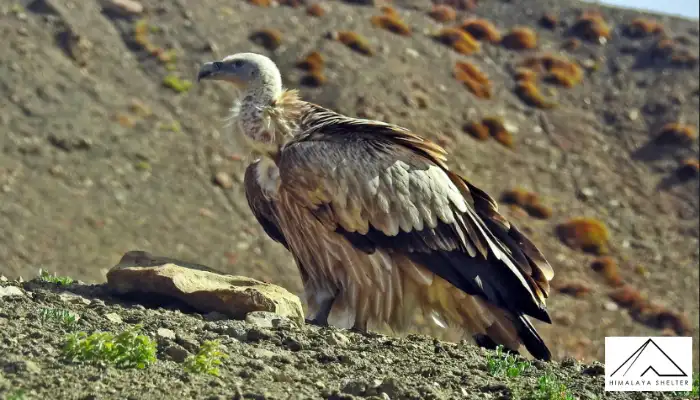
The Himalayan Griffon Vulture is one of the largest birds in the Himalayas. They are old native of the Himalayas. It comes in two largest vultures and predators. They are cleaners of the Himalayas.
They are found in heights of 9,800 to 19,700, even higher than many trails where you don’t reach. They mostly live in open fields to find food.
- Body features: In size, they are very big, they have a very pale yellow color and feathery, but their head is without feathers and has very wide wings.
- Where to Find Them: They are found in the high altitudes of the Himalayas. Regions and trekking areas you can find them in Spiti Valley and Lahaul, Kinner Kailash and treks Pin Valley National Park, Pin Bhaba trek, Pin Parvati trek, Great Himalayan National Park trek, Jalori Pass Trek, Kalihani Pass trek of Himachal, and Valley of Flowers and Hemkund Sahib Trek. In the valleys of Har ki dun and the ridges of Kuari Pass and Phulara Ridge of Uttarakhand.
7. Golden Eagle
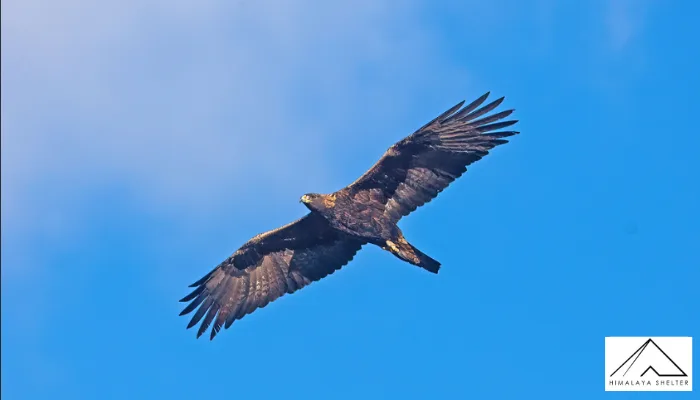
The golden eagle is known for its strength and speed. They made nests on cliffs and have their territory area as large as 200 km². They live at heights of 6,600 feet to 1800 feet.
- Body Features: They are dark brown in color with golden feathers. Hooked beak and strong talons.
- Where to find them:
Brahmatal, Kedarkantha, Chopta Tungnath, Valley of Flowers, and Dayara Bugyal of Uttarakhand.
Spiti Valley, Lahaul Valley, Pin Valley National Park, Great Himalayan National Park, and Jalori Pass of Himachal Pradesh.
Yumthang Valley, Dzongri Trek, Kanchenjunga Base Camp of Sikkim
8. Himalayan snowcock
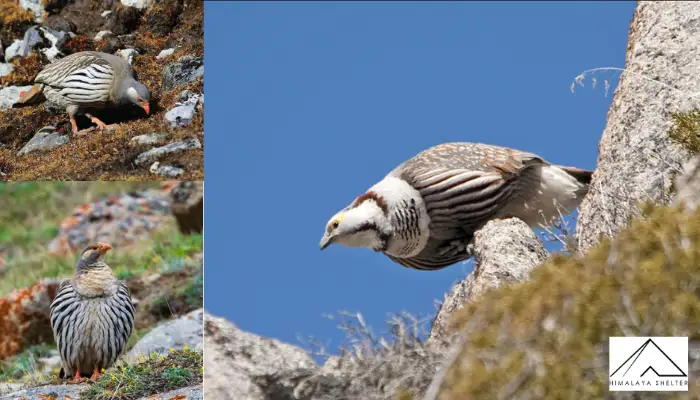
The Himalayan Snowcock is a large and rough bird. They live in rocky areas of the mountains.
You can often hear its loud calls. They echo off the bare ridges. It flies strongly. It stays above the tree line where most other animals can't live.
- Body Feature: Its feathers are mostly grayish brown with streaks. This color helps it hide easily among the rocks. It has a white face. And it has a dark stripe next to its eye. It blends right in.
- Where you can find them: They are found in open and rocky areas of mountains and also in meadows of high altitude. High altitude treks of Himachal, Treks in Uttarakhand, and Treks in Ladakh.
9. Lammergeier
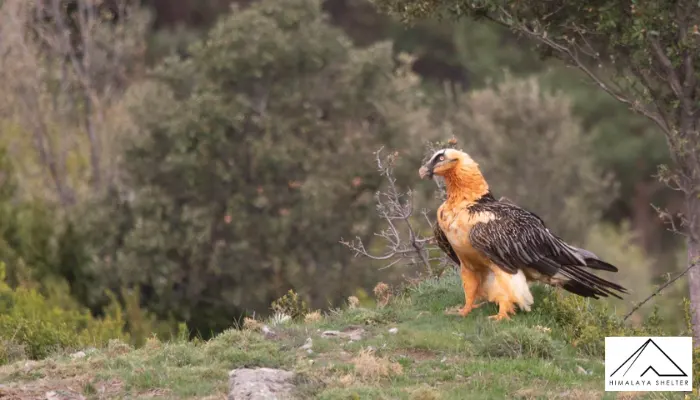
Lammergier is a bearded vulture. They mostly eat bones only. They built their nest on cliffs or caves. They live at high altitude in meadows, and they like to live hidden.
- Body Feature: They have black wings and a red chest. They have black beards on their face.
- Where you can find them: They are seen in the higher region of Sikkim, Uttarakhand, Himachal Pradesh, Ladakh, and Treks in Kashmir.
10. Himalayan Bluetail
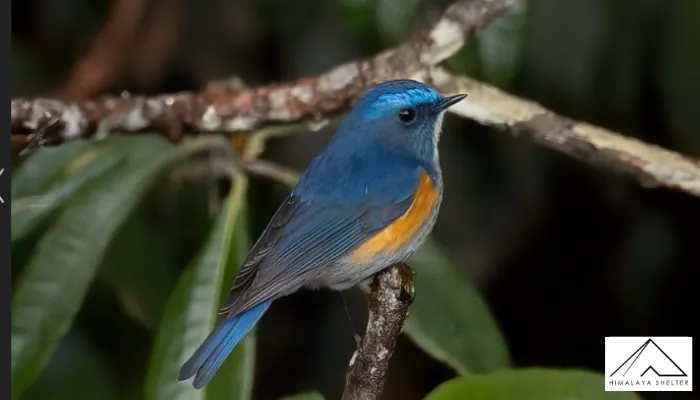
The Himalayan Bluetail is a small and active bird that is found in the forests of the Himalayas. This bird lives in all four seasons forests and areas with rhododendrons. They like shaded forests where sunlight is not harsh. They mostly live between 6000 ft and 12000 ft.
- Body Feature: The male bluetail has a blue tail and orange on the side of the wings, and the female bluetail has a brown body with a little blue on the tail.
- Where you can find them: You can find the Himalayan Bluetail along treks of Uttarakhand, Himachal Pradesh, Sikkim, and Arunachal Pradesh. Kuari Pass, Chopta, Valley of Flowers, and Dzongri treks are all common trekking routes to see them.
11. Alpine Chough
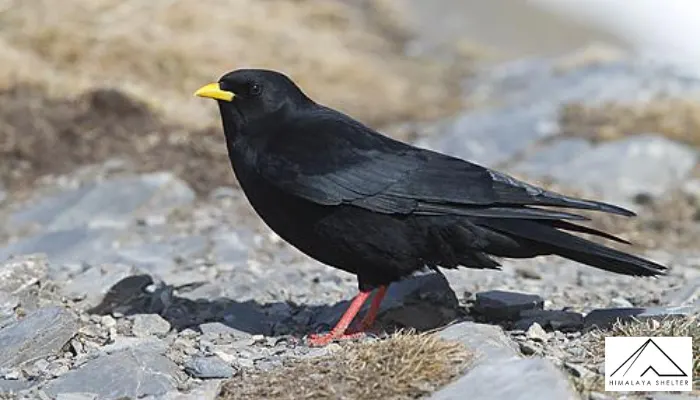
The Alpine Chough is a black colored mountain bird; they are very noisy in nature. They live in areas with rocks, mountain cliffs, and high latitude meadows. They live at heights of 9,840 to 19,685 feet.
- Body Feature: Their body is glossy black, their beak is yellow, and their legs are red.
- Where you can find them: You don’t need to make efforts to find them; you can easily see Alpine Choughs in regions of Ladakh, Spiti, and Uttarakhand. They are also seen around high altitude passes such as Rohtang, Kunzum, and Khardung La, and on treks like Stok Kangri, Rupin Pass, and Kedartal.
12. Snow Partridge
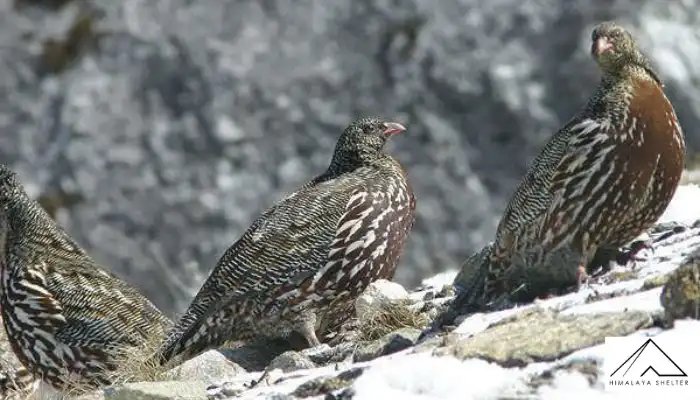
The Snow Partridge is a small and tough bird of the high region of the Himalayas. It lives in areas of rock, high altitude meadows, and slopes of scree. They usually live at altitudes between 9,840 to 16,400 feet.
Snow Partridges sometimes walk or run on the ground, instead of flying. They live in small groups and are quiet in nature. If you don't watch carefully, then you can easily miss.
- Body features: Snow Partridge has grey and brown feathers with dark streaks and a white belly. Its appearance helps them to get mixed with rock areas.
- Where you can find them: Trekkers can find them in areas of Ladakh, Spiti Valley, Lahaul, and high ridges of Uttarakhand and Himachal Pradesh, especially above the tree line.
13. Blood Pheasant
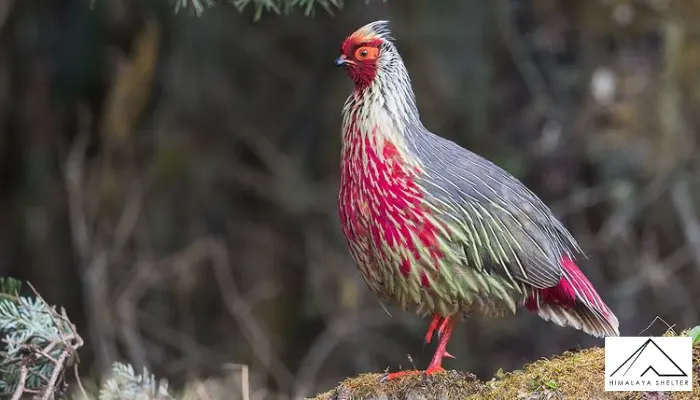
The blood pheasant is a small, colorful bird. They live in groups. They are difficult to see because of their color, and they easily get mixed with the color of the forest. They live in the high Himalayas at a height of 8,860 to 13,120 feet.
- Body features: They have a beautiful pink color around their eyes and on their chest. The remaining body is grey and a light shade of green.
- Where you can find them: They are mostly seen at remote places in the Himalayas. Treks that are not very accessible. Treks like Roopkund, Aancha, and Dzongri. And ridge treks like Kuari Pass, Brahmatal, Spiti valley trek, Khalindi, Pin Parvati Pass, etc.
14. Brown Dipper
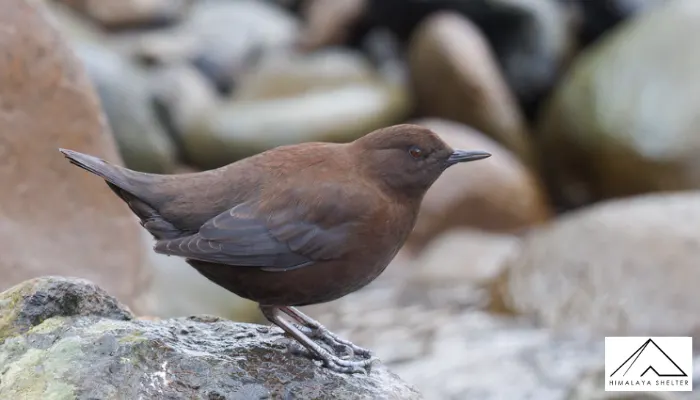
The brown dipper is a small, sturdy bird often found near fast-flowing mountain streams. They are excellent divers and swimmers, feeding underwater on aquatic insects. Their brown plumage blends well with rocks and water, making them difficult to spot. They live in the Himalayas at elevations ranging from 4,900 to 14,800 feet.
- Body features: They have a uniform dark brown body with a slightly lighter throat. Their short tail and strong wings help them dive into cold streams. They are compact, with a rounded body and a sharp beak adapted for catching insects underwater.
- Where you can find them: Brown dippers are mostly seen along Himalayan rivers and streams in remote trekking regions. Treks like Valley of Flowers, Har Ki Dun, Pindari Glacier, Dzongri, and Rupin Pass often provide sightings. They are also spotted on ridge treks with river crossings, such as Kuari Pass, Pin Parvati Pass, and Spiti Valley treks.