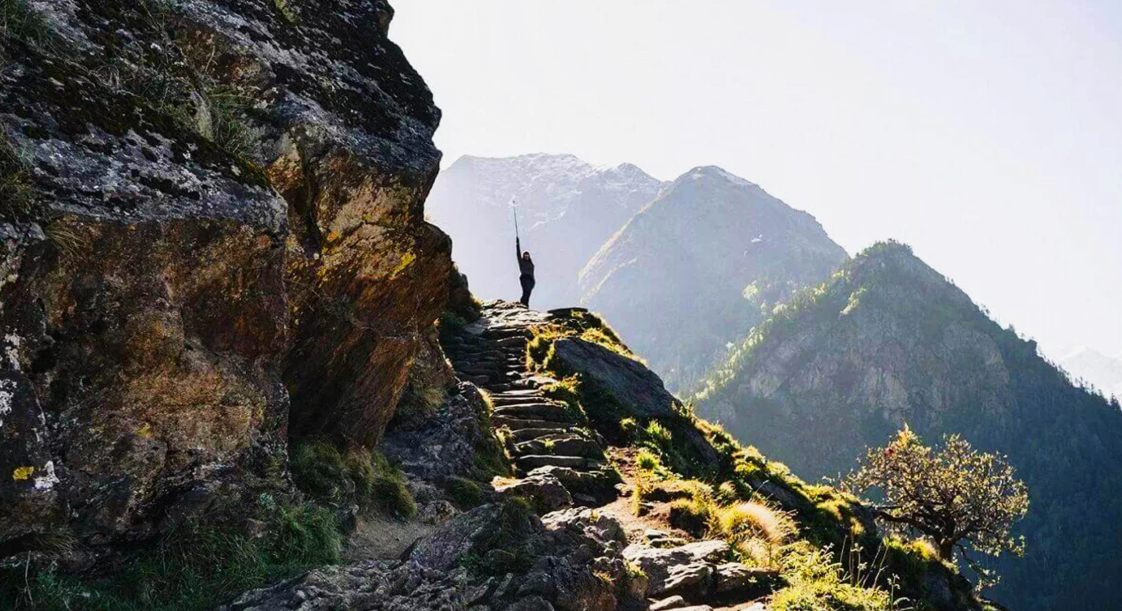
The Indian region of the Great Himalayan Trail is very diverse. It can be done completely from Kashmir to Uttarakhand or Uttarakhand to Kashmir, or it can create routes accordingly, because the trekking routes of India are very systematic and well-developed.
Kashmir to Ladakh Region
Kashmir is a beautiful region in the Indian Himalayas. It has large green valleys and clear rivers. You will see alpine meadows and snowy mountains. The landscape feels different from the dry terrain of Ladakh. Thick pine forests and grasslands fill the area. You will pass traditional mountain villages. Kashmir serves as a starting point for the western section of the Great Himalayan Trail.
Many remote trekking routes connect Kashmir with Ladakh and Zanskar. These routes cross through high mountain passes. They are true Himalayan traverses. You walk from the green valleys of Kashmir into the cold desert of Ladakh.
The Warwan Valley to Zanskar Traverse is a good example. This route starts in the Warwan Valley of Kashmir. It crosses high passes like the Boktol Pass. It also goes over the Lonvilad Pass. Then the trail enters the Zanskar region of Ladakh. Trekkers see a major change in the landscape. The route moves away from rivers. It leaves shepherd settlements behind. You enter barren mountains. You will see glaciers. You will pass through remote Buddhist regions.
Another connection starts from the Sonamarg side of Kashmir. Several traditional routes cross high passes into the Zanskar Valley. Traders used these ancient trails in the past. Shepherds and local communities used them to move between regions before roads existed.
These crossover routes are true expedition-style journeys. They are different from localised treks like the Kashmir Great Lakes Trek. They show the contrast between the green Kashmir landscapes and the wild terrain of Ladakh. This makes them unique trekking experiences in the Indian Himalayas.
Ladakh to Spiti or Lahaul Region
The Ladakh, Zanskar, Lahaul, and Spiti regions form a dramatic section of the Great Himalayan Trail in India. This part of the Himalayas is different from the green valleys of Kashmir. It enters the Trans Himalayan cold desert. Barren mountains and massive glaciers dominate the landscape. You will see turquoise lakes. There are remote high altitude plateaus. These regions offer a great trekking experience. They are known for long crossover expeditions. These trips connect Ladakh with the valleys of Himachal Pradesh.
Most of these routes were ancient trade trails. Shepherds used them for migration. Local communities traveled on them to move between Ladakh and Zanskar. They used them to reach Lahaul and Spiti. Today, people consider them excellent high altitude traverses in the Indian Himalayas. They represent the true spirit of the Great Himalayan Trail.
the Parang La Trek is an iconic crossover route. It connects Ladakh to the Spiti Valley. This ancient trail begins from Karzok village. This village sits near the famous Tso Moriri Lake in Ladakh. The path crosses the high Parang La Pass at around 5,600 meters. Then it drops down into the villages of Kibber and Kaza in Spiti. You will walk through vast Changthang plateaus. The trail goes through high altitude river valleys. It passes through remote mountain terrain. The trip is one of the most spectacular trans Himalayan journeys in India.
The Padum to Darcha Trek is another historic route. It connects the Zanskar region of Ladakh with the Lahaul Valley in Himachal Pradesh. The trail starts from Padum. It crosses high mountain passes. It moves through isolated valleys. Then it goes down toward Darcha in Lahaul. This path was a main trekking path for centuries. It served as a trading connection between Ladakh and Himachal.
The Kang La Trek is for highly experienced trekkers. It is for mountaineers. It offers a difficult glacier crossing between Lahaul and Zanskar. The route begins from the Miyar Valley in Lahaul. It follows the Miyar Glacier for nearly 24 kilometers. It crosses the Kang La Pass at around 5,465 meters. Then you enter the remote Zanskar Valley near Padum. This trip shows the extreme wilderness of the Great Himalayan Trail.
Kinnaur To Uttarakhand Region
These crossover expeditions are very different from short valley treks. They require excellent physical fitness. You need prior high altitude trekking experience. Proper acclimatization is necessary. You must be able to travel through isolated mountain terrain for several days. The Ladakh to Spiti region represents the raw heart of the Trans Himalayan area within the Great Himalayan Trail.
The Kinnaur to Uttarakhand section of the Great Himalayan Trail shows a big shift in the landscape. You move from the dry terrain of Spiti and upper Kinnaur into the green mountain regions of Garhwal and Kumaon. This part of the Indian Himalayas has a lot of variety. Dry cliffs slowly change into thick forests. You will see alpine meadows and glacial rivers. You will pass through traditional Himalayan villages.
People used many of these routes as ancient trade trails. They were used as pilgrimage paths too. These paths connected Himachal Pradesh with the border valleys of Uttarakhand and Tibet. Several high altitude crossover treks still connect these remote regions today. They form an important part of the larger Great Himalayan Trail network.
The Pin Bhaba Pass Trek is a great route in this section. It connects the cold desert of Spiti Valley with the green Bhaba Valley in Kinnaur. You cross the Pin Bhaba Pass at around 4,915 meters. Trekkers see a dramatic change in the scenery. The views switch from barren mountains to forests and waterfalls. You walk past alpine grasslands.
Ancient valleys and passes link the remote border regions of Kinnaur and Uttarakhand near the frontier. These routes pass through isolated villages. You see high grazing grounds. The rugged terrain helps preserve the traditional culture of the higher Himalayas.
The landscape becomes more vibrant when the Great Himalayan Trail enters Uttarakhand. The Garhwal and Kumaon Himalayas have famous trekking regions. They have large glacier systems and pilgrimage routes. Treks like Har Ki Dun or Ruinsara Tal show the expedition spirit of the trail. The Kalindi Khal trek does this too. You can also explore the Milam Glacier and the Nanda Devi region. These paths connect remote valleys and ancient villages across the central Himalayas.
This section combines cultural history with geographic variety. You start in the Buddhist villages of upper Kinnaur. You end in the ancient settlements of Uttarakhand. Trekkers experience changing architecture and languages. The traditions change along with the landscape as you move through the heart of the Indian Himalayas.
Final Thoughts
The Great Himalayan Trail is more than just a trekking route. It is a journey across a diverse mountain system. It connects landscapes and cultures. It links ancient trade routes. It goes through remote Himalayan communities. Every section offers a different experience. You see the green valleys of Kashmir. You cross the cold deserts of Ladakh and Spiti. You walk into the forests of Uttarakhand. You see glacier regions there too. The Indian Himalayas are unique because of this geographical variety. They have a rich mountain culture. The trekking network is well developed.
The GHT is not a single marked trail. It is a network of ancient paths that existed for centuries. Traders once used many of these routes. Shepherds used them too. Pilgrims traveled across high mountain passes between regions on these paths. Today, trekkers follow these same trails to experience the scale of the mountains. You see the wilderness. You enjoy the beauty of the Himalayas. The journey is about trekking through remote mountains. It is about understanding the local people. You learn about the traditions. You see the history that shaped life in the Himalayas for generations.