As we don't have any particular information about the person who discovered the Kuari Pass Trek, fortunately, the trek got its name and popularity after the year 1905. When Lord Curzon trekked to Joshimath from the valleys and ghats in the 1900s, before that, locals were calling it the Untouched Pass. However, after that incident, the trail gained popularity and was named as the Lord Curzon Trek as well as the Kuari Pass, which means 'virgin crossing'.
Who was Lord Curzon
Lord George Nathaniel Curzon was the viceroy of India from 1899 to 1905, but he was not only a political figure. he played a significant role in introducing India’s high mountain regions for scientific study, forestry development, and early trekking. His lasting impact is deeply rooted in the Kuari Pass trail.
Curzon was passionate about the Indian Himalayas and often went into remote areas that were, at that time, largely untouched or accessible only to shepherds and local traders.
Lord Curzon Trail
Major rivers you see while travelling from Rishikesh to Joshimath
Ganga - The Ganga (Ganges) does not begin at any lake or glacier with the name “Ganga”. It is formed when two major Himalayan rivers come together: the Bhagirathi (coming from Gomukh) and the Alaknanda (coming from the Satopanth–Nanda Devi region), which meet at Devprayag. The journey begins along the Ganga from Rishikesh to Devprayag.
Alaknanda - From Devprayag onwards, the journey follows the Alaknanda all the way to Joshimath, yet passes multiple Prayags (Sangams). This is the only river you see for almost the entire drive.
Mandakini - Joins Alaknanda at Rudraprayag, which comes from the Kedarnath Valley, and it is visible at Rudraprayag.
Pindar River - Meets Alaknanda at Karnaprayag, comes from the Pindari Glacier region (Kumaon–Garhwal boundary), which is visible at the Karnaprayag confluence.
Nandakini River - Joins Alaknanda at Nandprayag, and its source is near the Nanda Ghunti–Trishul region, which is visible at Nandprayag.
Birahi Ganga - A smaller but notable tributary joining Alaknanda near Birahi/Chamoli.
Book Your Trek Now
Major towns and cities you pass through while travelling from Rishikesh to Joshimath
Rishikesh is the starting point as well as the last major city before heading into the mountains, where you spot three of India's most sacred rivers meet together – Ganga, Yamuna and Saraswati, and experience all kinds of adventure activities as well.
2. Shivpuri
Shivpuri is one of the renowned cities for white-water river rafting experiences on the Ganga River and riverside camping on the bank of the Ganga.
3. Devprayag
First major confluence (Prayag) where the holy rivers Bhagirathi and Alaknanda meet, merge into one and take the name Ganga, making it a unique pilgrimage start of the Alaknanda valley.
4. Srinagar (Garhwal)
Srinagar sits at an altitude of 1,900 ft. For centuries, Srinagar was the capital of the Gharwal Kingdom till 1803, which was founded by King Ajayapal of Tehri Garhwal in the 14th century, until the arrival of the British. Nowadays, Srinagar is one of the largest towns in Garhwal, a major market and medical hub.
5. Rudraprayag
There's a mythological belief that the holy city of Rudraprayag is named after the Rudra avatar of Lord Shiva. Several trekking routes pass through, like the Chopta Chandrashila trek, the Deoriatal trek and the Tungnath temple. And also the holy rivers Alaknanda and Mandakini confluence.
6. Karnaprayag
The toy town Karanprayag, as the name suggests, is the city of Karna of the Mahabharata, which is located at a median elevation of 1,451 meters above sea level. It is well-known for connecting the Garhwal vicinity with the Kumaon vicinity of Uttarakhand through NH 109. Also acknowledged for the confluence of the Alaknanda and Pindar rivers.
7. Nandprayag
Nandprayag is well-known for its religious importance. According to Hindu mythology, as soon as King Nanda did a huge Yajna right here to invite Lord Vishnu to bless him with a son, Lord Vishnu agreed. At the same time, Devki, Kansa’s sister, who was chained up in prison, was also given the same blessing. To make this happen, the gods determined that Vishnu might be born as Krishna to Devki, but Yashoda, King Nanda’s wife, would raise him. There's also a temple dedicated to Krishna in Nandprayag. Another motive this vicinity is crucial is that the first-rate rishi Kanva got here right here to meditate. Apart from this, it's also believed that King Dushyant married Shakuntala here. All those testimonies make this area exciting for everyone, even individuals who aren't religious. As well as the confluence of Alaknanda and Nandakini.
8. Chamoli
Chamoli gives plenty of locations for pilgrims and visitors. Chamoli is the birthplace of the “Chipko Movement”, which became a nonviolent, social and ecological movement through rural villagers, particularly women, in the 1970s, with the aim of protecting trees and forests. Chamoli proved itself “the most adorable in its natural assets, be it scenery, valley aspects, water edges, floristic” Nowadays, Chamoli is the head of the district headquarters, an administrative and transport hub.
9. Joshimath
Joshimath is the centre of one of the four major mathas (monasteries), which was established by Adi Shankaracharya in the 8th century. Although Joshimath acts as the winter seat of Lord Badri Vishal (Badrinath), the idol is moved from Badrinath Temple to Joshimath every winter.If you want to experience all these, the Himalaya Shelter provides a two-day stay in Joshimath in the local guest house and homestays.
JyotirMath is one amongst the four Maths which were established by the Adi Sankaracharya 1200 years ago for preserving Hinduism and Advaita Vedanta, which is the doctrine of non-dualism. JyotirMath is also known as the Atharva Veda monastery because it was formed based on the Atharva Veda.
Narsingh Temple
Narsingh Temple is part of the Sapt Badri Yatra; the temple is dedicated to Lord Narsingh, the half-lion, half-human, which is the 4th incarnation of Lord Vishnu. Famous for the miracle regarding the statue's arm becoming thinner each year.
Kalpavriksha
Kalpavriksha is a wish-granting divine tree in religions like Hinduism, Jainism and Buddhism. Its earliest descriptions are mentioned in the Sanskrit literature. According to Hindu mythology, the Kalpavriksha originated during the Samundra Manthana.
Local Attractions
Skiing in Auli
Auli comes out as the best place for skiing in India. Nevertheless, Auli holds a number of adventure events in the wintertime. However, skiing has become incredibly popular worldwide. There are also some enterprises which provide skiing courses and beginner-friendly programmes. Courses are of 7-14 days' duration, which cost around 9,000 to 30,000 rupees.
Artificial Lake
The artificial lake is one of the biggest attractions of Auli because it is situated at around 3,000 meters, which makes this one of the highest artificial lakes in the world. This lake was built by the government to create snow for the brand-new ski slopes because in the summer, there's not much snowfall for skiing. Additionally, the lake is a sight to behold.
Gorson Bugyal
Gorson Bugyal is an alpine meadow setting in the Garhwal Himalayas in the region of the Chamoli district of Uttarakhand. The Bugyal is at an altitude of 3,519 m and 19 km away from Joshimath. The large alpine meadow of Bugyal covers hundreds of acres of land, in which you get to see vegetation of apple orchards, oak and deodar forests; however, during winters, the entire meadow is covered with snow.
Ropeway to Auli
The ropeway to Auli is one of the longest and highest ropeways in India, which stretches over 4.5 km from Joshimath to Auli, offering breathtaking views of the Himalayas, including India's 2nd-highest peak, Nanda Devi, and others. Suspended above the snow-covered slopes and pine forests, it offers not just a ride but an unforgettable experience at the minimal price of 1,000 rupees. However, the ropeway has been closed since 2023 because of land subsidence and the cracks appearing in the area of Joshimath.
Tapovan Hot Springs
Tapovan Hot Spring comes out as a natural spa surrounded by silent forests, valleys and Himalayan peaks standing as guardians of this sacred place, with rich sulphur in water that has long been renowned for its healing touch. The water heats up to 100°C, making it ideal for bathing in winter as well. Tapovan itself means 'forest of spiritual practices'. According to Indian mythologies, Lord Lakshman, the younger brother of Lord Ram, meditated in this forest after the events of the Ramayana.
Local Attractions and Camp View
Trekking Routes from Joshimath
Joshimath is one of India’s biggest trekking bases. Which offers the base for the following treks:
Gulling: Forest campsite, quiet, great for acclimatisation
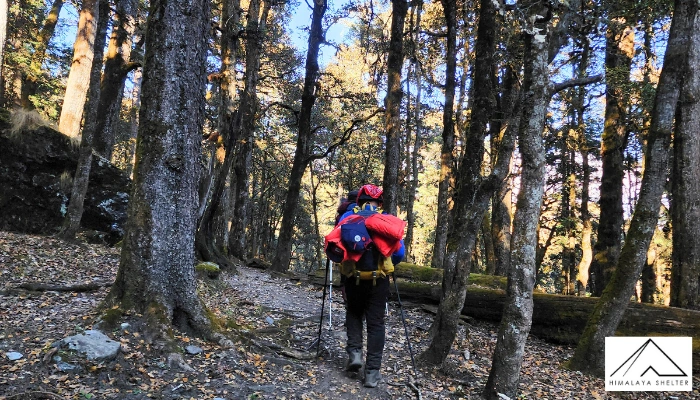
The trek starts from the Dhak village, and Gulling comes as the 1st major campsite. In open meadows, surrounded by dense oak, rhododendron and maple trees. The air of Gulling is rich with the scent of moss and wildflowers, with the pleasant sounds of birds; however, the forest absorbs all the external sounds. Additionally, this camp fits best for the acclimatization of trekkers. As the Himalaya Shelter pitches the camp in the best position for maximising the experience of trekkers.
Tali Forest Camp: Deep oak forest, magical lighting
Tali Forest camp is located between dense, tall trees. In the morning, sunlight passes through the branches and leaves. Additionally, the trail from Gulling to Tali offers the most picturesque views.
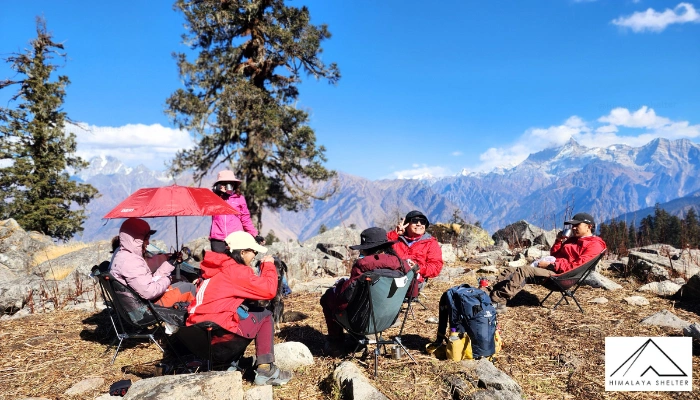
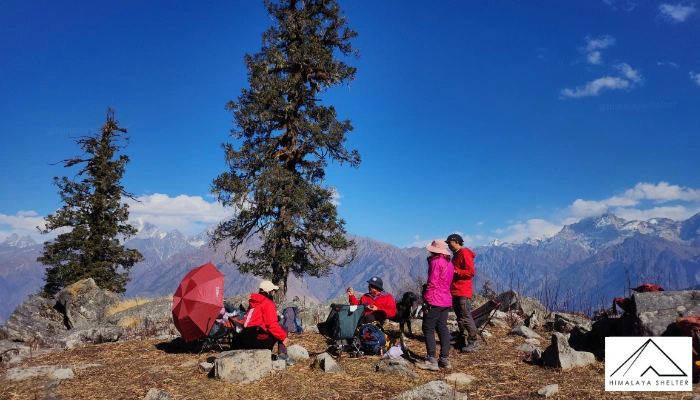
Himalaya Shelter client Resting Group
Tali Lake: Lake reflections, alpine terrain begins.
As the trek emerges from the forest, it reaches the serene Tali Lake, a small lake reflecting patches of sky and tree lines. This campsite marks the shifting from forest to open meadow, giving trekkers early glimpses of the surrounding peaks along Nanda Devi.
Khullara: Best mountain views, wide meadows
Khullara is the centre point of all Kuari Pass campsites. It is a vast alpine meadow set against the towering backdrop of Dronagiri. The meadow feels alive with wind, open sky, and endless wide horizons. Khullara is notably magical during sunrise and sunset, when Dronagiri glows gold, red, and finally blue. However, in winter, Khullara becomes a broad snowfield.
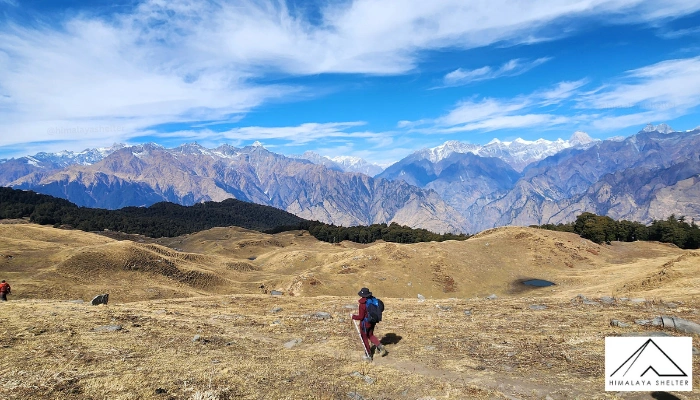
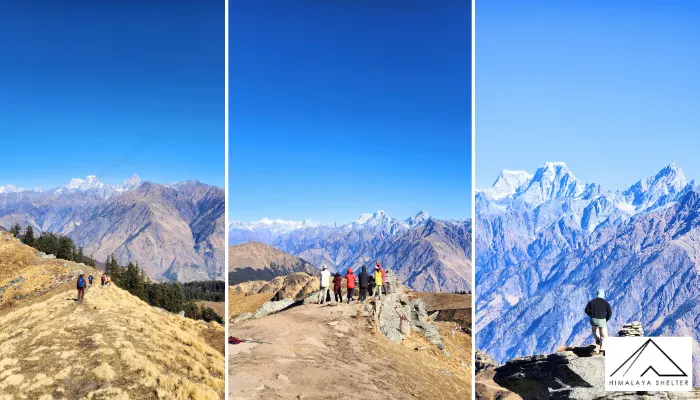
Walking across Kuari Pass’s rolling alpine meadows towards the snow-clad peaks
Gorson Bugyal: Grand meadows, ski slopes, Trishul views
Gorson Bugyal is one of India’s popular alpine meadows, which seems like an endless rolling field of grass surrounded by significant Himalayan peaks. The gentle slopes of Gorson lead you to Auli, India’s most prominent and famous ski destination.
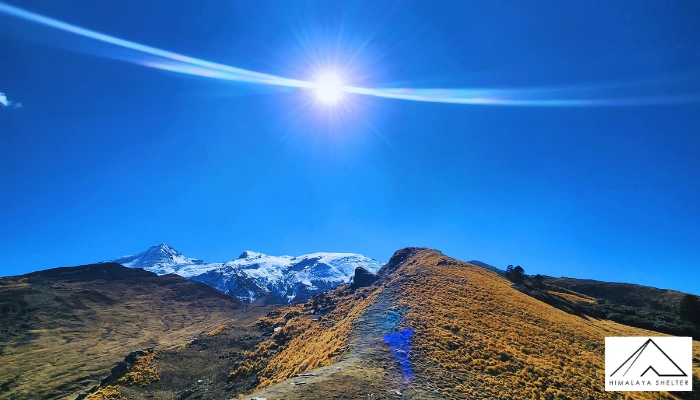
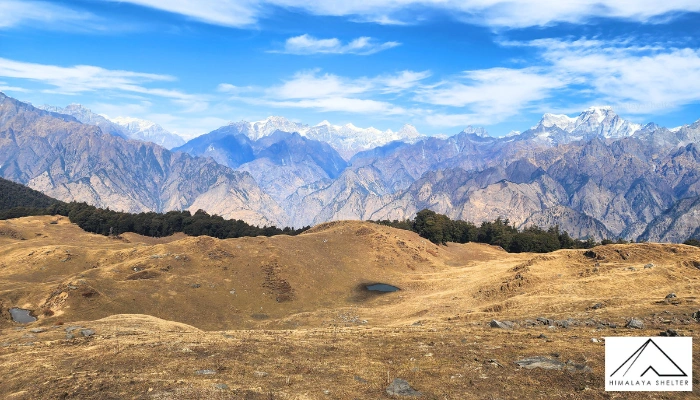
Golden meadows and a wall of Himalayan giants on the Kuari Pass trail
Major peaks
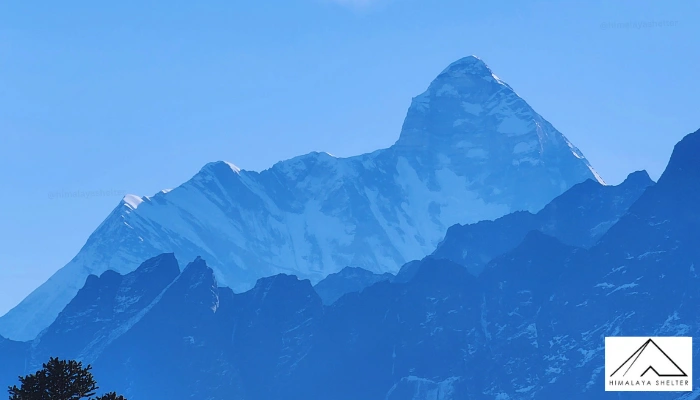
Nanda Devi (7,816 m): Nanda Devi is the second-highest peak in India. In the year 1988, UNESCO declared the surroundings of Nada Devi National Park as a World Heritage Site. Nanda Devi peak
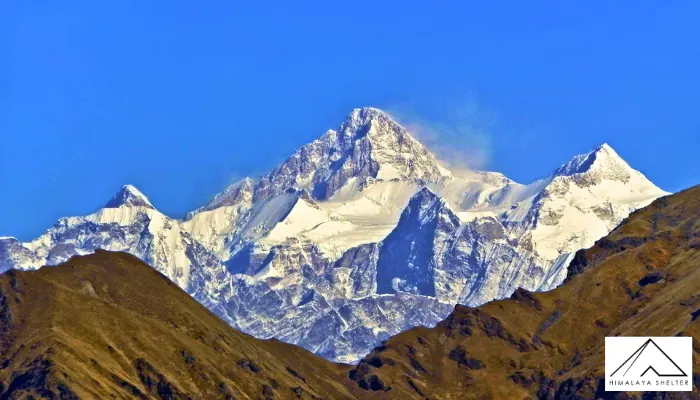
Kamet (7,756 m): Kamet is the 3rd highest peak in India and the 29th highest in the world, with a height of 7,756 meters; however, it is the highest climbable peak in India. On Kamet, the first successful ascent was made by a British team in the year 1931. It lies near the Tibet border, in the remote Garhwal region, and is often referred to as the crown jewel of Indian expeditions. Kamet Peak
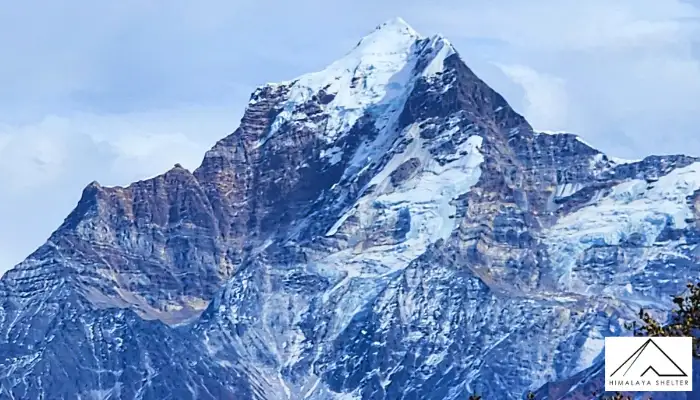
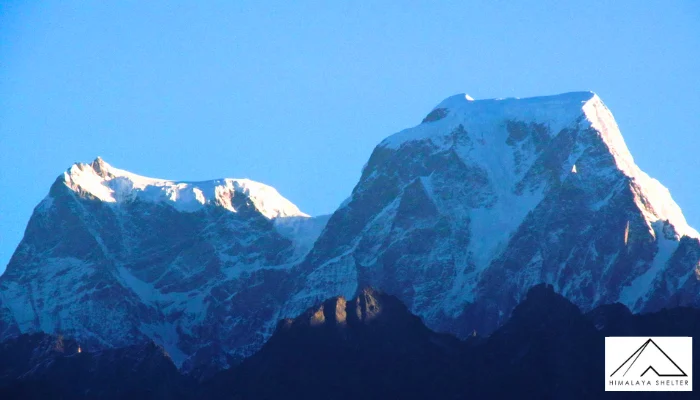
Dronagiri (7,066 m): A towering peak dominating the skyline near Garhwal, one of the trek’s closest and most dramatic mountains. Dronagiri Peak
Hathi Parvat (6,727 m): Hathi Parvat, the name itself, means Elephant Peak because its shape is like an elephant. It is a part of the twin massif Hathi-Ghoda. Hathi Parvat Peak
Ghoda Parvat (6,708 m): Forms the second half of the twin Hathi–Ghoda massif (mountain range). Ghoda Parvat Peak
Dhak Village - Dhak's Traditional Garhwali Lifestyle
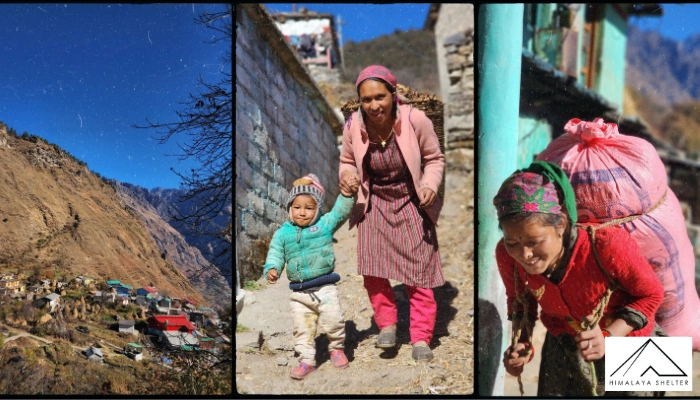
Dhak Villager People
For centuries, Dhak has contemplated the conventional Garhwali manner of life. The people right here are recognised for his or her tough work, hospitality, and deep respect for nature.
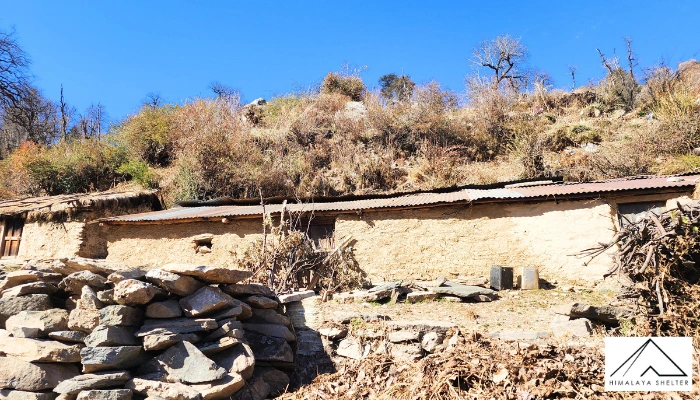
Houses: Traditional homes were made of stone, wood, and mud, with sloping slate roofs to resist heavy rain and snow. The ground floor is frequently used to hold cattle, at the same time as households live on the top floor.
Farming: Agriculture has been the main occupation. Crops like mandua (finger millet), wheat, rajma (kidney beans), and barley are cultivated well on terraced fields. Seasonal vegetables have also been grown for household use.
Food: The community diet plan included clean but nutritious dishes like madua roti, gahat (horse gram) soup, and dal with rice.
Clothing: Woollen garments made from sheep wool kept villagers warm during extreme winters. Women often wore traditional Garhwali jewellery, especially during festivals and weddings.
Community Life: Villagers work together during sowing and harvesting. They celebrate festivals with folk songs, dances, and rituals honouring local deities.
Local Culture and Festivals
The people of Dhak continue to celebrate their culture through festivals and rituals:
Harela - A festival that signifies the beginning of the sowing season. People plant saplings and pray for a prosperous harvest.
Makar Sankranti - Celebrated with fairs, folk dances, and traditional foods like khichdi.
Nanda Devi Raj Jat Yatra - Although not directly in Dhak, this famous pilgrimage influences the cultural spirit of the region.
During weddings and community gatherings, villagers perform cultural dances like Chholiya and Langvir Nritya, accompanied using dhol and damau (traditional drums). These practices keep Dhak’s identity strong even in modern times.
Architecture and Village Layout
Stepping into Dhak is like going back into the past. The village is built over the slopes with narrow paths which connect the homes. For building houses, they still use traditional wooden carvings on doors and windows. The terraced fields spread across the hillside look so practical as well as beautiful.
Small Old House
Nanda Devi Biosphere Reserve
Located in Uttarakhand's Garhwal Himalayas, the Nanda Devi Biosphere Reserve (NDBR) is a high-altitude conservation area recognised by UNESCO. It features some of the most pristine alpine ecosystems on earth and is centred around Nanda Devi (7,816 m), India's second-highest peak.
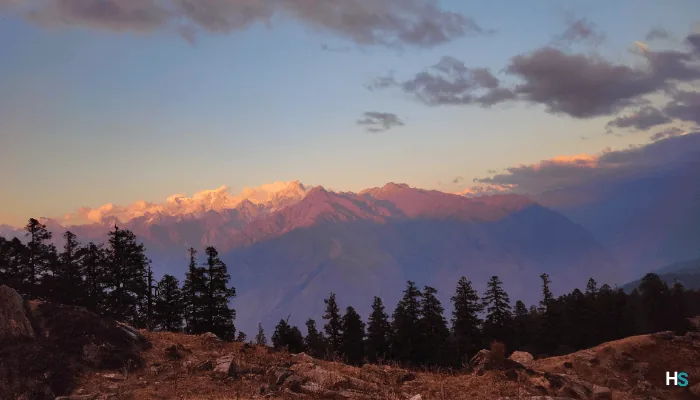
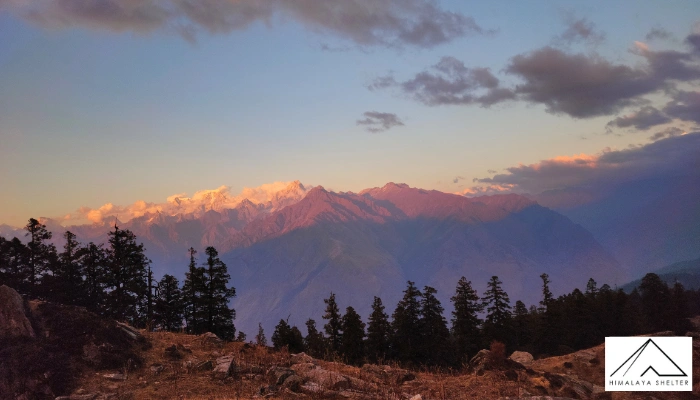
Sunset glow on the Kuari Pass range, captured on the trail with Himalaya Shelter
Geography & Zones
Core: The Nanda Devi Sanctuary and Valley of Flowers
Buffer: Joshimath, Lata–Tolma, Gorson Bugyal
Transition: Agricultural areas and towns
Flora
Ancient oak forests
Rhododendron corridors
High-altitude birch
Alpine meadows with primulas, potentillas, and blue poppies
Fauna
Himalayan tahr
Musk deer
Snow leopard (rare)
Monal pheasant
Red fox, marmots, and weasels
Local Communities
Bhotiya, Tolchha, and Marcha communities, who historically migrated seasonally and traded with Tibet.
Past, Present, and Future of Kuari Pass Trek
Past: From shepherd and local routes to exploration by Lord Curzon, Kuari Pass evolved into a strategic survey point. In the early times, mountaineers used it to study about sanctuary and also for exploring climbing routes.
Present: Nowadays, Kuari Pass has become one of India's most popular winter treks. The infrastructure of Joshimath and Auli supports and promotes more tourism.
Future:Eco-friendly and sustainable trekking, waste management and controlled tourism decide the longevity of the trail. If the trail is managed respectfully, the Kuari Pass trek can remain one of the most iconic Himalayan journeys in India for future generations. Himalaya Shelter operates all the treks in an eco-friendly manner, and we support local communities.
FAQ’s
Q. Is the Kuari Pass trek suitable for beginners or first-timers?
Ans: Yes, it is suitable for beginners and even for first-timers with moderate fitness.
Q. Starting point of the trek?
Ans: Dhak village is the starting point for the Kuari Pass trek, which is 10–12 km from Joshimath.
Q. What is the maximum altitude of the trek?
Ans: The summit of the Kurari Pass trek is at approximately 3,756 meters (12,388 ft).