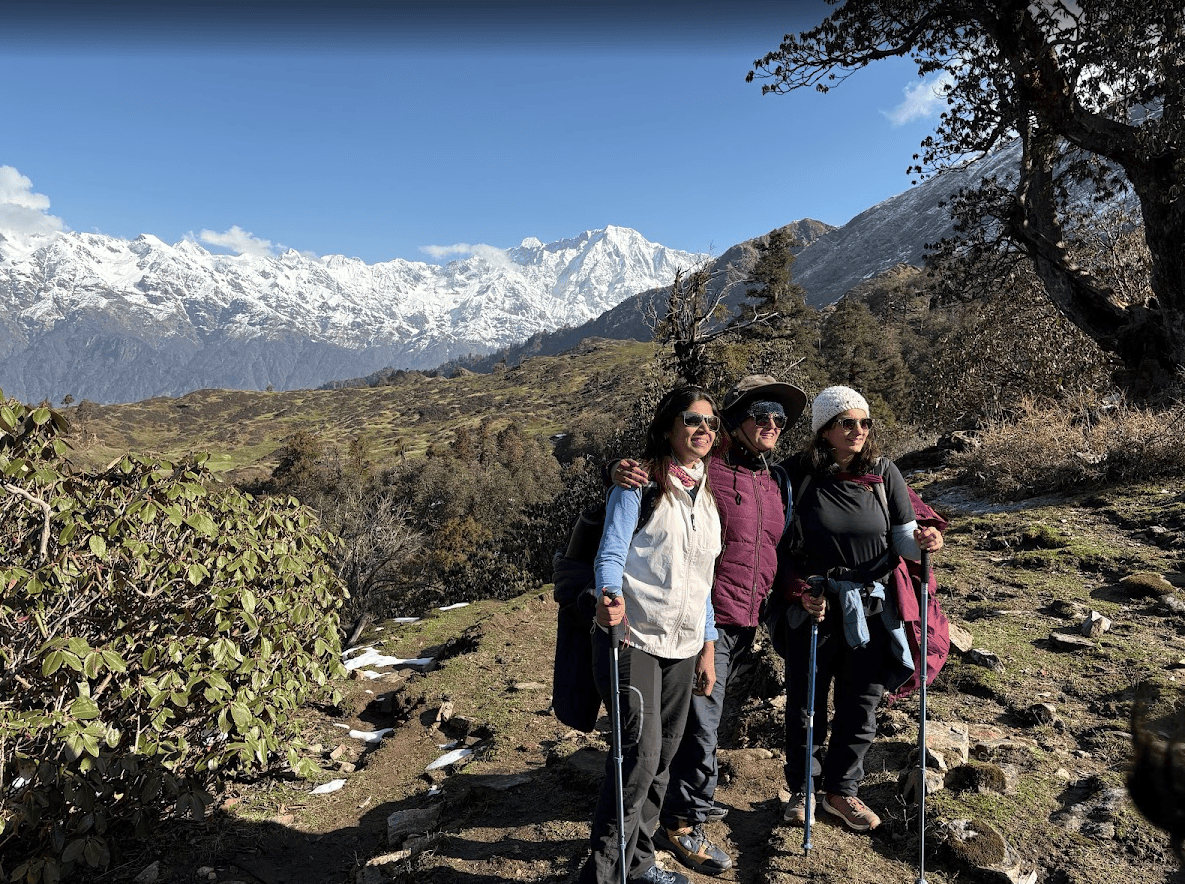
Periods during a trek are a common concern. It is an obvious feeling of discomfort just to think of living and trekking in the wild during menstruation, and how I will manage there. Instead, it is not difficult. Periods do not make trekking difficult or impossible. Women have a myth that trekking exertion makes cramps worse. But it makes you feel good because that's when you feel down or have mood swings. It refreshes your mood because you are in a green forest, breathing fresh air, and trekking, which relieves cramps. So menstruation should not be a reason to stop you from trekking.
Of course, yes, you can trek during periods. It is as normal on a trail as it is in daily life. You just need to be more prepared. You know your body best. Pack extra supplies like pads or cups. You will be in remote areas. These items will not be available for purchase there.
Do not worry too much about it. You do not have to take pills to delay your period just because you are going on a trek. It is manageable with basic preparation.
When women go to high altitude, typically above 2,500-3,000 meters. Due to hypoxia (low oxygen) or atmospheric pressure, physiological stress increases, which can lead to hormonal changes, especially in women body. So, high altitude can impact menstruation cycle. It can be early or can be delayed. So if you are thinking my period will not fall during these dates. You are wrong, it can fall due to high altitude. That is why always keep your period kit with you on trekking.
Also, here everybody reacts differently. And here must question for some females who usually experience painful periods. For them, it is advisable to do what they normally do, lie down in a tent with a hot water bag. Our trek leader always carries an empty water bag. When you reach the campsite, ask them for a hot water bag, they will provide you. If the pain is too much, you can take painkillers like ibuprofen or meftal spas.
Staying hydrated and fueled during the trek is advisable, especially when you are in periods. It helps ease period cramps and fatigue.
Yes, indeed, the washrooms on the trek are not always available. When you are in a campsite, there are toilet tents available, which are a bio and dry toilet. The main concern is when you are on trail. Here, also nothing to worry about. Just go behind the bushes or huge boulders and tell the trek leader or your friend to keep an eye. And remember, never go near water.
If you use pads or tampons, used ones should be wrapped in paper or newspaper and collected in a zipper plastic bag and keep this bag in a separate side or bottom section bag and bring it back to the city. Always carry a zipper lock bag with you. Because you should not leave it on the mountain, we need to be eco-conscious.
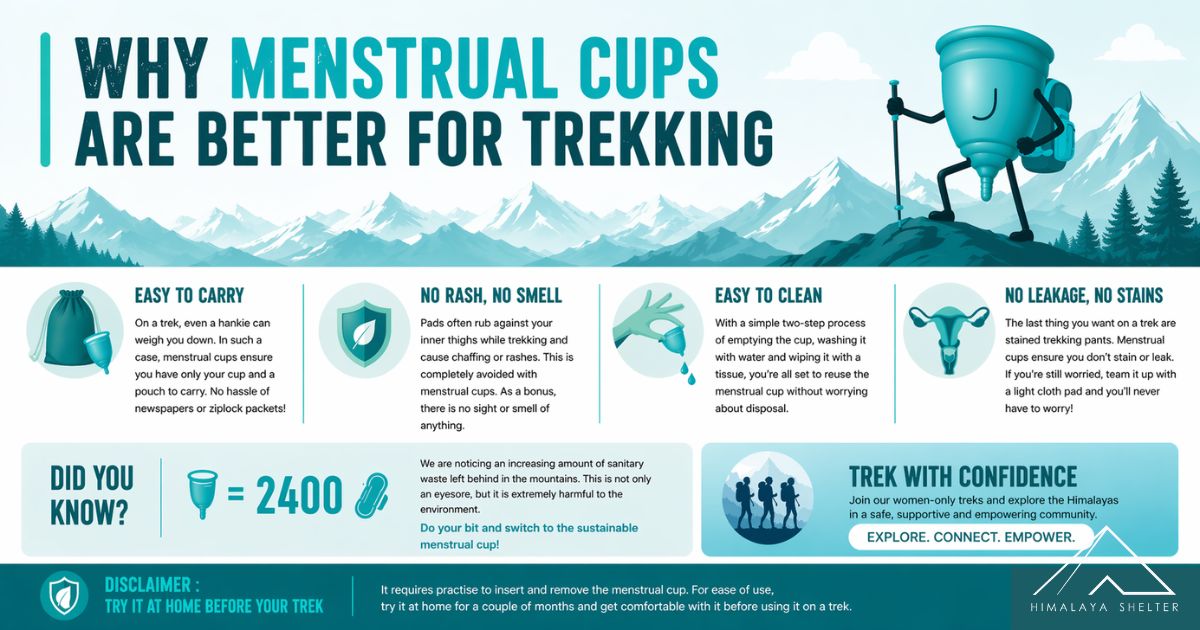
If you use menstrual cups, wash them with water, wipe with tissues and dump them into a pit. Remember not to use wet wipes because it is non biodegrable.
Keep a number of extra pairs of underwear in case it stains.
Wash your hands or use sanitizer after every time you change.
With these instructions, manage your hygiene and also keep the mountain clean. In this process, there should not single piece of trash left behind.
Normally, we get tired easily during periods. And during trek, it is common to get more tired due to periods.
Stay fueled. Eat breakfast before the trek and carry snacks or dry fruit while walking. And keep them in pockets or bags or side pockets of the bag where hands can easily reach.
Stay hydrated. Drink enough water and try to take it from food, like eating more dal, soup or tea. And this savoury hot food will help to ease cramps.
Do not push unnecessarily, just walk at your own pace and take a rest in between.
Try to get proper sleep after dinner. Sleep helps to maintain energy.
A good period kit helps a lot on a trek. You want to keep things simple. Stay hygienic. Avoid leaving waste in remote areas where disposal is hard.
Menstrual cup: This is a practical choice. It is reusable. It is lightweight. You do not have to carry used waste. It becomes the easiest option once you are comfortable using it.
Sanitary pads: These are familiar. They are not very convenient on a trek. You must carry used pads back with you. This adds to waste. It can cause a smell if not packed right. Keep a few for backup.
Tampons: They are compact. You need to keep your hands clean while changing them. These are useful if you already use them regularly.
Zip-lock bags: These are essential for storing used products. Always pack out your waste. Never leave anything on the trail.
Tissues: Use these for cleaning when water is scarce. Choose biodegradable options. This helps reduce your impact on nature.
Hand sanitiser. This is a must. Use it before you change your products. Use it after too. It keeps you clean.
Extra underwear: Leaks can happen. Quick-dry fabric works best. It is better for trekking conditions.
Pain relief medication: Carry what you usually take for cramps. Only use what suits your body.
Hot water bag: You do not need to carry this while walking. Ask your trek leader for hot water at the campsite. It helps ease cramps.
Small pouch: Keep everything in one waterproof bag. It makes your items easy to find when you need them.
At the Himalaya shelter, our team carries a hot water bag and a medical kit which has pain relief tablets. When you need those things, you can ask our trek leader. They will completely help you.
Track your cycle before the trek
It gives you an idea of what to expect. This helps you prepare better.
Avoid taking pills to delay your periods
These pills can disturb your hormonal balance. It might affect your future cycles too. Managing your period on the trek is usually safer than trying to shift it.
Inform your trek leader
If you feel comfortable This is not required. It is helpful if you need extra support. It helps with flexibility on the trail.
Be flexible with your pace
You might feel slower on some days. That is completely fine.
Do’s:
Stay well hydrated
Maintain proper hygiene
Eat regularly and don’t skip meals
Listen to your body and take breaks when needed
Don’ts:
Ignore pain or discomfort
Skip food, especially on long trekking days
Overexert yourself unnecessarily
Stress too much about it—it’s manageable
Periods shouldn't stop you from trekking. It might seem like a big worry, but you can manage it with a bit of planning. Plenty of women trek in the Himalayas every year. It becomes a normal part of the trip once you know what to pack and how your body reacts.
Try not to overthink the situation. Your cycle doesn't change the mountains. You can keep your plans exactly as they are. Trust yourself to handle it.
We organize women only treks at the Himalaya Shelter. These trips help you feel more supported if you are nervous about your first trek. You can build your confidence on the trail with a group that understands.
Tanisha Chauhan
Tanisha is a Trek Leader at Himalaya Shelter. She loves the mountains and telling stories about them. She enjoys sharing experiences from her trips. Her goal is to become a full-time mountain leader
18 Apr 2026
Cost: ₹22000 | $251
Type: Moderate - Difficult
Best Time: May to June and September to November
Cost: ₹19500 | $210
Type: Moderate
Best Time: June to September
Cost: ₹45000 | $513
Type: Difficult
Best Time: May to June and September to October
Cost: ₹26000 | $289
Type: Moderate - Difficult
Best Time: May to June | September to October
Cost: ₹7500 | $83
Type: Easy
Best Time: January, February, March, April, October, November, December
Cost: ₹12500 | $142
Type: Moderate
Best Time: March, April, May. June, September, october, November
Cost: ₹20500 | $228
Type: Easy - Moderate
Best Time: July to September