Himalayan Wildflowers: A Complete Guide for Trekkers

Himalayan Wildflowers: A Complete Guide for Trekkers : (Where & When to See Them)

The Himalayas have a very rich alpine ecosystem. Over 10,000 plant species grow at different heights. Many wildflowers bloom between spring and early autumn. You will see different types of flowers in the Himalaya as you walk from forests to open meadows. Each flower fits its specific altitude. These flowers in the Himalayas are seasonal. You might miss them if you do not look closely on the trail. This guide helps you identify common flowers in regions like Uttarakhand and Himachal.

You will notice these flowers appear in different spots along the trail. Some grow near streams. Others spread across wide meadows. A few types only live at very high altitudes where the weather is harsh. The growing season is short in those areas. Paying attention to these small details changes how you feel during a trek.
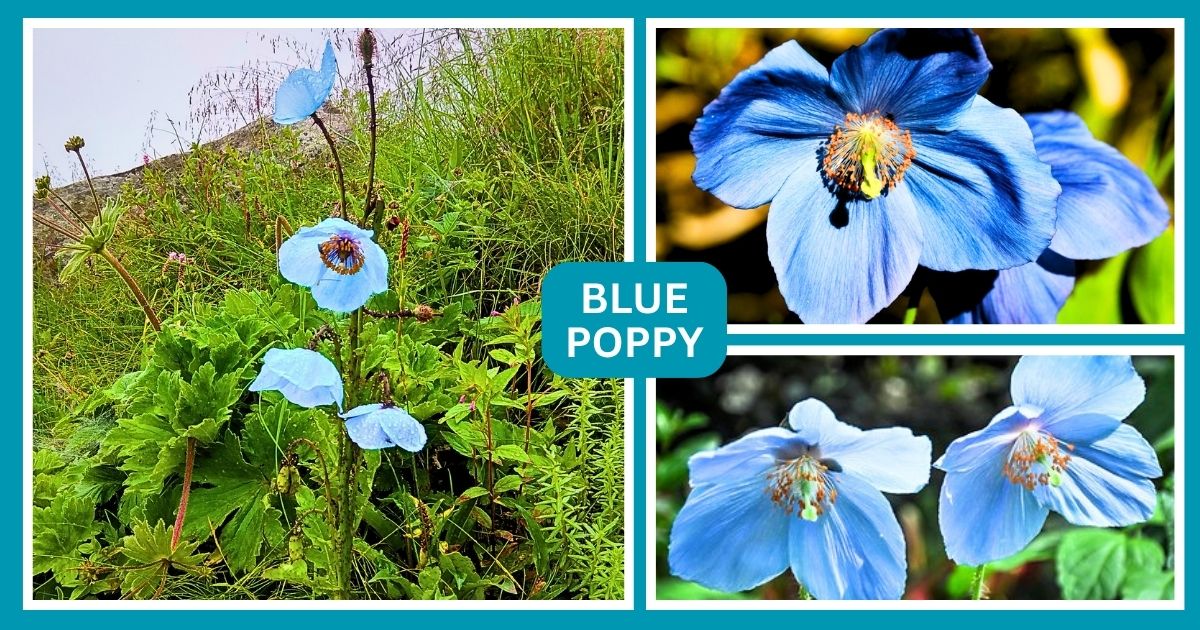
Himalayan Blue Poppy (Meconopsis aculeata) 

himalayan wildflowers
Himalayan Blue Poppy


Local Name: Neela Posta; Queen of Himalayas 

The Himalayan Blue Poppy grows in high altitude areas. You will find it in alpine meadows or on wet slopes. It grows across the western and central Himalayas.

It grows on heights between 2,400 meters and 4,700 meters. Thiis is Habitat of hill slopes, rock crevics. The flower blooms in the monsoon season from June to September.

Flower feature: The petals are sky blue with a soft texture. The center of the flower is bright yellow. This blue color stands out against the green grass. It is one of the easiest flowers to spot on the trail.

Where to Find Them: You can spot them in regions like Uttarakhand, Himachal Pradesh, and Kashmir, especially on treks like Valley of Flowers, Hampta Pass, Har Ki Dun, Rupin pass, Pin Bhaba and Kashmir Great Lakes, mostly near water streams and moist meadow sections.

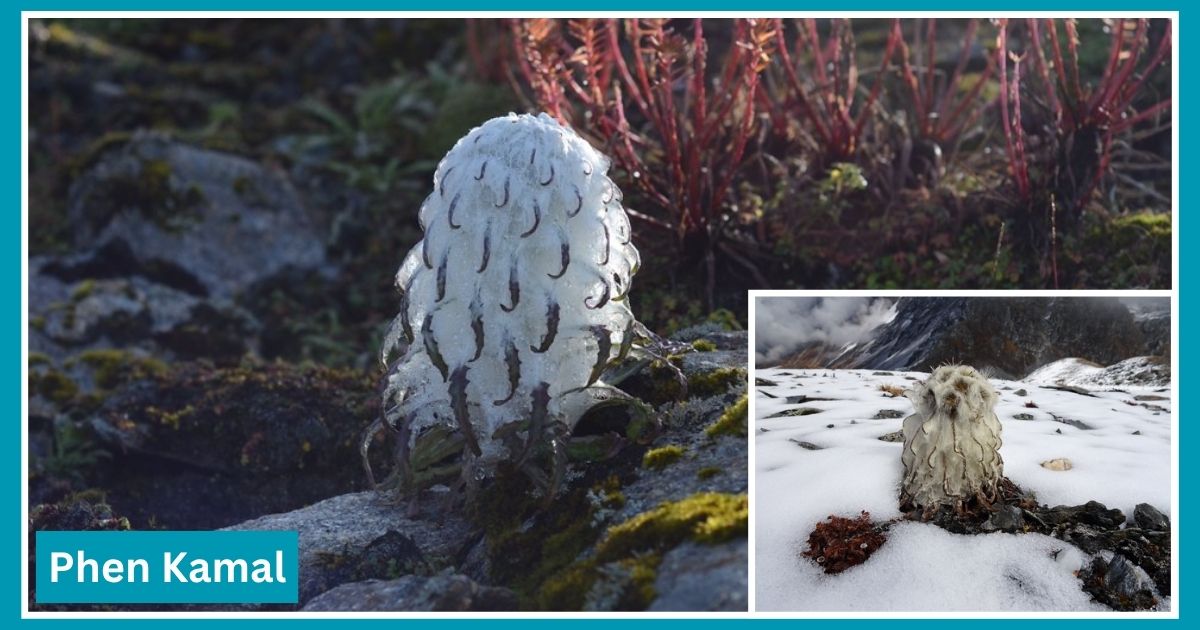
Phen Kamal (Saussurea gossypiphora)

flowers in the himalayas
Phen Kamal


Local name: Kapasi, Phen Kamal

Phen Kamal is a rare flower. It grows at high altitudes in the Himalayas. High altitudes are places 4,000 meters above sea level. You will find it in alpine regions. Alpine regions are cold areas above the line where trees stop growing.

The plant lives in harsh, rocky terrain. This terrain is ground covered in stones and boulders. Very few plants survive in these spots. Most Phen Kamal grow in the western Himalayas..

Body Feature: It has a unique cotton-like appearance, covered in dense white woolly fibers that protect it from cold winds. The actual flower is hidden inside this fluffy structure, giving it a soft, ball-like look.

Where to Find Them: You can spot Phen Kamal in high-altitude areas of Uttarakhand and Himachal, often on challenging treks and near rocky slopes above the tree line such as Borasu Pass trek, Maldaru lake trek, Har ki Dun ruinsara lake, Pin Bhaba, and spiti treks though sightings are rare.

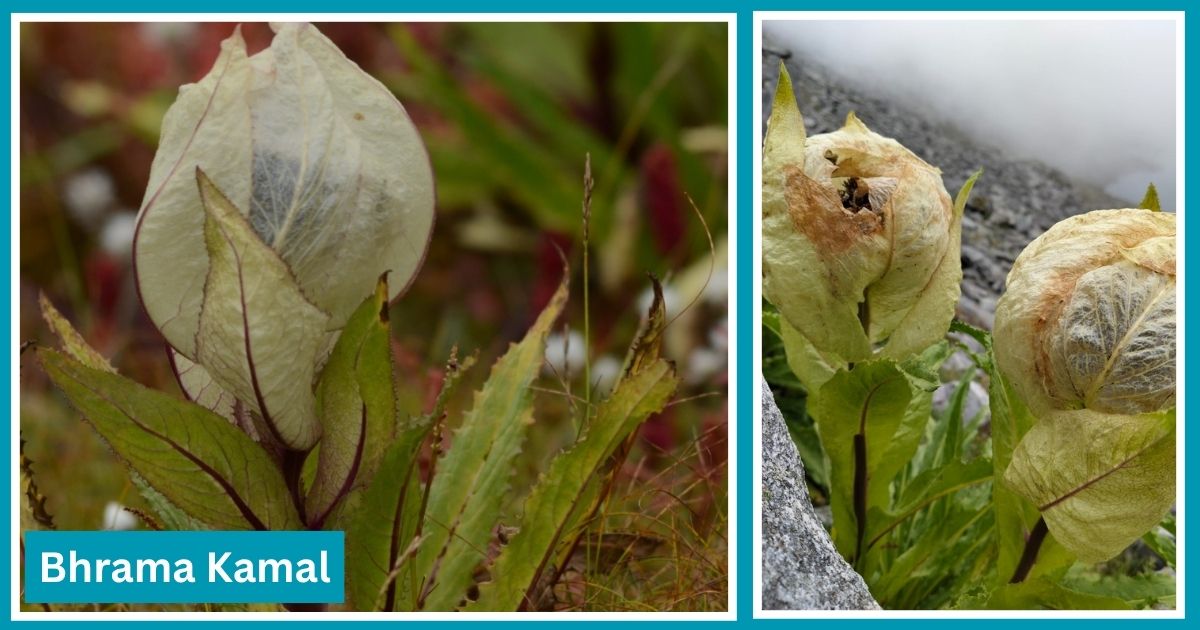
Brahma Kamal (Saussurea obvallata) 

high altitude flowers
Brahma Kamal

Brahma Kamal is one of the most well-known high-altitude flowers in the Himalayas and holds cultural and religious importance, especially in Uttarakhand. It grows in alpine regions of the western Himalayas and blooms during the monsoon months.

It is usually found at altitudes between 3,000 meters to 4,800 meters. The flower blooms during July to September and is adapted to cold, dry conditions of high mountains.

Body Feature: It has a pale yellow to creamy-white flower enclosed in layered, translucent bracts that protect it from harsh weather. The structure looks like a closed lotus, which makes it stand out on rocky terrain.

Where to Find Them: You can spot it in Uttarakhand and nearby Himalayan regions, especially around Kedarnath, Hemkund Sahib, Gaumukha Tapovan, near Hampta Pass, Borasu Pass and on treks like Valley of Flowers National Park, often on rocky slopes and high-altitude meadows.

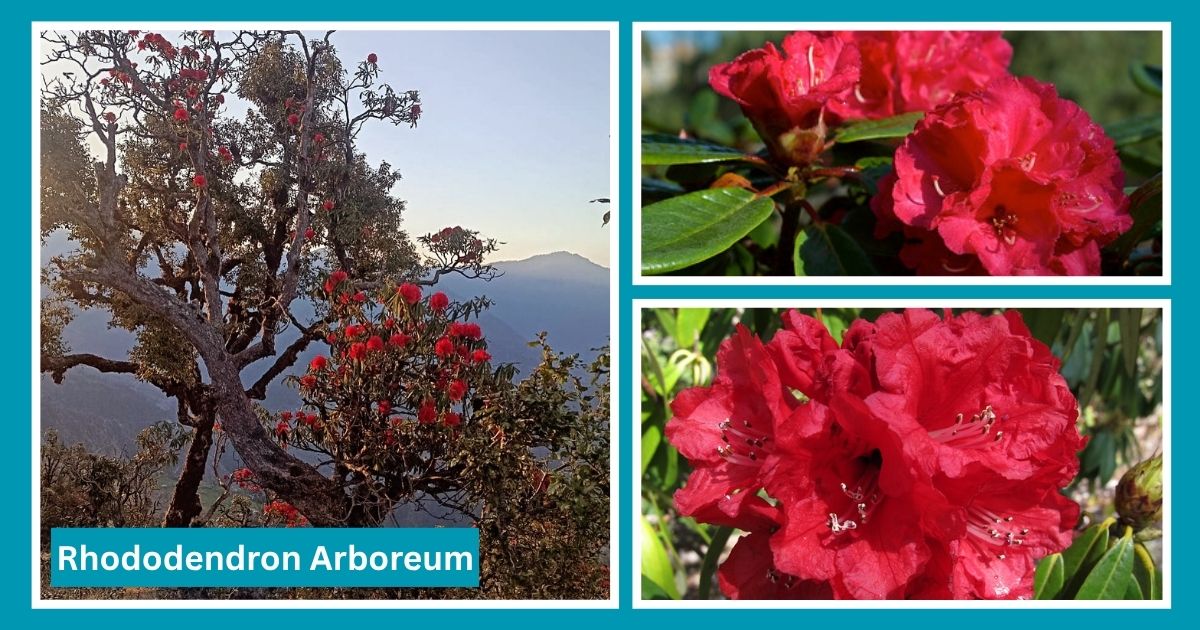
Rhododendron Arboreum

Flowers in Spring

Rhododendron arboreum

Rhododendron arboreum is one of the most common and well-known rhododendron species in the Himalayas. It grows as a medium-sized tree and is famous for covering hillsides with bright red blooms during spring.

It is usually found at altitudes between 1,500 meters to 3,000 meters. The flowering season is from March to May.

Body Feature: It has large clusters of bright red flowers, with thick, leathery leaves. The tree stands tall and is easily noticeable in forest regions.

Where to Find Them: Found across Uttarakhand, Himachal, and Nepal, especially on treks like Chopta Chandrashila, Kedarkantha, Dodital, Ranthan Kharak, and Dayara Bugyal in forest sections.

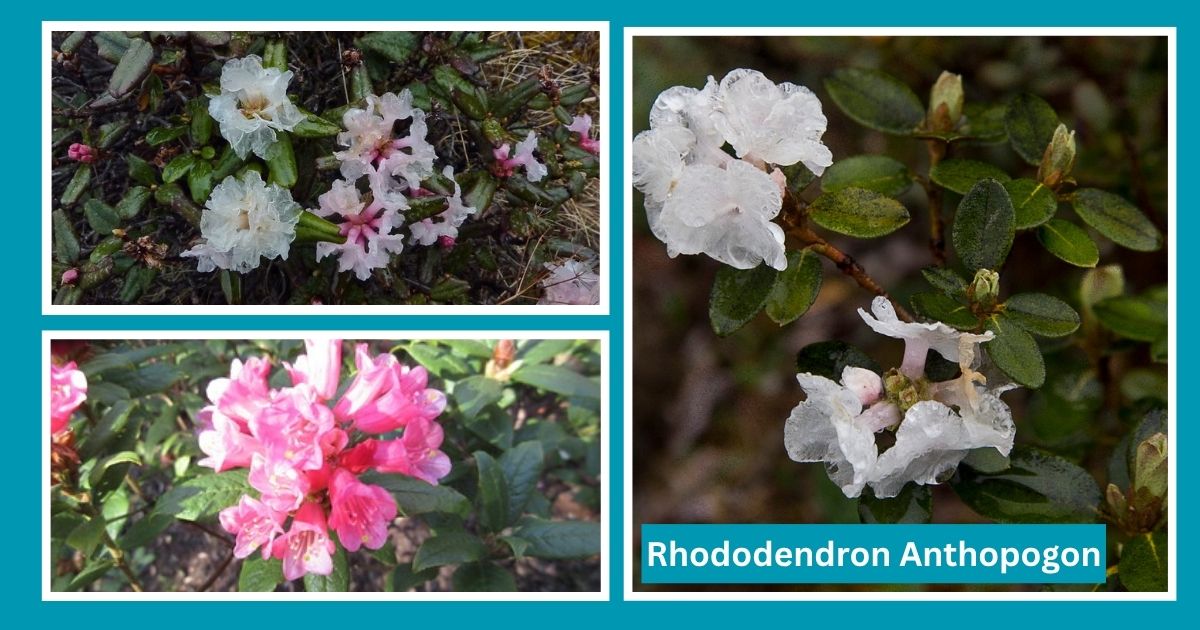
Rhododendron Anthopogon

himalayan flowers
Rhododendron anthopogon

Rhododendron anthopogon is a low-growing shrub found in high-altitude Himalayan regions. It is known for its aromatic leaves and small flowers.

It is usually found at altitudes between 3,000 meters to 4,500 meters. The flowering season is from May to June.

Body Feature: It has small yellow to pale pink flowers and dense, aromatic foliage. The plant grows close to the ground, forming compact patches.

Where to Find Them: Found in higher regions of Uttarakhand, Himachal, and Sikkim, especially above the tree line on alpine slopes and rocky terrain.

Rhododendron Campanulatum

Purple flowers
Rhododendron campanulatum

Rhododendron campanulatum is a high-altitude rhododendron species found in subalpine and alpine regions of the Himalayas. It grows as a shrub or small tree.

It is usually found at altitudes between 3,000 meters to 4,000 meters. The flowering season is from May to June.

Body Feature: It has bell-shaped flowers in shades of purple, pink, or white, often with spotted patterns inside. The leaves are thick and grow in clusters.

Where to Find Them: Found in Uttarakhand, Himachal, and Sikkim, especially near the tree line and in subalpine forests on treks like Kuari Pass and Har Ki Dun.

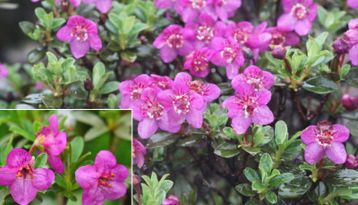
Rhododendron lepidotum

Rhododendron lepidotum

Rhododendron lepidotum is a smaller species of rhododendron found in higher altitudes of the Himalayas. It grows as a low shrub in alpine regions.

It is usually found at altitudes between 3,000 meters to 5,000 meters. The flowering season is from April to June.

Body Feature: It has small pink to purple flowers with a slight fragrance and grows as a compact shrub close to the ground.

Where to Find Them: Found in high-altitude regions of Uttarakhand, Himachal, and Sikkim, especially above the tree line on alpine slopes.

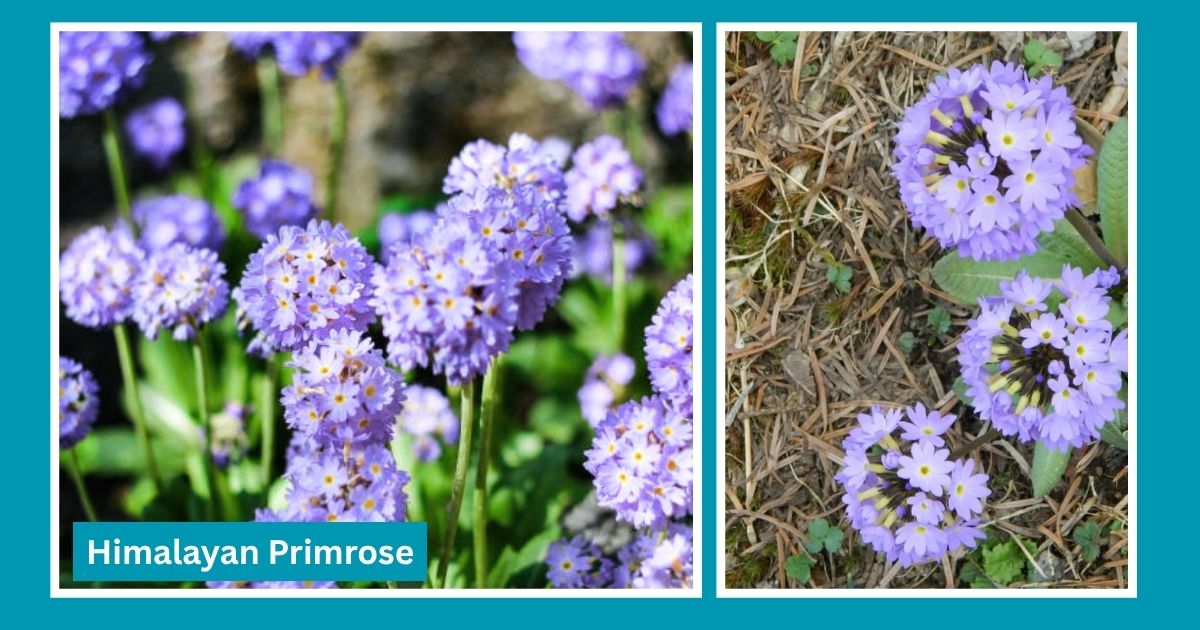
Himalayan Primrose (Primula)

Himalayan wildflowers
Himalayan Primrose

Local Name: Jalkutre

Primula denticulata, commonly known as the drumstick primrose, is a bright alpine flower found in the Himalayan meadows during early bloom season. It grows in clusters and is one of the first flowers to appear as snow starts melting.

It is usually found at altitudes between 3,000 meters to 4,500 meters. The flowering season is mainly from May to July, depending on snow conditions.

Body Feature: The flower forms a round, ball-like cluster made up of many small purple, pink, or white blooms on top of a single upright stem. Its unique spherical shape makes it easy to spot in open meadows.

Where to Find Them: You can spot it in alpine regions of Uttarakhand, Himachal, and Kashmir, especially in bugyals and near moist meadow sections on treks like Valley of Flowers, Kedarkantha (early season), Har Ki Dun, Dayara Bugyal, Ali Bedni Bugyal,  and Kashmir Great Lakes.

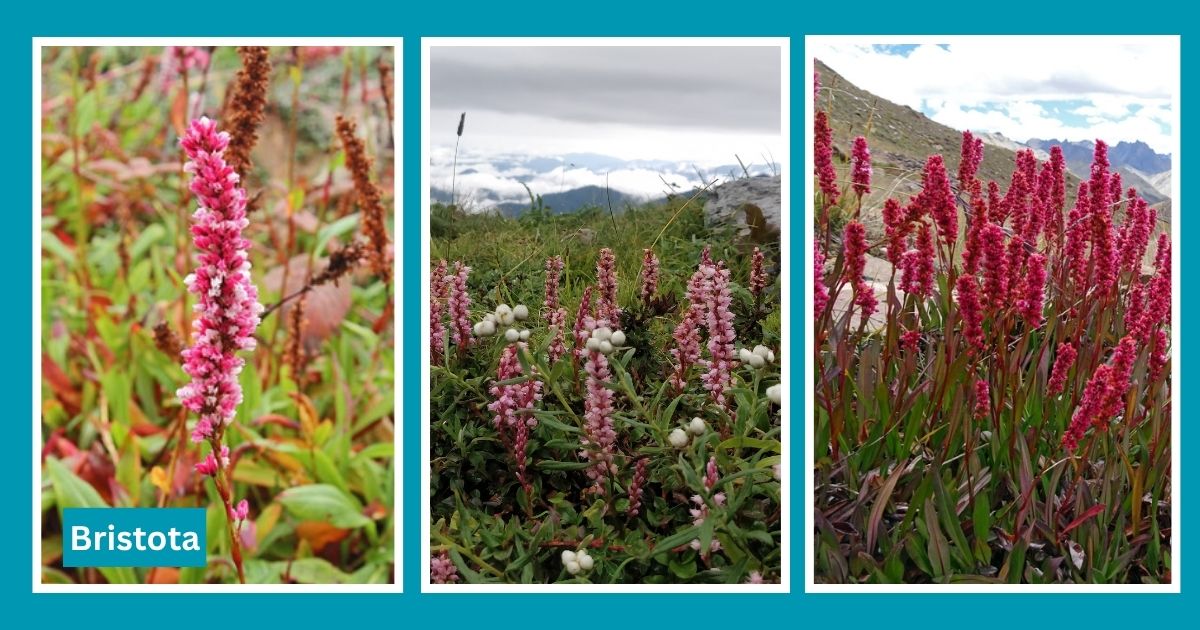
Bristota (Bistorta affinis / Persicaria bistorta)

flower that grow in Himalayas
Bristota

Local Name: Inuri

Bistorta is a common wildflower found in the alpine meadows of the Himalayas. It grows in open grasslands and often forms large patches during the blooming season.

It is usually found at altitudes between 3,000 meters to 4,500 meters. The flowering season is from June to September, especially after snowmelt.

Body Feature: It has dense, cylindrical spikes of small pink flowers on upright stems. From a distance, these look like soft pink brushes spread across the meadow.

Where to Find Them: You can spot bistorta in bugyals of Uttarakhand, Himachal, and Kashmir, on treks like Valley of Flowers, Dayara Bugyal, Gaumukh Tapovan, Hampta Pass and Kashmir Great Lakes, mostly in open meadow sections.

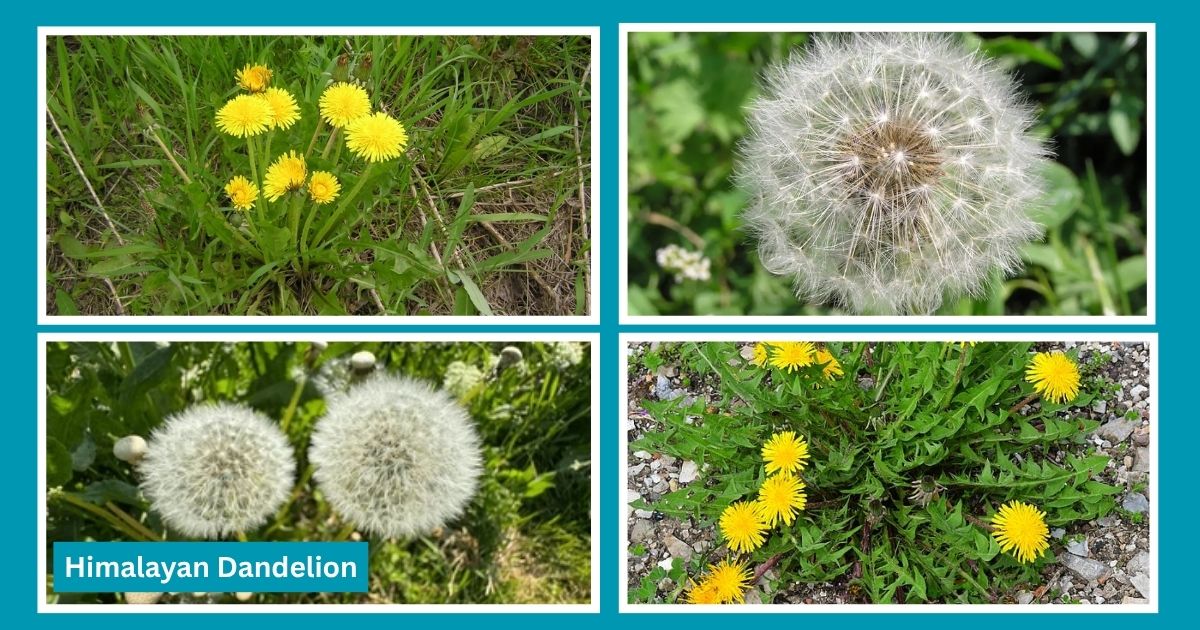
Himalayan Dandelion (Taraxacum officinale)

Himalayan dandelion
Himalayan Dandelion

Local Name: Dugdhee

Himalayan Dandelion is a high-altitude wildflower commonly found in open meadows and grassy slopes of the Himalayas. It is similar to the common dandelion but adapted to colder, alpine conditions.

It is usually found at altitudes between 2,500 meters to 4,500 meters. The flowering season is from late spring to early autumn, depending on the altitude.

Body Feature: It has bright yellow flower heads that later turn into soft, white puffballs of seeds. The plant stays low to the ground, with jagged green leaves forming a rosette.

Where to Find Them: You can spot it in alpine meadows and along trekking trails in Uttarakhand, Himachal, and Kashmir, especially on treks like Valley of Flowers, Dayara Bugyal, Pin Bhaba, Kashmir Great Lakes, Pir Panjal, Surya Top and many more treks.

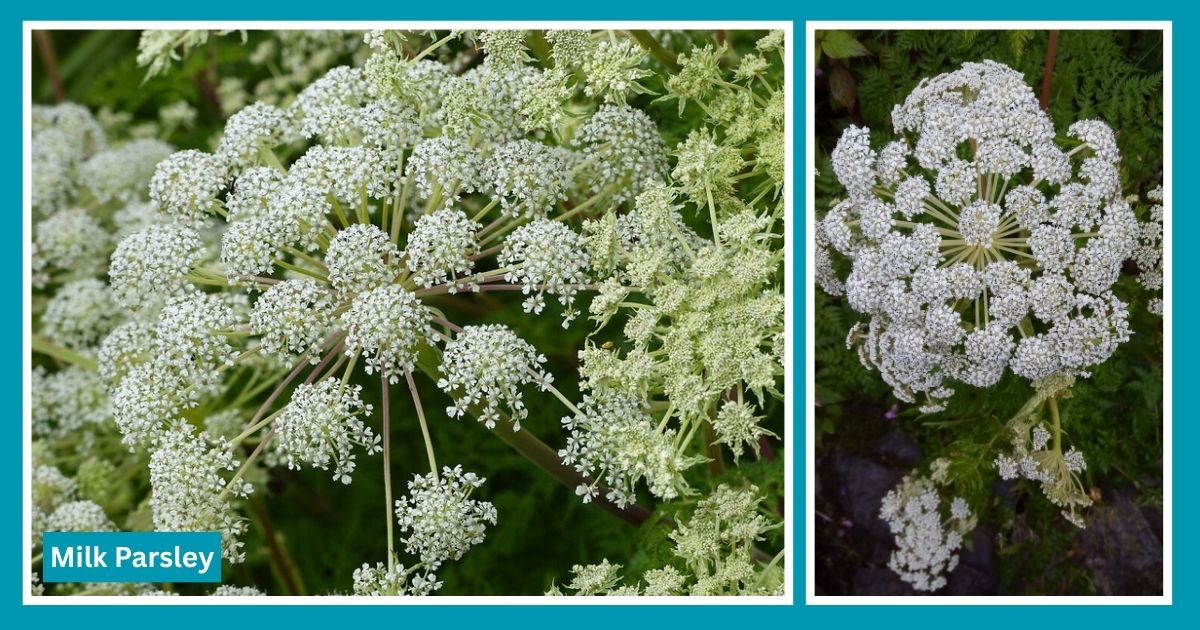
Milk Parsley (Selinum)

Flowers on Har Ki Dun
Selinum

Local name: Bhutkesi

Bhootkeshi is a Himalayan wild plant commonly found in alpine and subalpine regions. It is known more for its strong aroma and traditional uses.

It is usually found at altitudes between 2,500 meters to 4,000 meters. The flowering season is from June to September.

Body Feature: It has clusters of small white flowers arranged in umbrella-like shapes, with finely divided leaves and a strong herbal scent.

Where to Find Them: You can spot it in Uttarakhand, Himachal, and Kashmir, especially in alpine meadows, near streams, and on open grassy slopes along treks like Valley of Flowers, Har Ki Dun, Gaumukh Tapovan and Kashmir Great Lakes.

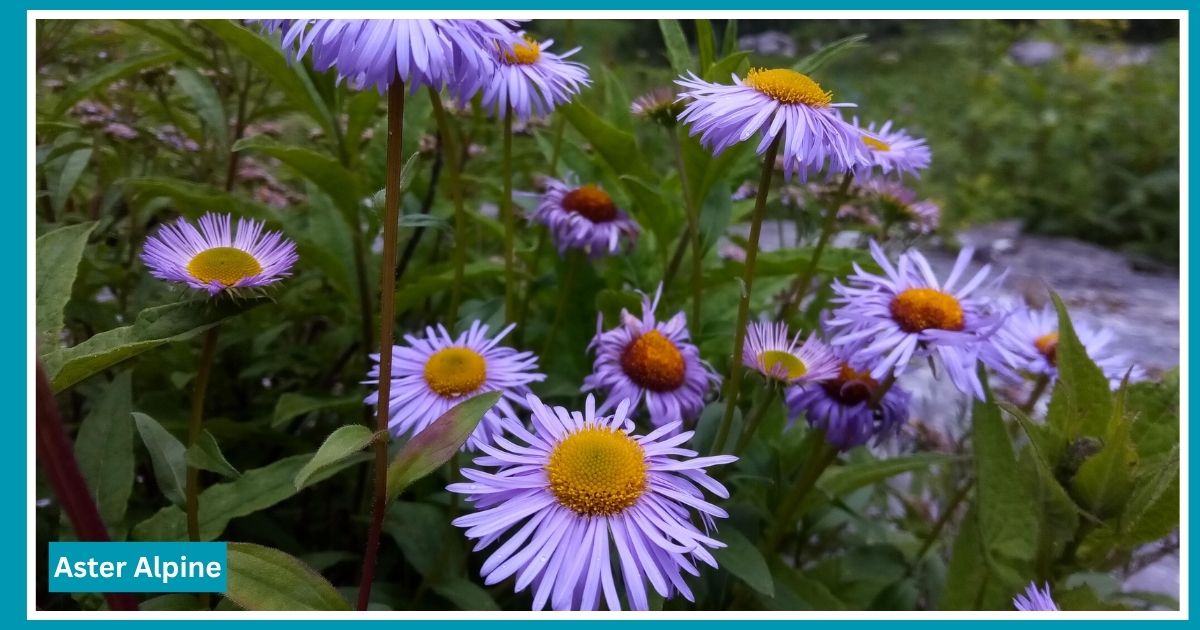
Alpine Daisy (Aster Alpine)

purple flowers
Aster Alpine

Alpine Daisy is a common wildflower found in the high-altitude meadows of the Himalayas. It grows in open grassy areas and adds bright color to alpine landscapes during the blooming season.

It is usually found at altitudes between 3,000 meters to 4,500 meters. The flowering season is from June to September, especially during peak summer.

Body Feature: It has classic daisy-like flowers with purple, blue, or sometimes white petals surrounding a bright yellow center. The plant stays low to the ground and often grows in small clusters.

Where to Find Them: You can spot it in alpine meadows of Uttarakhand, Himachal, and Kashmir, especially on treks like Valley of Flowers, Dayara Bugyal, Pin Bhaba and Kashmir Great Lakes, mostly in open meadow sections.

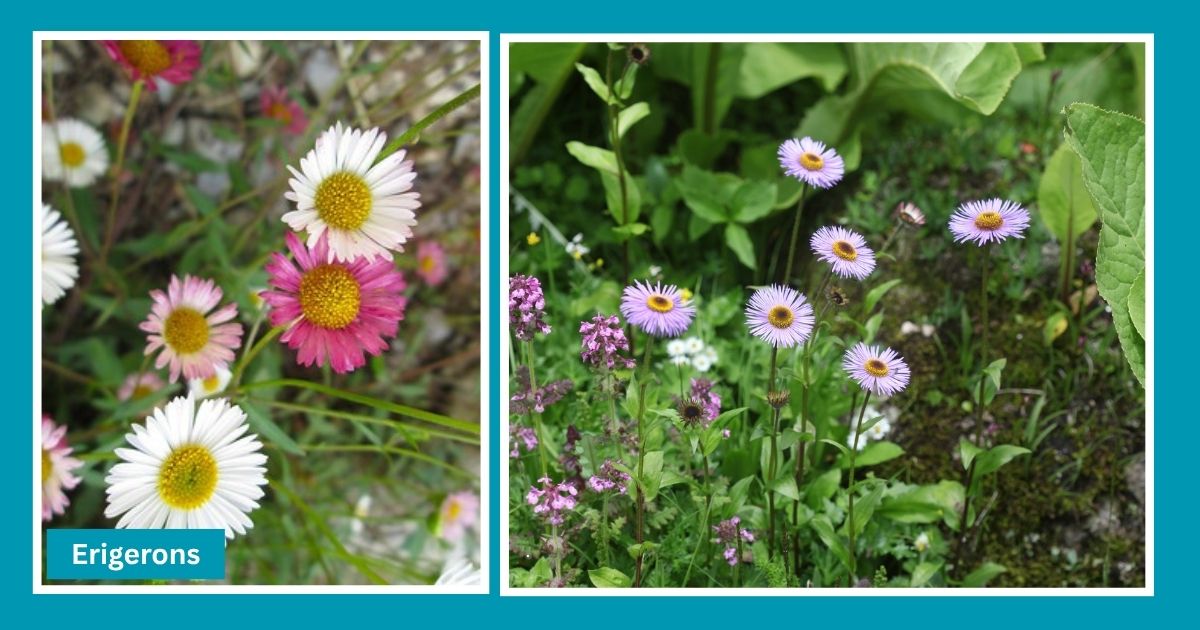
Daisy Fleabane(Erigeron)

flowers on dayara bugyal trek
Erigeron

Local Name: Rayhanda

Daisy Fleabane is a delicate wildflower found in open grassy areas and along trekking trails in the Himalayas. It often grows in clusters and blends easily with other meadow flowers.

It is usually found at altitudes between 2,000 meters to 4,000 meters. The flowering season is from June to September, especially during the peak monsoon bloom.

Body Feature: It has thin, white to pale pink petals surrounding a yellow center, giving it a soft, daisy-like appearance. The petals are finer and more numerous compared to typical daisies.

Where to Find Them: You can spot it across Uttarakhand, Himachal, and Kashmir, commonly along trailsides, open slopes, and alpine meadows on treks like Valley of Flowers, Har Ki Dun, and Dayara Bugyal.

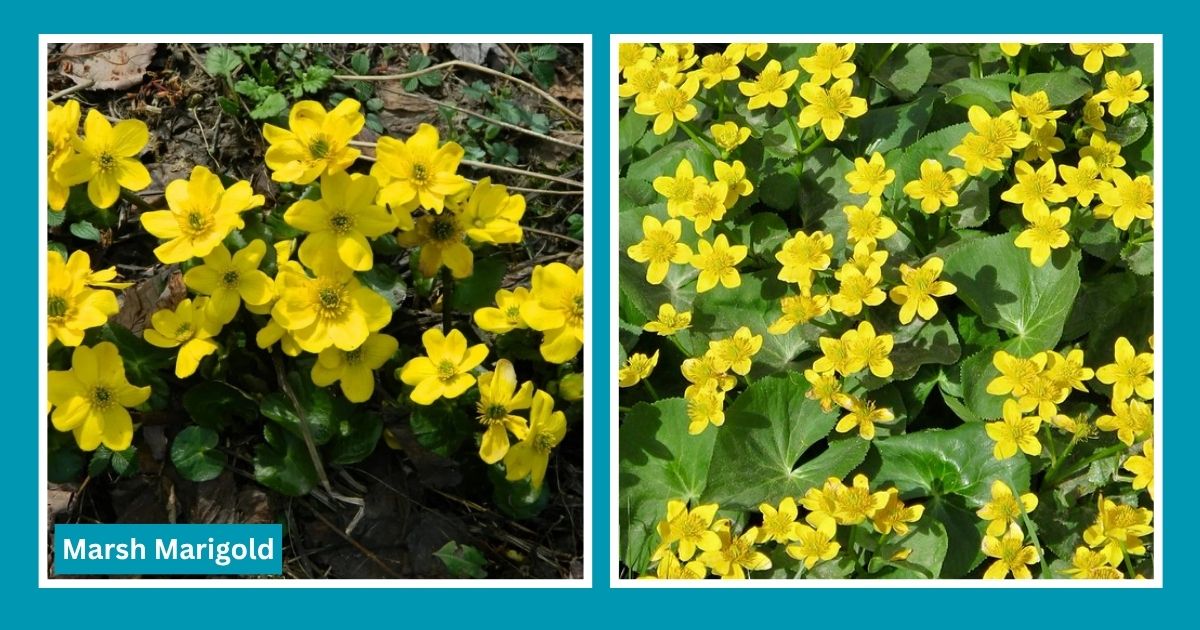
Marsh Marigold(Caltha Palustris) 

flowers on har ki dun trek
Marsh Marigold

Marsh Marigold is a bright yellow wildflower commonly found in wet and marshy areas of the Himalayas. It usually grows near streams, small water channels, and damp meadow sections.

It is typically found at altitudes between 2,000 meters to 4,000 meters. The flowering season is from May to July, especially soon after snowmelt when water availability is high.

Body Feature: It has shiny, golden-yellow cup-shaped flowers with broad, rounded green leaves. The plant stays low and often forms clusters in wet ground.

Where to Find Them: You can spot it in Uttarakhand, Himachal, and Kashmir, especially near water streams and marshy patches on treks like Valley of Flowers, Har Ki Dun, and Kashmir Great Lakes.

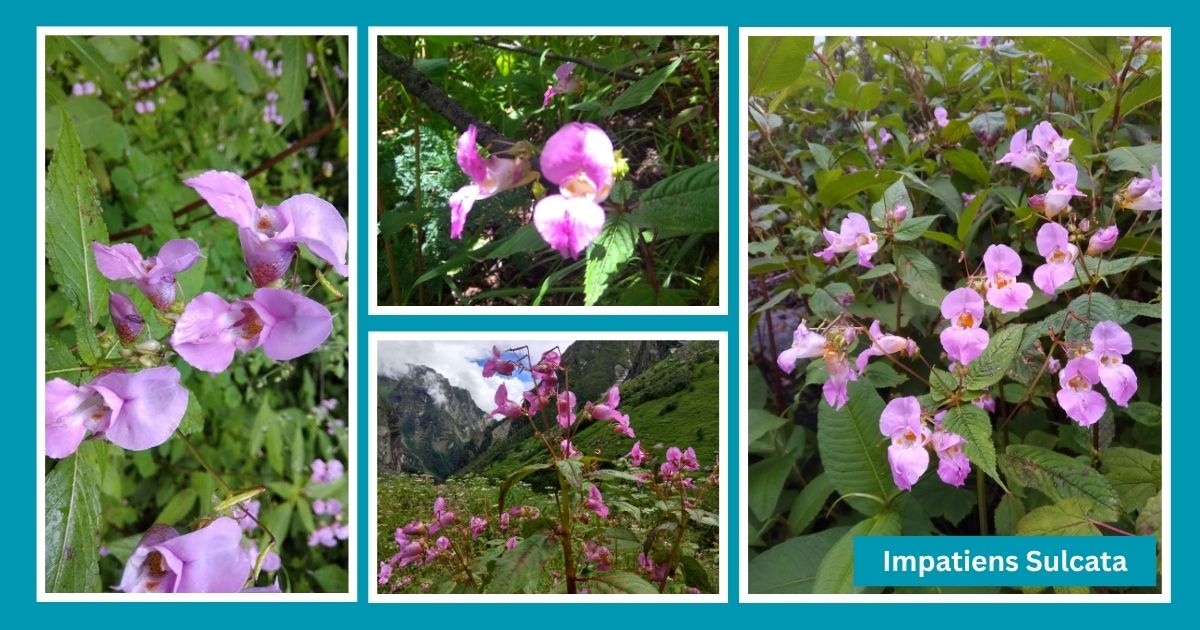
Impatiens sulcata

wildflowers on Hampta Pass trek
Impatiens Sulcata


Local Name:  Chaul, Kwal

Impatiens sulcata is a tall wildflower commonly found in the Himalayan region, especially in moist and shaded areas. It grows quickly during the monsoon and often appears in large patches along the trail.

It is usually found at altitudes between 1,500 meters to 3,500 meters. The flowering season is from July to September, during peak monsoon.

Body Feature: It has tall, fleshy stems with bright pink to purplish flowers that have a hooded, hanging shape. The plant can grow quite high, sometimes above waist level, making it easy to notice.

Where to Find Them: You can spot it in Uttarakhand, Himachal, and Kashmir, mostly near water streams, forest edges, and damp trail sections on treks like Valley of Flowers, Har Ki Dun, Rupin Pass, Hampta Pass & many more.

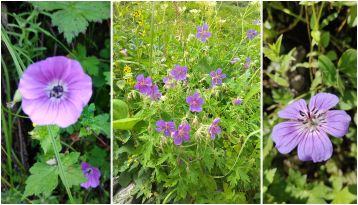
Himalayan Cranesbill (Geranium Wallichianum)

flowers on pin bhaba trek
Himalayan Cranesbill

Local Name: Ratanjot

Himalayan Cranesbill is a common meadow flower found across the Himalayas, especially in open grassy slopes and alpine regions. It blooms during the summer and adds soft color to the landscape.

It is usually found at altitudes between 2,500 meters to 4,000 meters. The flowering season is from June to September.

Body Feature: It has large blue to violet flowers with delicate veins and a slightly open, rounded shape. The leaves are deeply cut and spread low to the ground.

Where to Find Them: You can spot it in Uttarakhand, Himachal, and Kashmir, commonly in meadows on treks likes Valley of Flowers and Kashmir Great Lakes.

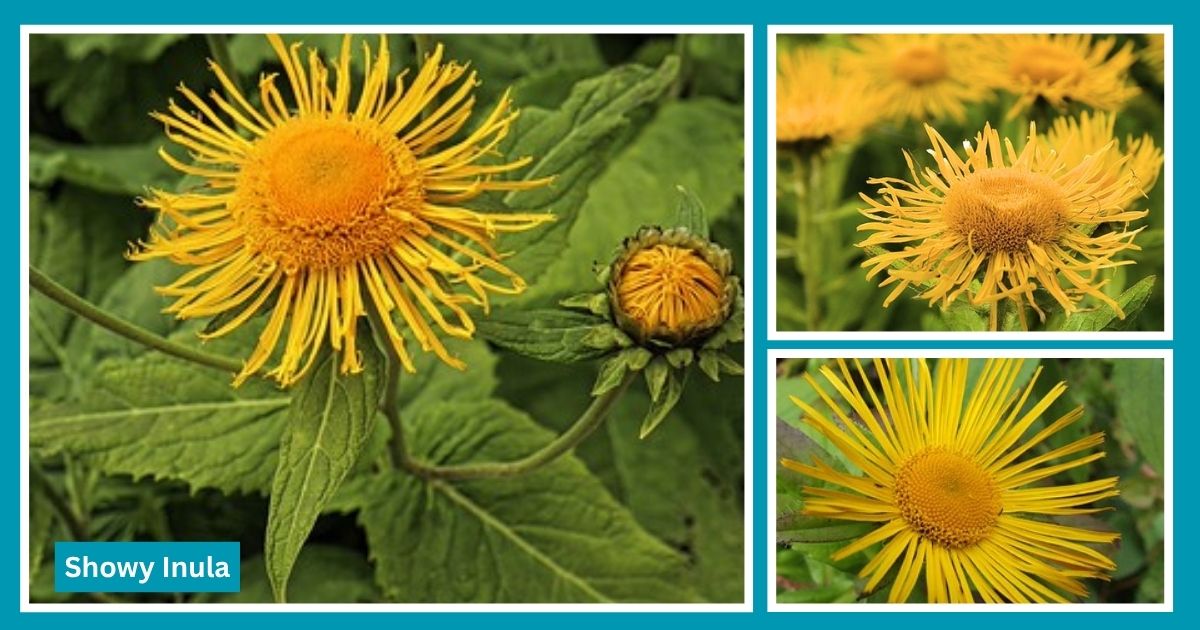
Showy Inula (Wild Sunflower)

wild sunflower
Showy Inula

Showy Inula is a bright alpine flower that resembles a wild sunflower. It grows in open meadows and adds a vibrant yellow color to the landscape.

It is usually found at altitudes between 2,500 meters to 4,000 meters. The flowering season is from June to September.

Body Feature: It has large yellow flower heads with long petals radiating from the center, similar to a sunflower but more delicate.

Where to Find Them: Found across Uttarakhand and Himachal, especially in alpine meadows and open grassy areas.

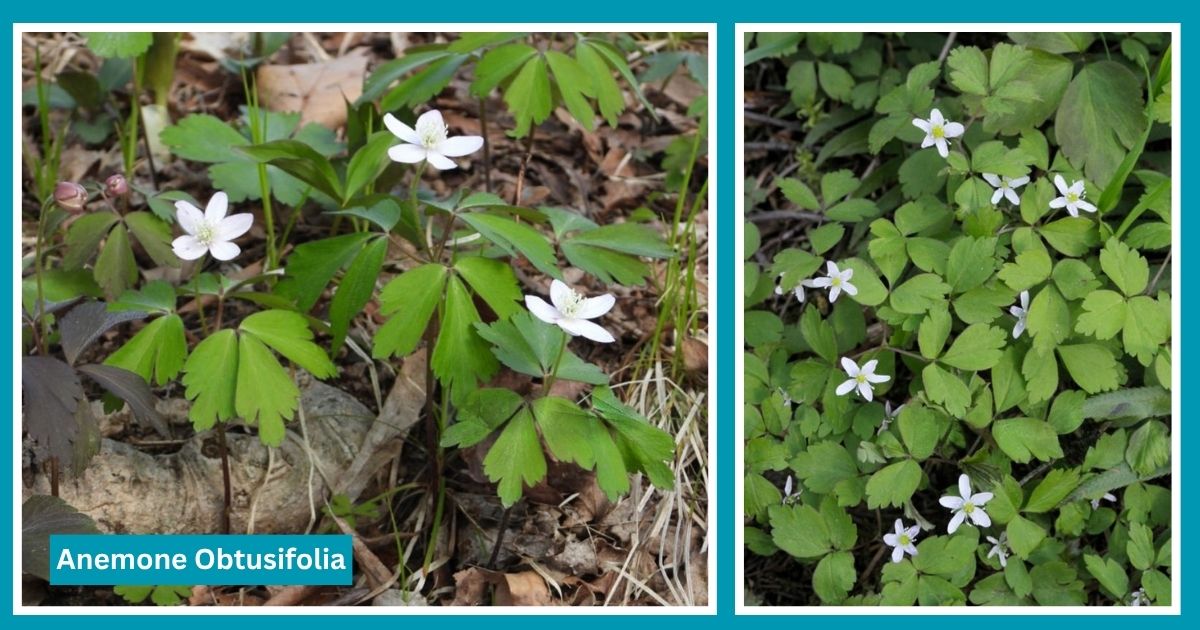
Riverside Windflower (Anemone obtusifolia)

wildflower on the himalaya
Anemone Obtusifolia

Riverside Windflower is a delicate wildflower found near water sources in the Himalayas. It blooms in moist and shaded environments.

It is usually found at altitudes between 2,500 meters to 4,000 meters. The flowering season is from May to July.

Body Feature: It has white petals with a contrasting dark center and slender stems. The flowers sway easily in the wind.

Where to Find Them: Common near streams and damp meadows in Uttarakhand and Himachal on various treks.

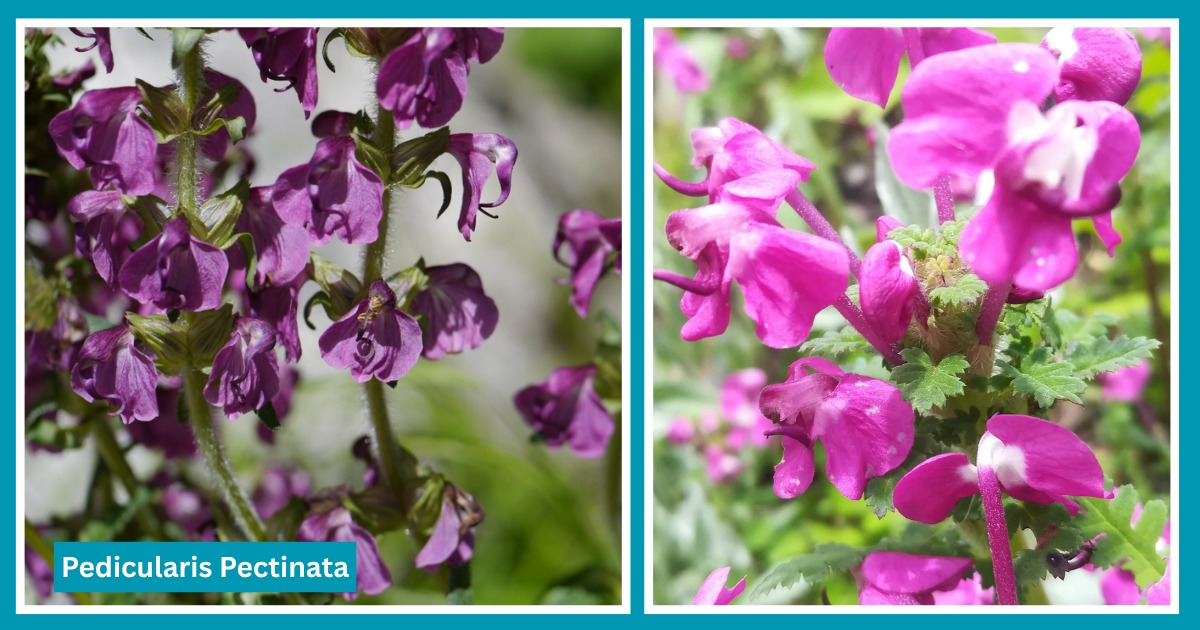
Pedicularis pectinata 

flowers on Valley flowers trek
Pedicularis Pectinata

Pedicularis pectinata is a distinctive alpine flower found in Himalayan meadows. It is part of a large group of lousewort species common in high-altitude regions.

It is usually found at altitudes between 3,000 meter to 4,500 meters. The flowering season is from June to August.

Body Feature: It has pink to reddish flowers with a curved, beak-like shape and finely divided leaves.

Where to Find Them: Found in alpine meadows of Uttarakhand, Himachal, and Kashmir, especially in flower-rich regions like Valley of Flowers.

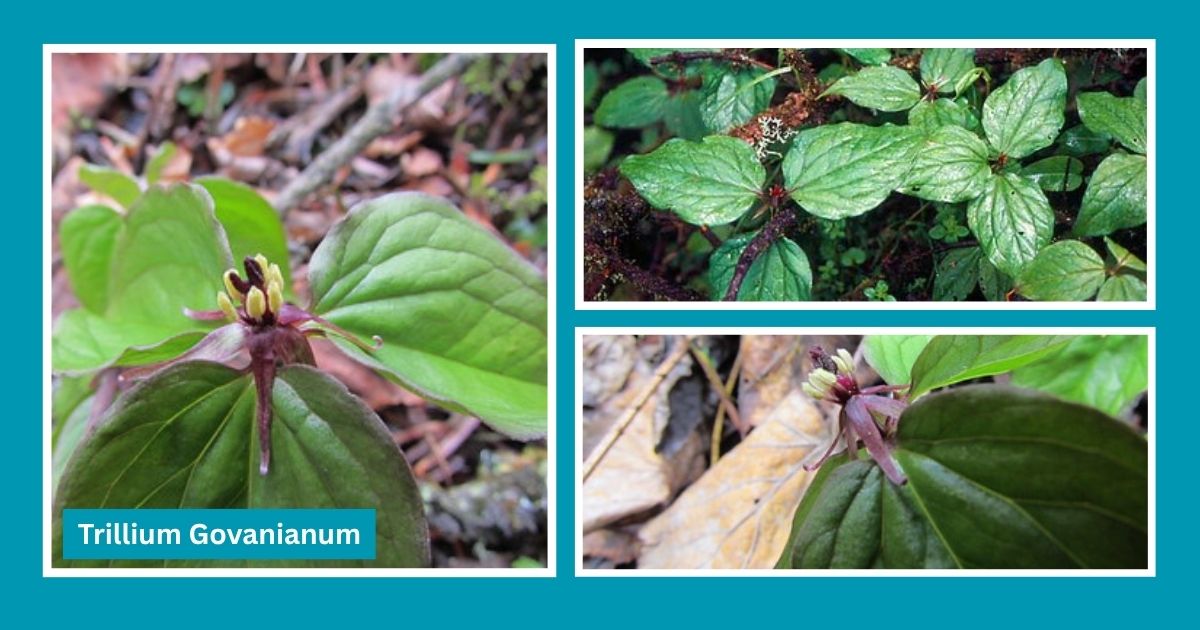
Trillium govanianum

flower on treks
Nag Chattri

Local Name: Nag Chattri

Trillium govanianum is a rare and valuable Himalayan plant found in forested regions. It is known for its medicinal importance.

It is usually found at altitudes between 2,500 meters to 3,500 meters. The flowering season is from April to June.

Body Feature: It has three broad leaves arranged in a whorl with a single flower in the center, usually greenish to reddish in color.

Where to Find Them: Found in forested areas of Uttarakhand and Himachal, though sightings are less common on regular trekking routes.

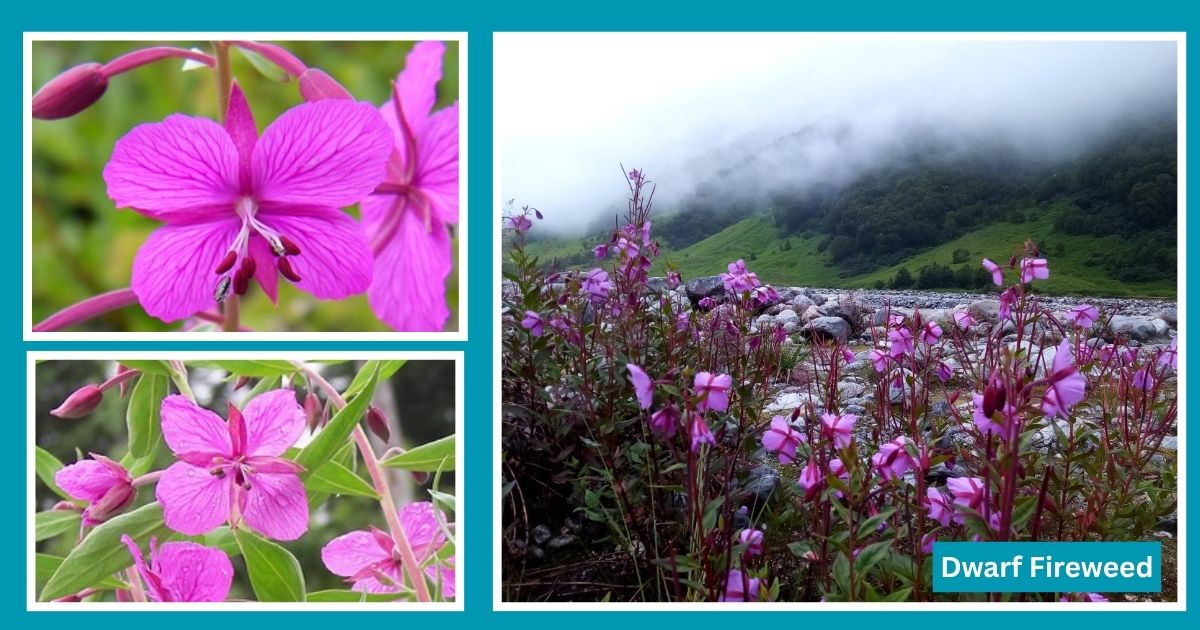
Dwarf Fireweed

Dwarf Fireweed
Dwarf Fireweed

Dwarf Fireweed is a hardy alpine flower found in high-altitude regions of the Himalayas. It often grows in rocky terrain and areas where vegetation is sparse.

It is usually found at altitudes between 3,000 meters to 5,000 meters. The flowering season is from June to August.

Body Feature: It has bright pink to purple flowers with four broad petals and grows low to the ground. The plant is small but stands out against rocky landscapes.

Where to Find Them: You can spot it in higher Himalayan regions of Uttarakhand, Himachal, and Ladakh, especially on rocky slopes and exposed trails.

Fritillaria roylei (Van Lahusan)

High altitud flowers
Fritillaria Roylei

Local name: Kakoli

Fritillaria roylei is a rare Himalayan flower found in alpine and subalpine regions. It grows in open slopes and meadow areas.

It is usually found at altitudes between 2,500 meters to 4,000 meters. The flowering season is from May to July.

Body Feature: It has bell-shaped flowers that are usually greenish to purple with a checkered or patterned appearance. The plant is slender and delicate.

Where to Find Them: Found in Uttarakhand and Himachal, though sightings are rare and mostly in less disturbed areas.

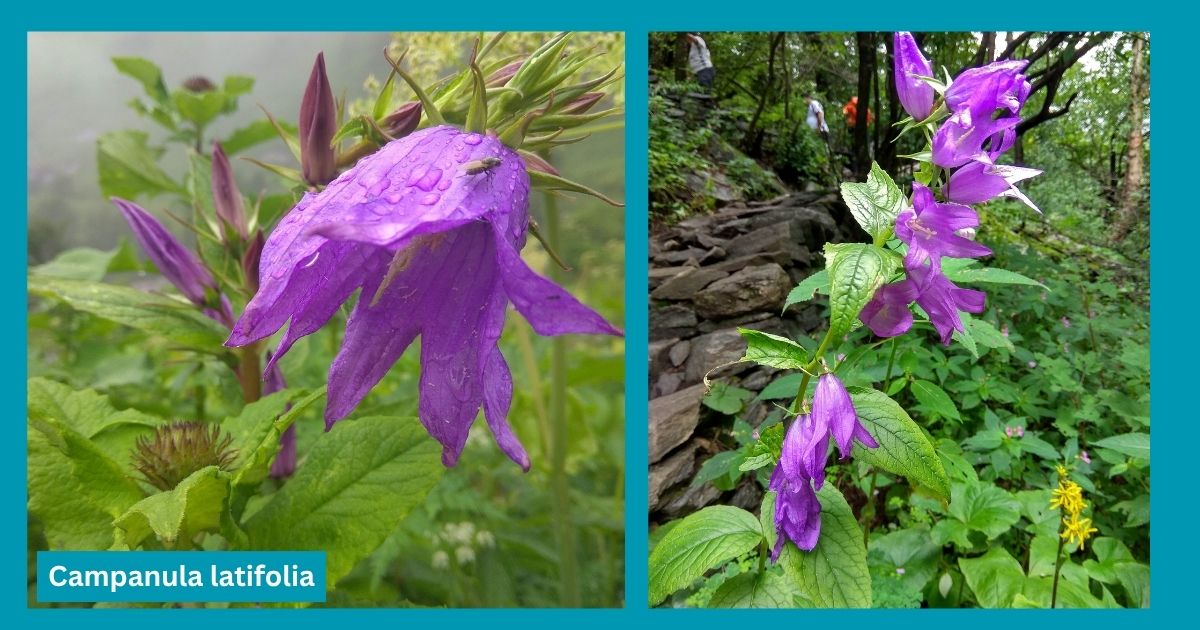
Campanula latifolia

Flowers on Pin Bhaba Pass trek
Campanula Latifolia

Local name: Kakoli

Campanula latifolia, commonly known as Giant Bellflower, is a tall wildflower found in Himalayan regions, especially in moist and shaded areas.

It is usually found at altitudes between 2,000 meters to 3,500 meters. The flowering season is from June to August.

Body Feature: It has large, bell-shaped blue to violet flowers growing along tall stems. The plant can grow quite high compared to other wildflowers.

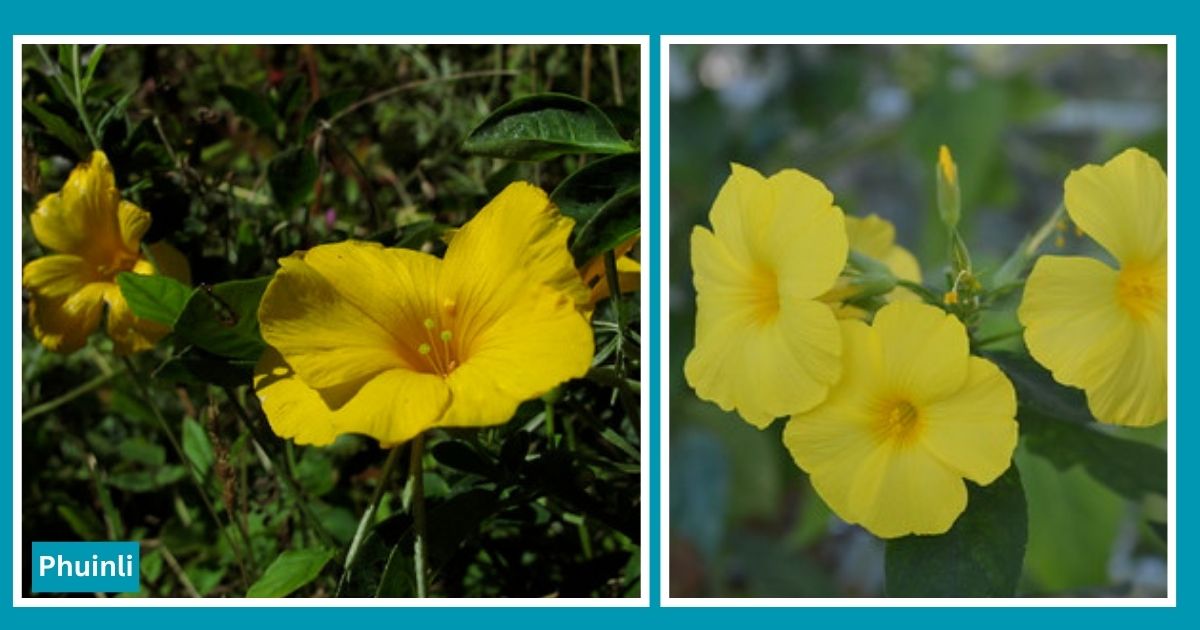
Where to Find Them: Found in forest edges and meadows in Uttarakhand and Himachal, especially in damp conditions.Reinwardtia (phiunli)

yellow flowers
Phiunli

Local name: Phiunli

Reinwardtia indica is a bright flowering shrub found in the lower to mid-altitude regions of the Himalayas. It usually grows along forest edges, open slopes, and sunny trail sections.

It is typically found at altitudes between 1,000 meters to 3,000 meters. The flowering season is from October to April, though it can vary slightly by region.

Body Feature: It has striking yellow, delicate flowers with a slightly crinkled texture and thin petals. The plant grows as a small shrub with slender branches and light green leaves.

Where to Find Them: You can spot it in Uttarakhand, Himachal, and parts of the central Himalayas, especially along forest trails, roadside slopes, and open hillside areas during its blooming season.

Final thoughts:-

This guide above help you to identify flowers when you go on trek. These all flowers you commonly found on many treks.  

The Himalayas have more than just big peaks or long trails. Many people miss the small details. Wildflowers are a big part of those details. The trail feels different once you start noticing them. This happens whether you walk through forests or cross streams. It happens when you move across open meadows.

Himalayan wildflowers depend on the season. The season is the specific time of year like spring or summer. They also depend on altitude. Altitude is the height of the land above sea level. The same trek looks different in May or July. It looks different in September. Some flowers bloom for a short time. Others need specific conditions to grow. A few are very rare. Spotting them feels like luck.

Take extra time to look around if you trek in Uttarakhand or Himachal Pradesh or Kashmir or ladakh. You do not need to know every name. Notice the colors or shapes. Look at where they grow. This is enough to change your experience on the trail. These flowers do not demand attention. They quietly make the Himalayas feel more alive.


About Author

author_image

Himalaya Shelter

Tanisha is a Trek Leader at Himalaya Shelter. She loves the mountains and telling stories about them. She enjoys sharing experiences from her trips. Her goal is to become a full-time mountain leader.

Recommended Treks

Recent trek Ranthang Kharak Trek
Ranthang Kharak Trek

Cost: โ‚น28000 | $320

Type: Easy - Moderate

Best Time: March, April, May

Recent trek Pin Bhaba Pass Trek
Pin Bhaba Pass Trek

Cost: โ‚น27000 | $321

Type: Difficult

Best Time: July to August

Recent trek Gaumukh Tapovan Trek
Gaumukh Tapovan Trek

Cost: โ‚น45000 | $513

Type: Difficult

Best Time: May to June and September to October

Recent trek Borasu Pass Trek
Borasu Pass Trek

Cost: โ‚น36000 | $398.31

Type: Difficult

Best Time: May-June | September-October

Recent trek Dayara Bugyal Trek
Dayara Bugyal Trek

Cost: โ‚น11,299 | $125.46

Type: Easy

Best Time: January, February, March, April, May, June, September, October, November, December

Recent trek Valley Of Flowers Trek
Valley Of Flowers Trek

Cost: โ‚น25500 | $294

Type: Moderate

Best Time: July | August | October

Recent trek Har Ki Dun Ruinsara
Har Ki Dun Ruinsara

Cost: โ‚น17500 | $200

Type: Easy - Moderate

Best Time: March to September

Recent trek Har Ki Dun Trek
Har Ki Dun Trek

Cost: โ‚น12500 | $142

Type: Moderate

Best Time: March, April, May. June, September, october, November

Recent trek Kashmir Great Lakes Trek 2026
Kashmir Great Lakes Trek 2026

Cost: โ‚น20500 | $228

Type: Easy - Moderate

Best Time: July to September