Your first Himalayan trek is always special. You have mixed emotions, excited but a little anxious. You imagine big snow-capped mountains and vast valleys. But one question that every trek beginner struggles:
Should you buy trekking gear or rent it?
Trekking seems an inexpensive activity. Well, that is not fully wrong as the stays and meals are quite reasonable. But trekking gear is pricey. If you have checked the price, you already know that good-quality trekking gear is costly. Even a snow-jacket can cost more than your trekking package. The cost of a complete trekking setup can be overwhelming. Good thing is-rental options are available for trekking gear.
Trekking gear is not any kind of trend. Without proper gear, your trek can be difficult to manage. Your gear directly affects your trek experience. Right gear means:
Managing weather changes easily
Comfortable walking for hours
Avoid injury and blisters
Carry enough load
Imagine walking for straight 6-7 hours in uncomfortable shoes. This can ruin your whole trek. Instead of enjoying the Himalayan views, you will feel strained.
Buying Trekking Gear:
Perfect size
Preferred color
No headache regarding availability
One investment and you can use it for many trek
Renting Trekking Gear:
Save money initially
No long-term commitment
Try and tested but purchasing
You should buy trekking gear when you are serious about trekking. You should start with essential gear.
Trekking shoes (Must Buy)
Your trekking shoes are the most essential gear on a trek. Trekking means hours and hours of walking on mountain trails. You can’t trek comfortably if you are not wearing the correct trekking shoes. Good shoes means a comfortable trekking experience.
Look for:
Good ankle support
Good grip
Water resistance
Backpack (Good to Buy)
A backpack is also a good purchase. The right backpack is necessary depending on your height. If you wear a bigger bag, your shoulder may hurt. Also, it can be very uncomfortable. If you are thinking about buying gear for your trek, your backpack should be on your list after your trekking shoes.
Look for:
30-40L for smaller treks (1-2 days)
50-65L for longer treks (3-7 days)
Clothing (Must Buy)
Always purchase your trekking outfits. Purchasing trekking outfits is good for hygiene. If you can’t buy all outfits, at least buy:
Thermal innerwear
Fleece
Trekking pants
Quick-dry t-shirts
Woolen socks
If you have some more budget then only you should buy a jacket. Owning clothes means better hygiene.
If you are going on your first trek then you should not spend more on gear that can be rented easily. This can save a lot of money.
Jackets
Jackets are necessary for Himalayan treks. If you are trekking in winter, late-autumn, and early spring then you need a good quality jacket. Your jacket should keep you warm even in sub-zero temperatures. These jackets are usually very expensive. Renting is good because:
You may not need padded jackets often
Good quality trekking jackets are very pricey
Jackets are available on rental
If you are a trek beginner and don’t want to spend a lot then you should rent a jacket.
Trekking Poles
Trekking poles are very helpful in trekking. These poles give you good support while ascending and descending. If you are going on a week-long trek then you need a trekking pole. But you should not buy trekking poles on your first trek. Trekking poles are easily available on rent.
Headlamp
Headlamp is surely an essential gear for trekking. You can’t fully rely on your phone touch. There are no electricity and charging options on the trek. You need headlamp for:
Using toilet tent at night
Trekking at night
Low visibility due to heavy fog
You need a good headlamp for trekking. Do not buy cheap headlights as their battery may drain in a few hours. Instead, rent a good headlamp so you can trek without worrying.
Sleeping bag and tent
Good quality tents and sleeping bags are very pricey. You will see different types of trekking tents. But not all treks are the same. Trekking in the Himalayas means good treks that can protect you even in heavy snowfall. Good-quality tents are very expensive. If you are new to trekking then you should not purchase it. You can easily rent a sleeping bag and tent.
If you are trekking with a trek operator then you don’t need to rent. Most trekking companies provide tents and sleeping bags.
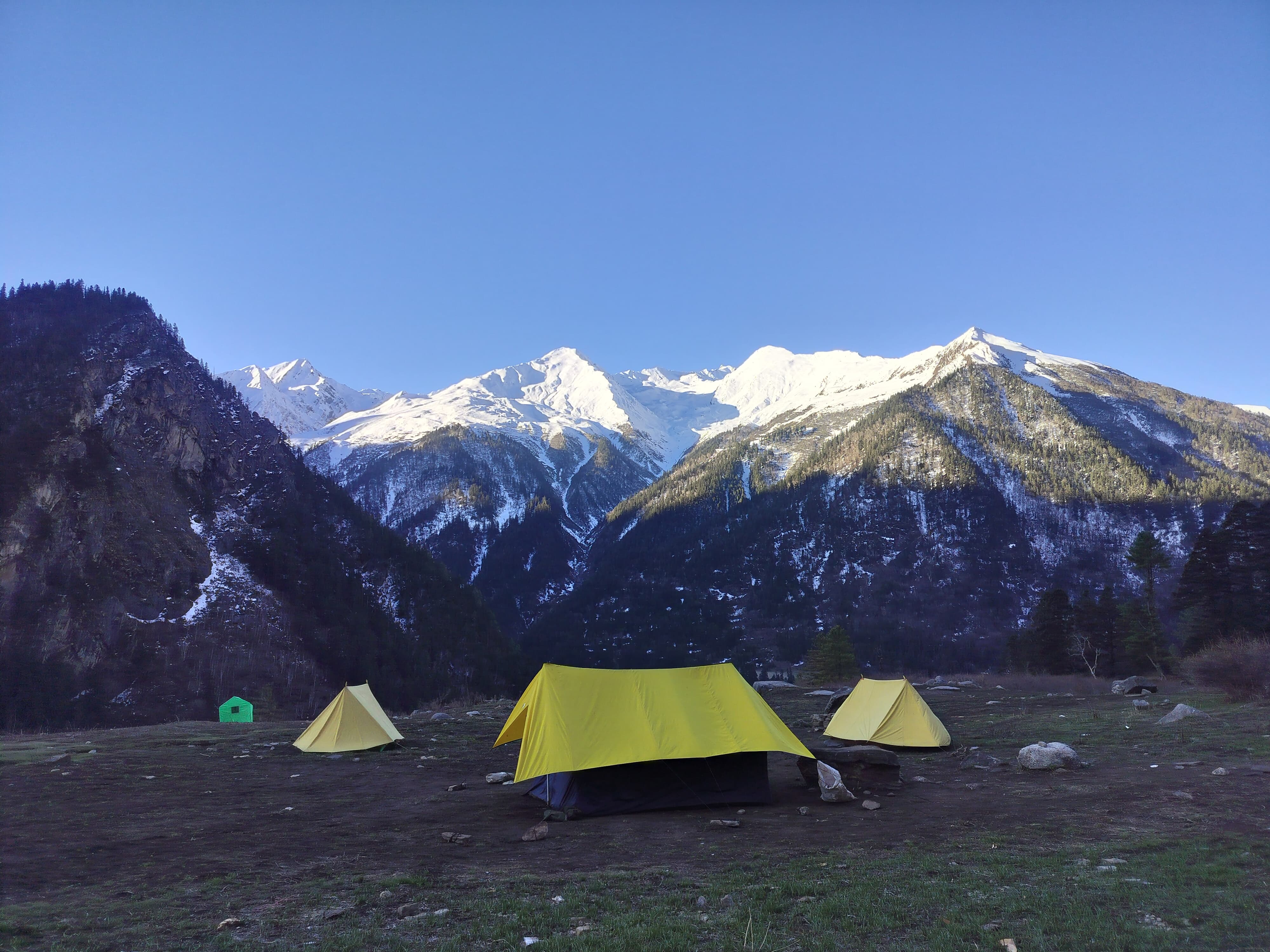
Let’s save you from some common beginner mistakes:
1. Buying Everything at Once
You don’t need full professional gear for your first trek.
2. Choosing Cheap Shoes
Bad shoes means a painful trek.
3. Overpacking
More weight, more struggle.
4. Ignoring Weather
Always check weather conditions before packing.
5. Not Testing Gear
Always try your gear before the trek.
Renting trekking is good for your pocket. If you decide to rent, don’t just pick anything.
Check for:
Cleanliness and hygiene
Proper size and fit
Damage or wear
Always check the ratings and reviews of the gear rental store. Rent from trusted stores only.
You should only buy whole trekking gear when:
You are done with at least 4-5 long Himalayan treks.
Want good comfort
Planning to trek often
In this case, you can buy trekking gear and make your trek comfortable and memorable.
Final Thoughts
Trekking requires good gear that can help you to trek comfortably. Quality trekking gear is expensive. If you are new to trekking then renting is surely a good option. Buy essential gear like shoes, thermal innerwear, etc. You don’t have to spend a lot of money on your first trek. Rent gear items like trekking poles, headlamps, etc. Start buying gear when you have earned some experience in trekking and want to continue it for a long time.
Himalaya Shelter offers customized trekking services. We provide a tailored itinerary chiefly designed for you. Our experts will design the itinerary depending on your fitness level, pace and experience. We can customize your dates, meals, stays, and conveyance. Our trek team will fully take care of your comfort and safety. We work to provide you with the best Himalayan trekking experience.
Himalaya Shelter has now begun its journey on the Great Himalayan Trail, India. The GHT is one of the longest trails in the world. There is no fixed route map as you start from one end of the country to another. You may be walking in neighboring countries like Nepal and Bhutan. The trek is hundreds of kilometers long and offers real Himalayan experience.
Manisha Sirari
Manisha is a skilled content writer with over 7 years of experience. She has expertise in creative writing. Manisha is very well known for crafting informative and SEO-friendly articles. She delivers content that informs and inspires. From technology to travel, Manisha blends storytelling with great strategy to connect the readers. When not writing, you can find her on a new Himalayan trek.
18 Apr 2026
Cost: ₹On Demand | $On Demand
Type: Difficult
Best Time: July, August, September and October
Cost: ₹26000 | $289
Type: Moderate - Difficult
Best Time: May to June | September to October
Cost: ₹11500 | $130
Type: Moderate
Best Time: May, June, September, October, November
Cost: ₹12500 | $142
Type: Moderate
Best Time: March, April, May. June, September, october, November