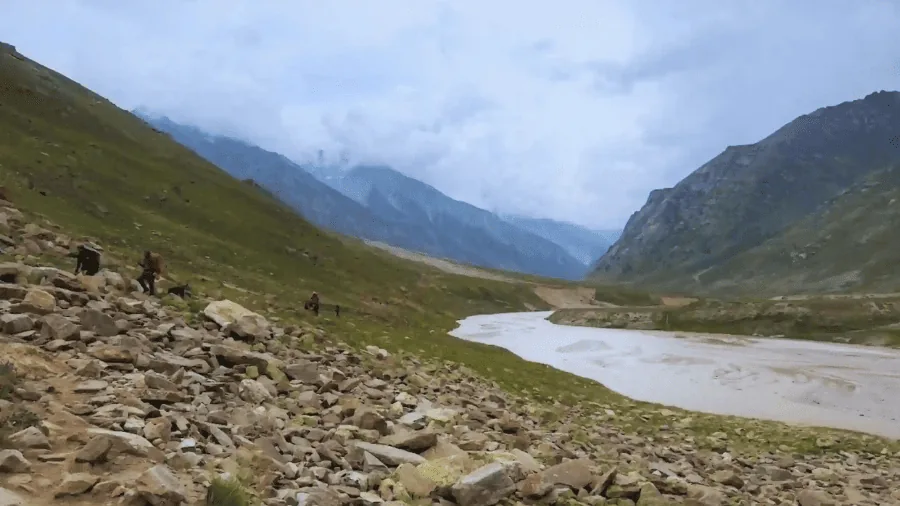
Overview of Miyar Valley Trek in Himachal Pradesh
The Miyar Valley trek in Himachal Pradesh is one of the most stunning off-beaten pathways in the world. Located in the Lahaul region of Himachal Pradesh, Miyar Valley is enveloped in the rugged beauty of the Himalayan Mountains. The trek isn’t as popular as other ones in the region, but it offers the same stunning sights.
Why Miyar Valley is Unique Among Himachal Treks?
Miya Valley is one of the very few places in the world where you can cross a few glaciers and high mountain passes. Because the valley is rarely visited, the Lahauli culture is well preserved. The valley offers everything a trekker looks for, and more. The alluring wildflower and the remarkable peaks give the trekker a sight to capture in memory.
High-Altitude Wilderness Appeal
The Miyar Valley trek in Himachal is one of the places in the world where a high-altitude experience is possible. The snow-fed river, the moraines and the glaciers, and above all, the raw mountain terrain. The experience of solitude in the wildlife-filled valley lets you feel the true heaven of the Himalayas!
Where Is Miyar Valley Located in Himachal Pradesh?
Miyar Valley Trek in Himachal, which starts from the Lahaul region located on the border of Ladakh, India, and runs Miyar Nala which is a tributary of Chenab River, is located northern side of the great Himalayan range. This region is located far away from the Himalayan moisture, causing the dry and stark mountain landscape.
Keylong is the closest big town, which also doubles as Lahaul's administrative hub. From Keylong, the road takes you first to Khanjar, before you progress on to the Miyar Valley.
The road ends close to the small village of Khanjar. Connectivity to Miyar Valley is limited. Road access depends on seasonal conditions and remains open mainly during the summer months. The valley is cut off in winter due to heavy snowfall on high passes. Internet access is rare.

Why Miyar Valley Trek Is Considered an Offbeat Trek in Himachal?
Unlike other trekking destinations in Himachal, Miyar Valley trek have garnered attention for being remote. The valley is extremely distant from its main tourist routes, and accessibility is very limited. The path does not lead to busy towns, nor does it have popular campsites. It is extremely rare to go a few days without coming across another trekking group, but that is exactly what is possible on these treks.
The difference is easy to see when you compare this to popular treks like Hampta Pass Trek or Beas Kund Trek. Those trails are well-marked. They get crowded during the summer. Miyar Valley feels raw. It is quiet. Facilities are minimal there. The route demands more self-reliance. You will find long glacier walks.
It is ideal for experienced hikers who want solitude. These hikers are comfortable with long walking days. People interested in offbeat treks in Himachal often choose Miyar Valley. They like the isolation. It is not meant for first-time trekkers. It is not for those looking for comfort. The Miyar Valley Trek rewards patience. It requires preparation. You need a deep interest in remote mountain travel.
Miyar Valley Trek Route and Trail Description
The Miyar Valley trek route usually starts from Udaipur in Lahaul. The Miyar Valley trekking route follows the course of the Miyar Nala deep into the mountains. Most itineraries end near high-altitude glaciers. Some end at passes within the valley. You return along the same route. The exact endpoint can change depending on the weather.
The terrain changes steadily as you move ahead. Lower sections pass through narrow valleys. You walk on rocky paths and small village trails. The landscape opens into wide glacial valleys as altitude increases. These areas have loose moraine. You will face river crossings. The trail becomes rougher higher up. You will walk on ice and snow. Walking days can be long. The route often demands careful footing rather than speed.
Campsites in Miyar Valley sit on open valley floors. They are located near riverbanks. These camps are basic. They are exposed. No permanent shelters exist here. Some camps are near grazing grounds used by locals. Other camps sit near glaciers. These spots have sweeping mountain views. You can usually get water from nearby streams. Weather protection is limited.
Guides choose camps based on safety. They look for access to water. They check for natural wind cover.
Detailed Miyar Valley Trek Itinerary (Day-Wise Plan)
Here is a detailed Miyar Valley trek itinerary and acclimatization practices. The trek completes in 7 days.
- Day 1: Manali to Khanjer
- Day 2: Kanjeer to Yolling
- Day 3: Yolling to Zardong
- Day 4: Zardong to Palpu
- Day 5: Palpu to Gompa
- Day 6: Gompa to Tharang
- Day 7: Tharang to Kanjeer and Drive back to Manali
The Altitude gain and acclimatization notes:
- To get acclimatize drink enough water each day.
- Don’t rush ascend gradually, give body time adapt.
- In this Miyar valley trek, the altitude gains gradually.
- For detailed itinerary check Miyar Valley trek package.
Miyar Valley Trek Difficulty Level – Who Can Do This Trek
The Miyar Valley trek difficulty is consider easy to moderate. The trek days is 6 in which you will trek 59 km total and gain highest is 4023m. The trek has gradual ascends and some places there is also steep climb. That makes trek moderate.
Physical fitness requirements
The Miyar Valley Trek requires good physical fitness and prior trekking experience. You should be able to walk five to seven hours daily. Strong legs, good stamina, and basic core strength are important. Experience at high altitude helps, as the trek reaches close to 4000 meters and demands a steady pace.
Best Time to Do the Miyar Valley Trek
The best time to do the Miyar Valley trek is li from mid-May to June. During these days weather usually remains clear, at this time snow starts melting and flower also starts blooming.
Miyar Valley Trek in June and July
Temperature: Daytime 10°C to 20°C, Nighttime 0°C to 5°C. Snow may still be present at higher altitudes.
Miyar Valley Trek in August and September
Temperature: Daytime 12°C to 22°C, Nighttime 2°C to 7°C. Monsoon rains can occur in early August, but late August is generally stable.
Miyar Valley Trek in Late September to October
Temperature: Daytime 8°C to 18°C, Nighttime −2°C to 3°C. Clear skies and crisp weather make this ideal for trekking.
Miyar Valley Trek from November to May
Temperature: Daytime −5°C to 10°C, Nighttime −15°C to −5°C. Heavy snow blocks passes; trekking is extremely difficult and mostly unsuitable.
Miyar Valley Trek Altitude, Distance, and Key Facts
- Miyar Valley trek Maximum altitude is 3990 m at a glacial at Palpu near the snout of Miyar Glacier.
- The Total distance of the Miyar valley trek is 58 to 60 km.
- In May and June, daytime temperatures in the lower valley usually stay between 10°C and 20°C, while higher areas are colder, around 0°C to 10°C. Nights get chilly, with temperatures dropping to -5°C to 5°C in the lower sections and falling further to -10°C to -5°C at higher altitudes.
Cost, Permits, and Essential Preparation for Miyar Valley Trek
- Trek Cost: If you do the Miyar Valley trek with Himalaya Shelter, then the Miyar Valley trek cost is around Rupees 25500. During your stay, transport from Manali to Manali, three times meals, a certified guide and permit included.
- Permit requirements: Trekkers need an Inner Border Line permit for the Miyar Valley trek, as it comes into the restricted area of the Lahaul region of Himachal. This permit will handle your trek operator.
Also Read: Kuari Pass Trek