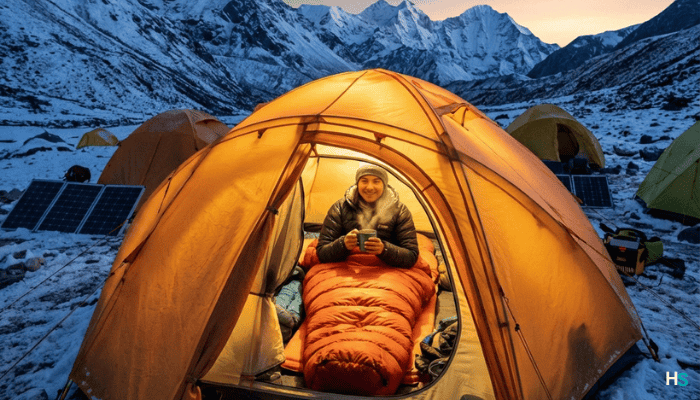
Guaranteeing Warmth, Safety, and Rest in the Himalayan Outdoors
At Himalaya Shelter, we understand that a peaceful rest is one of the most essential parts of your safe trekking experience. The climate in the Himalayas can be unpredictable, and temperatures can drop significantly and stay below freezing, sometimes for an extended time. Thus, we provide our trekkers with the best quality sleeping bags and other gear as well, which have been specifically designed for use in the Himalayas and to a high operational standard. The purpose of this article is to look at the design, technology, and safety objectives of the sleeping bags we provide for our trekkers and discuss how they fit into our overall accommodation system.
1. Why sleeping bags are so important in the Himalayas
The environment brings several obstacles that normal camping gear cannot adequately protect against. The nights can be very cold, windy, and include high humidity. It is necessary to recover energy correctly when doing a multi-day trek, as well as have the right environment for the body's acclimatization.
By providing a high-quality sleeping bag:
- A stable core temperature during the night.
- A lower risk of developing hypothermia or cold shock.
- A greater chance for physical recovery and improved acclimatization.
- An increase in quality sleep and improved performance on your next trekking day.
- Psychological (mental) comfort while camping in a severe environment.
Sleeping bags are clearly not an accessory but should be viewed as an essential piece of safety equipment.
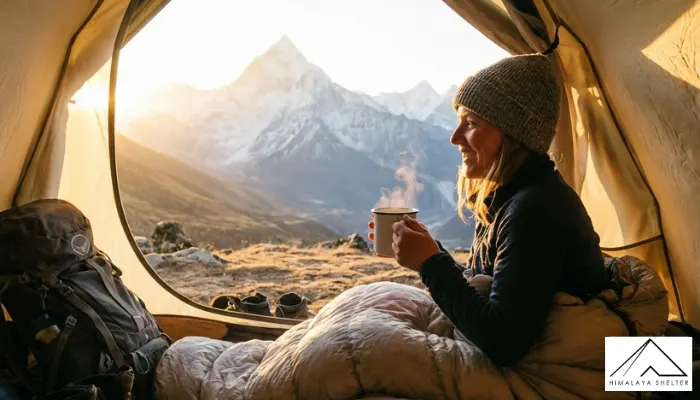
2. Temperature Ratings for the Sleeping Bags Used at Himalaya Shelter
Himalaya Shelter utilizes sleeping bags with temperature ratings made in accordance with ISO/EN standards. Therefore, their warm rating is made and confirmed within controlled settings.
Average temperature rating range for operational sleeping bags:
- Comfort: 5°C to 0°C
- Lower Limit: 0°C to −5°C
- Expedition Range (specialised climbs): -15°C to -25°C
This temperature rating will reflect the temperature range over most of the year throughout Uttarakhand, Himachal, Ladakh, and Kashmir.
3. Technical Insulation Technology
Most of the trekking sleeping bags are made from high-quality synthetic insulation, which has been specifically chosen for its strength and dependability in variable environmental conditions.
The advantages of Synthetic Insulation
- It preserves thermal retention
- It dries quickly
- It withstands commercial use for extended periods of time
- It has a lesser maintenance requirement compared to down insulation
These qualities mean that synthetic insulation is ideally suited to use on group treks in most conditions during all seasons.
Down Insulation (Winter & Expedition Works)
In an effort to further complement the technical fleet of sleeping bags, Himalaya Shelter also provides premium down sleeping bags in customized treks.
The advantages of Down Insulation
- They deliver an extraordinary warm-to-weight ratio
- Down sleeping bags compress to a high degree
- They provide an excellent selection for use on extremely cold nights that may fall below zero.
The use of down insulation will only be used for specific seasons, regions, and treks.
Read more: Top 10 Lists Of Camping Gears Create A Surreal Camping Journey
4. Design Features of Sleeping Bags
Technical specifications of sleeping bags chosen for use in the Himalayas:
a. Design Features (Mummy Design):
- Maximum thermal efficiency
- Less air pockets – less heat loss
- Hood to provide insulation around the head
b. Inner Lining (Soft Touch Fabric)
- Provides comfort while in the outdoors
- Promotes faster heating up of the bag when entering it
c. Two-Way Zippers
- Can open or ventilate the sleeping bag when the temperature is warm
- Reinforced anti-snagging mechanisms to provide strength and reliability
- These design features combine to provide quality warmth on varied Himalayan terrain.
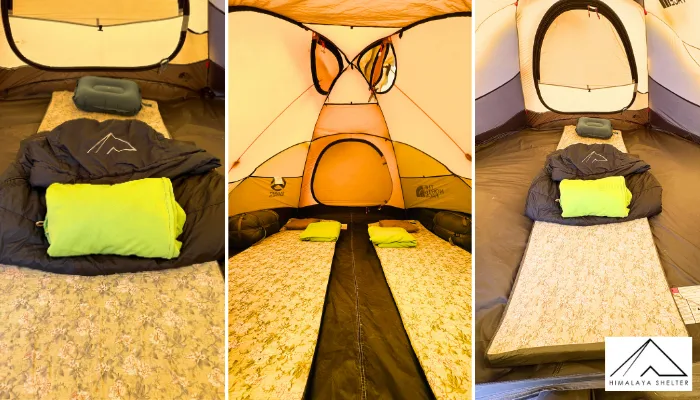
Design Features of Sleeping Bags
5. How Himalaya Shelter Maintains Sleeping Bags
On the Trail
- Daily airing to reduce internal moisture
- Protection from ground wetness and condensation
- Use of sleeping bag liners (optional) for added warmth and hygiene
After Each Trek
- Thorough cleaning according to the insulation type
- Inspection of zippers, joints, and insulation distribution Storage in large breathable sacks
This maintenance ensures consistent performance for every trekker, regardless of terrain or season.
6. Complementary Systems For More Effective Usage
A sleeping bag will do its best work when used in conjunction with other correctly matched gear. Himalaya Shelter offers:
- Insulated foam/inflatable sleeping mats keep the cold ground away from you.
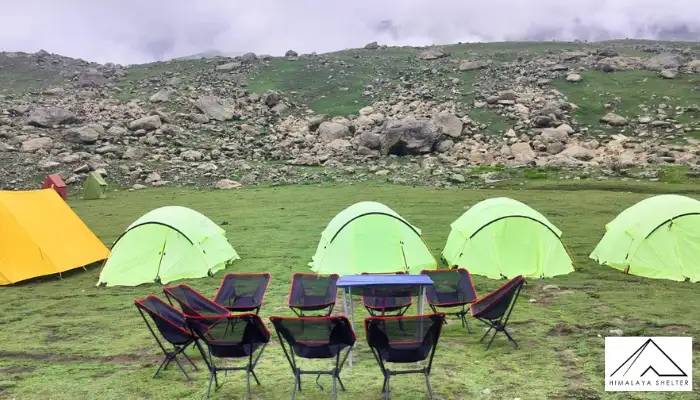
- Quality tents made to withstand the turbulent winds found in the Himalayas.
- Proper ventilation methods reduce humidity inside the tent.
All of these items are needed to produce a reliable thermal shelter system for your entire camp.
7. Reliability of the Himalaya Shelter Sleeping Bags
We have tested these sleeping bags on hundreds of treks each year as a learning opportunity.
We have been using such designed bags that adapt to the best possible fluctuations in weather conditions found in the Himalayas.
Our products are built for commercial strength.
We have established and practiced reasonable hygiene standards.