“Imagine walking in a dense forest of pine, deodar and maple. On the next step, you are on a carpet of grass with wildflowers, seeing a stream flowing, not just seeing it but also crossing it.and then crossing pass that is 14,100 ft and you stepped in different world barren mountain but still beautiful, then you thought trek is over but the reward Chandratal is waiting”.
Imagined? Now I will guide you for this journey. The Himalayas are very diverse. So there are a number of trails. Each has its own uniqueness. Every trek or trail has its season. But the monsoon season has many options in Himachal Pradesh. Trek Such as Pin Bhaba Pass trek, Buran Ghati trek, Pin Parvati Pass trek, Sar pass trek,etc. But in this blog we will discuss the Hampta Pass trek.. Which is easy to do but have all adventure thrills like the difficult trek Pin Parvati Pass trek.
Here I’m Tanisha Chauhan sharing a Hampta Pass Trek Detailed Guide. In which we discuss the season, Geography and Highlights.
If you want package details like itinerary, pricing. This is all you find on our Hampta Pass Trek Package.
The Hampta Pass is one the best monsoon treks in the Himalayas. It is also a very scenic trek and has vast landscapes and that changes as you walk further. The trek is located in Himachal Pradesh. The Hampta Pass connects two valleys. One is Kullu Valley which has lush green landscapes and other is Lahual valley which has dry barren landscapes. The Hampta pass trek starts near Manali. The trek has diverse landscapes, first deep forest, then vast open grassland, snow line , high pass and then barren Lahaul valley dry mountain.
The Hampta Pass trek is especially famous for the monsoon season. The landscapes are lush green and wild flower carpet blooms on the meadows that are on Kullu side. This is a crossover trek which is rewarding after every step.
The Hampta pass trek total distance is 25 km which completes in 4 or 5 days and that takes you at a height 14,100 ft. It can be easily done by beginners. To experience such a thrill, it is the best bet for beginners.
The Hampta Pass is located in Pir Panjal range of Himachal Pradesh. This pass is situated at an altitude of 14,100 ft (4,720 m). The pass serves as a natural corridor between two contrasting valleys, Kully valley and Lahual Valley.
To reach Hampta Pass, the trek starts from Jobra near Manali which is 17 km away.
Then from Jobra it has 15 to 16 km distance to Hampta Pass. To reach Hampta Pass you have to cross a maximum of 5 glacial rivers.
The Hampta Pass trek is not just different because of its crossover trek and two different sides. It is also different because, on this trek you will cross 5 glacial streams that gives you a lifelong real adventure.
After crossing the pass, the landscape changes dramatically into the barren and rugged terrain typical of Lahaul Valley. This shift from green valleys to a cold desert environment within a short trekking distance is one of the defining features that makes Hampta Pass stand out among Himalayan treks.
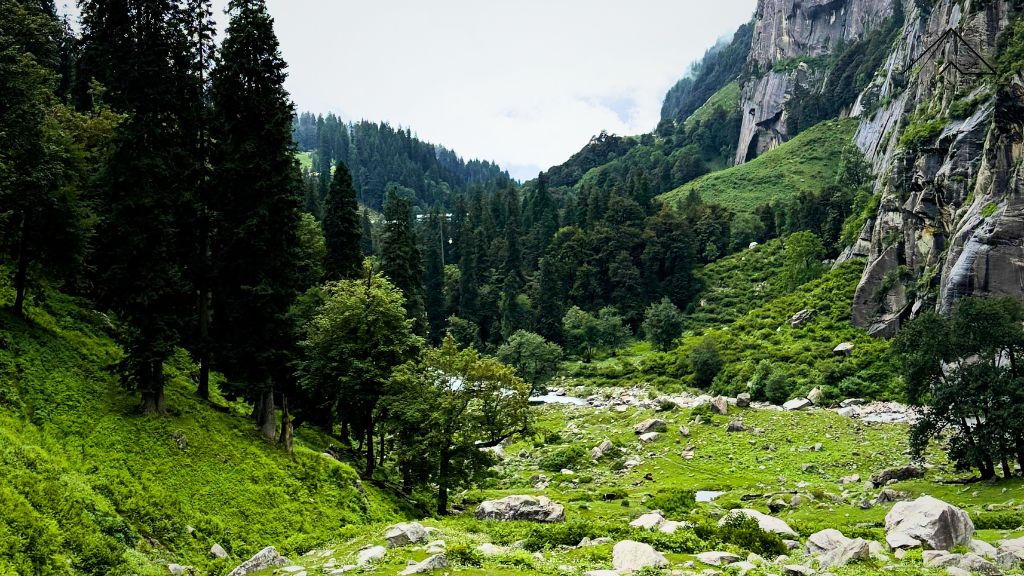
Dense forest trails of pine, maple and deodar trees
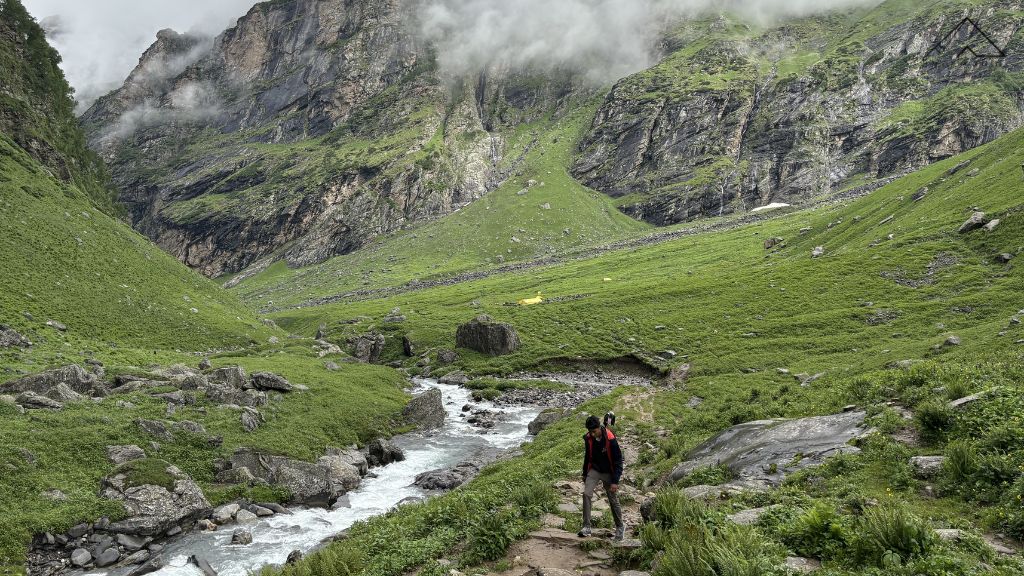
Vast Grassland with wild flower
Crossing of 5 Glacial streams
Chandratal Lake
High Pass
Changing in landscapes: green valley to barren Himalayas
You will experience this all on this one trek, which is an easy and beginner-friendly trek.
You can check the Hampta Pass Trek itinerary.
Hampta Pass has no significant history. As the Hampta Pass is like a corridor of two different valleys. So traders and shepherds use this route for trading between both regions of Himachal, and shepherds use the Hampta trek grassland for grazing their cattle on high altitude meadows.
The name Hampta is derived from the name of the rishi ‘Hampta’, who used to meditate there.
The Himalayan landscapes link back to the spiritual traditions of Himachal Pradesh. Many villages in the Kullu Valley worship local deities. People believe these spirits protect the mountains. They also believe they protect the forests and rivers. Local communities treat mountain passes like Hampta with deep respect because of these beliefs.
You cross the Pir Panjal Range during the trek. It acts as the border between the Kullu and Lahaul valleys.
You can see the Dhauladhar Range during the first part of the walk.
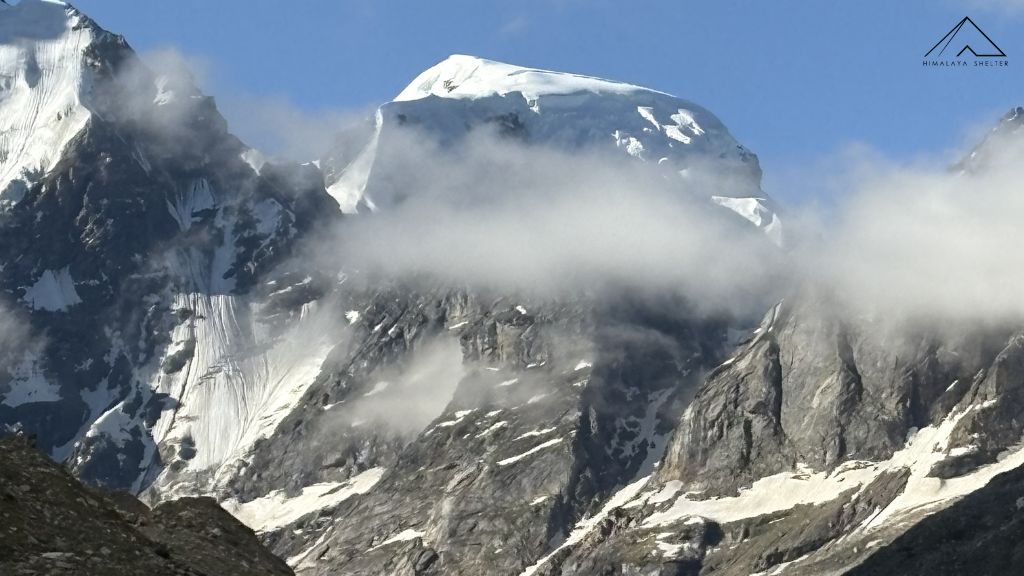
Deo Tibba stands at 6,001m. You usually see this snow peak from the Chika and Balu ka Ghera meadows.
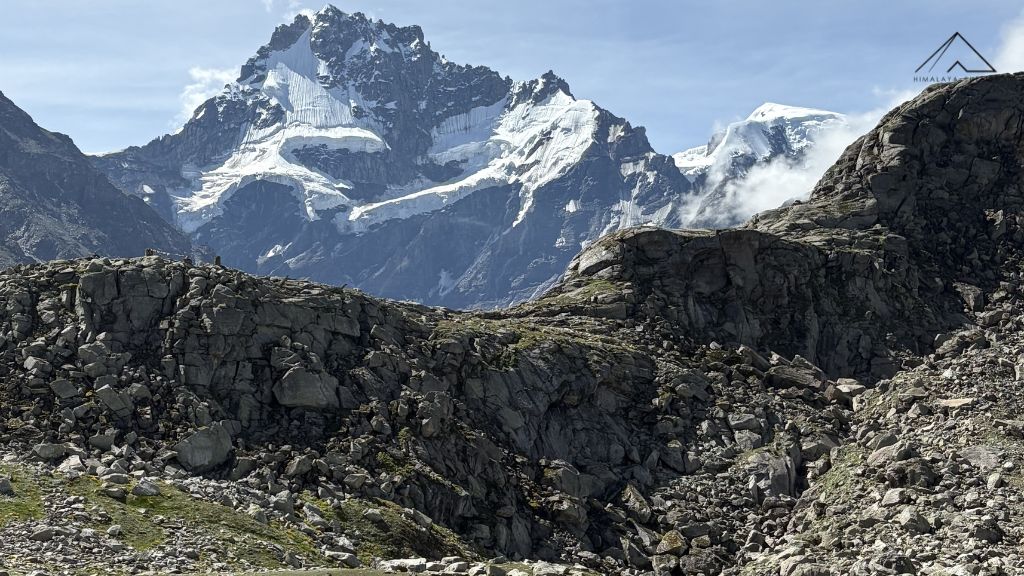
Indrasan is a large peak at 6,221m. It stays visible from the pass and the Lahaul side.
Hanuman Tibba is a well-known peak that appears on the trail.
You can see Shigri Parvat and Kullu Pumori from the higher parts of the trek.
The Seven Sisters Peak is visible when you walk from Jobri.
The Kullu Valley has a strong culture and deep spiritual roots. People in the villages near Manali live simply. They focus on farming. They raise livestock. They grow fruit in orchards.
Kullu Dussehra is a major celebration here. It is a big festival where people bring local deities from different villages. These gods travel in colorful processions. The valley fills with traditional music and dance. People gather to celebrate. This event is a central part of life in the region.
The drive from Manali to Jobra is just 1 hour, but this road trip is heavenly. You won’t want to look away from the window view. You will go up from Manali, and this road has 42 very sharp turn. In just 1 hour of drive the scenery will change. First, you pass through the apple orchard, terraced fields, then thick deodar forests and oak trees.
You know that Hampta Pass is a crossover trek. It is the highlight of the trek, crossing the pass. From the pass, you will see Indrasan Peak and the Dhauladhar range. Till the Pass, it was brown rocks and green land, but as you cross it, your feet are on white snow. Now you have left the Kullu valley, and you are in the dry and cold Lahaul valley.
Of course, the mountain views are quite highlights of every Himalayan trek. You will see the Dhauladhar range in starting of the trek. Sharp views of snow-covered Mt. Deo Tibba form Chikka and Balu ka Ghera. You will also see a clear view of Mt. Indrasan Peak from the Hampta Pass and the Lahaul side. While going down Chatru, you will see Inderkilla Peak on your left side. You will also get a rare sight of the Hampta Glacier when you leave the Balu ka Gehra campsite and go towards the Hamta pass.
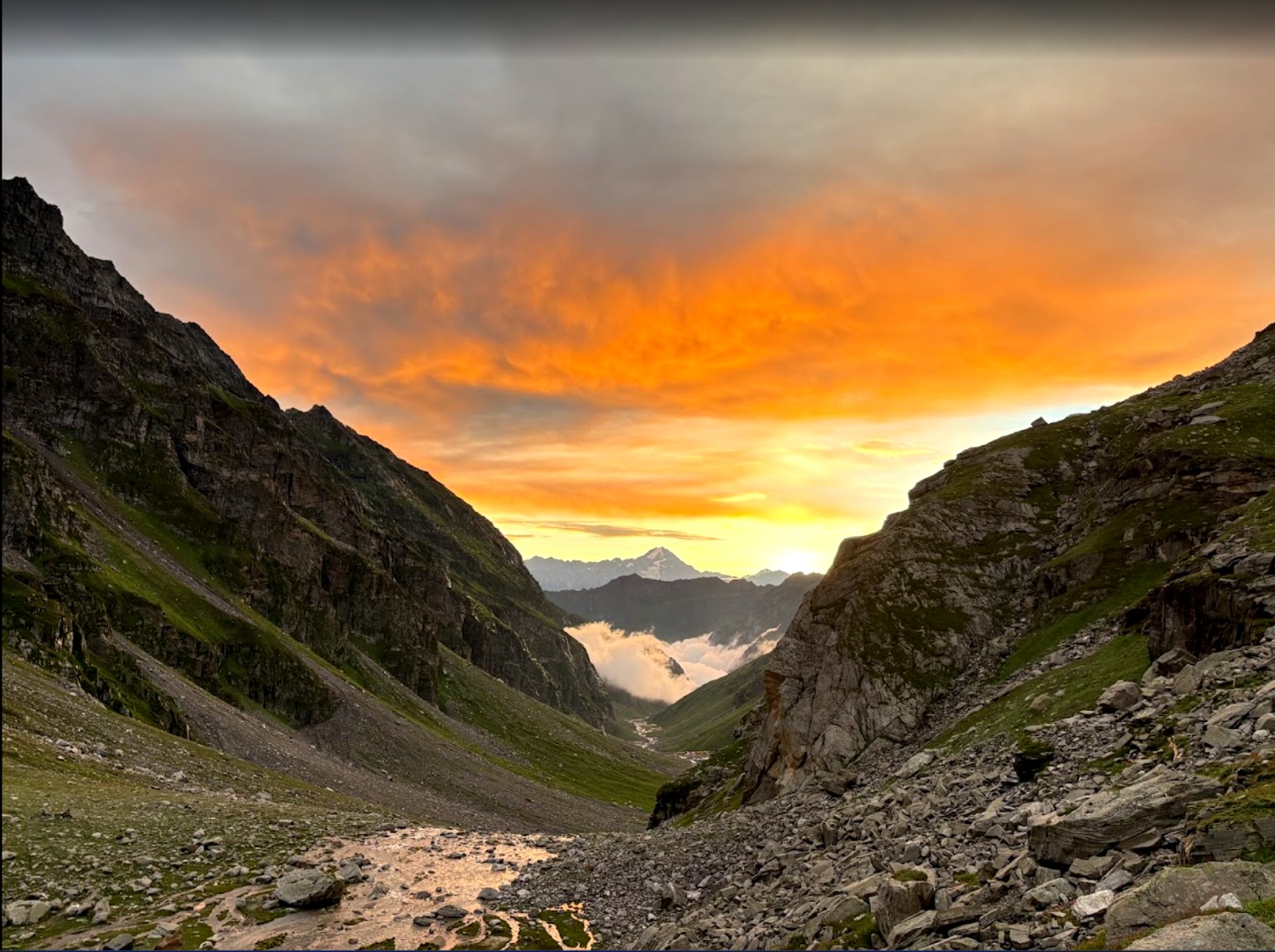
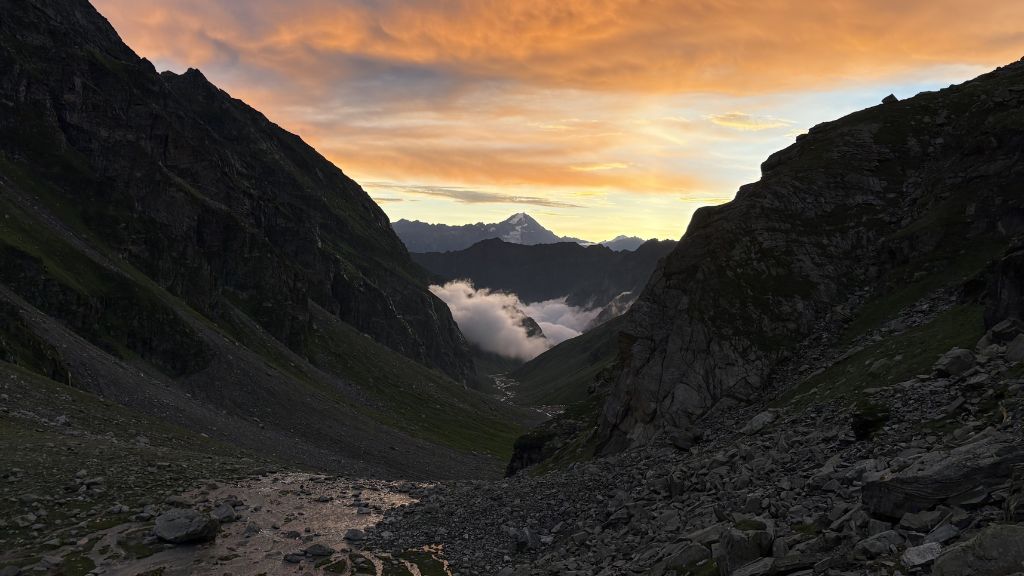
Jobra is a beautiful village near Manali. It is surrounded by forests of maple, oak, and pine. It is the base camp and starting point of the trek to Hampta Pass. And the beautiful thing is that the village has a lovely maple forest.
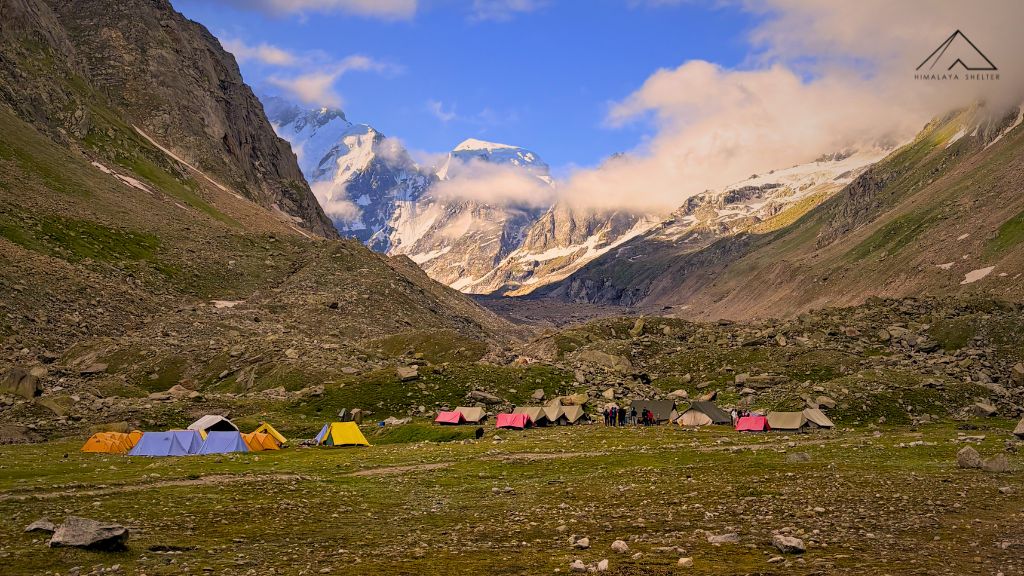
Chikka is a beautiful campsite in the vast open meadows, which has a carpet of wild flowers. This campsite is in the Hampta Valley, which means it is surrounded by massive green mountains. In this campsite, you will see two valleys that intersect each other.
The next major campsite is Balu Ka Ghera. It sits in a wide glacial valley. The name means bed of sand. This describes the sandy and rocky ground left by glaciers. Big mountains surround the area. You see the snowline, and that snowpatches feed the stream. And you camp there, imagine how incredible. It is the base camp for the climb to Hampta Pass. You will likely feel the cold here due to the high altitude.
You walk down into the rough ground of the Lahaul Valley after the pass. You will camp at Shea Goru. This spot sits in a valley with dry mountains and glaciers. It looks nothing like the green meadows on the Kullu side. This change in the landscape makes the Hampta Pass trek stand out.
The trek ends near Chatru. Many people travel from there to see Chandratal Lake. This high lake is known for its shape and clear water. These campsites offer a good look at different parts of the Himalayas.
On the Hampta Pass trek, trekkers have to cross rivers, not just one or two, but a total of 5 glacial streams.
From Jobra, the Rani Nallah flows parallel with you till Chikka Campsite. This is a glacial stream which fed by the meltwater of a glacier, and this meltwater creates waterfalls. You cross this river with the help of a wooden bridge or by stepping on rocks.
Trekkers cross this stream carefully by making a chain with hand locks. This stream provides trekkers with an actual adventure because it has glacier water. And you're going to feel that rustling cold water under your feet that will open your every sense.
Balu Ka Ghera stream flows along the campsite of Balu Ka Ghera. It is a fast-flowing stream that enhances the campsite further.
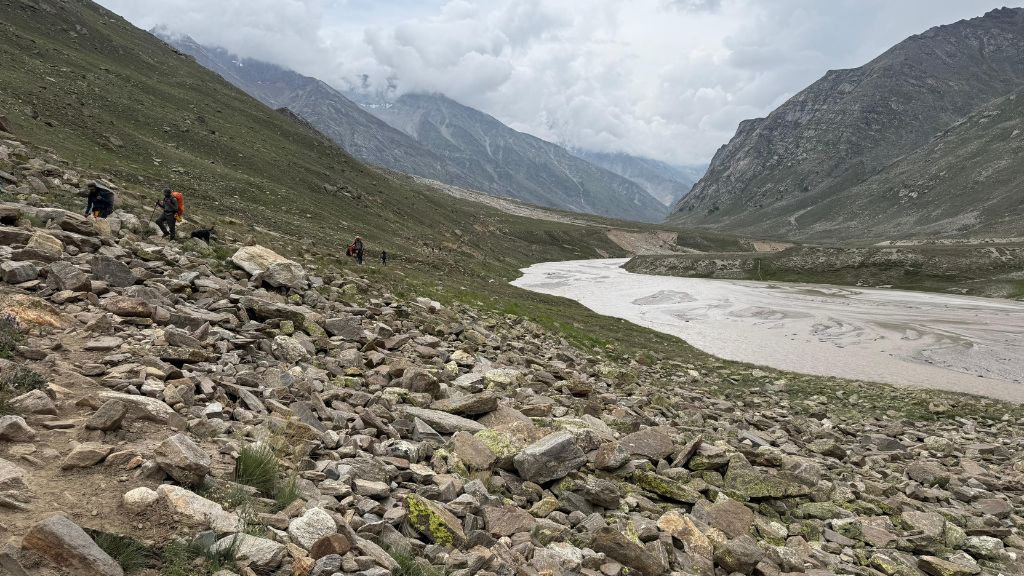
The Shea Goru River is a cold stream fed by glaciers. You will cross it after you come down from the Hampta Pass. The water moves fast. It often reaches your knees. Crossing this river takes some effort.
When you about to reach Chatru campsite, you can see the Chandra river flowing through a wide valley, which is surrounded by barren mountains of Lahual Valley.
The trek to the Hampta Pass begins in the Manali Wildlife Sanctuary, then through the Great Himalayan National Park, with a first leg through the verdant green forests of the Manali Wildlife Sanctuary, which covers approximately 30 square kilometers in the Upper Kullu Valley in Himachal Pradesh, home to a variety of wildlife, and connects this fragile ecosystem to the Great Himalayan National Park, a UNESCO World Heritage Site, which is known for its rich biodiversity and houses high altitude forests, mountain habitat, and hundreds of plant and animal species.
The forests around the Manali Wildlife Sanctuary provide a home to many different Himalayan mammals. You might come across the Himalayan Black Bear during your time in these woods. The Barking Deer is another animal that lives in this specific area. You can find the Himalayan Palm Civet in these thick forests. The Kashmir Flying Squirrel makes its home here as well. The Yellowโthroated Marten is a common sight in this part of the mountains.
The birdlife in this region is quite diverse. You can do Himalaya bird watching. You can see the colorful Himalayan Monal in these trees. The Koklass Pheasant lives among the forest floor and branches. The Western Tragopan is a rare bird found in this habitat. You might spot the Snow Pigeon flying near the treeline. The high mountain zones support very rare animals that live far above the valleys. The Snow Leopard stays in these cold and rocky heights. The Himalayan ibex lives in those same high-elevation areas.
The lower slopes of the Manali Wildlife Sanctuary have thick forests. These woods mostly have oak and conifer trees. You will see the Deodar Cedar and Blue Pine here. Spruce and Fir trees grow well in this soil. Different types of Oak trees fill the landscape.
Many other trees grow in this area. You can find Maple and Walnut trees. The Horse Chestnut and Willow are common. The tall trees start to disappear as you climb higher. They give way to small shrubs. Rhododendron and Juniper bushes take over the hills. The plants eventually turn into alpine meadows. The ground becomes rocky mountain slopes.
This change from thick forests to open alpine landscapes happens often in the western Himalayas. It creates an ecological corridor. This path connects the green valleys around Manali to the high mountains. These peaks are part of the Great Himalayan National Park. The transition helps move life between different heights. The variety of plants supports many types of animals. Each layer of the mountain offers a different home for wildlife. The environment changes fast as you go up. This makes the region important for nature conservation.
Himalaya Shelter
Tanisha is a Trek Leader at Himalaya Shelter. She loves the mountains and telling stories about them. She enjoys sharing experiences from her trips. Her goal is to become a full-time mountain leader.
16 Feb 2026
11 Feb 2026
11 Feb 2026
10 Feb 2026