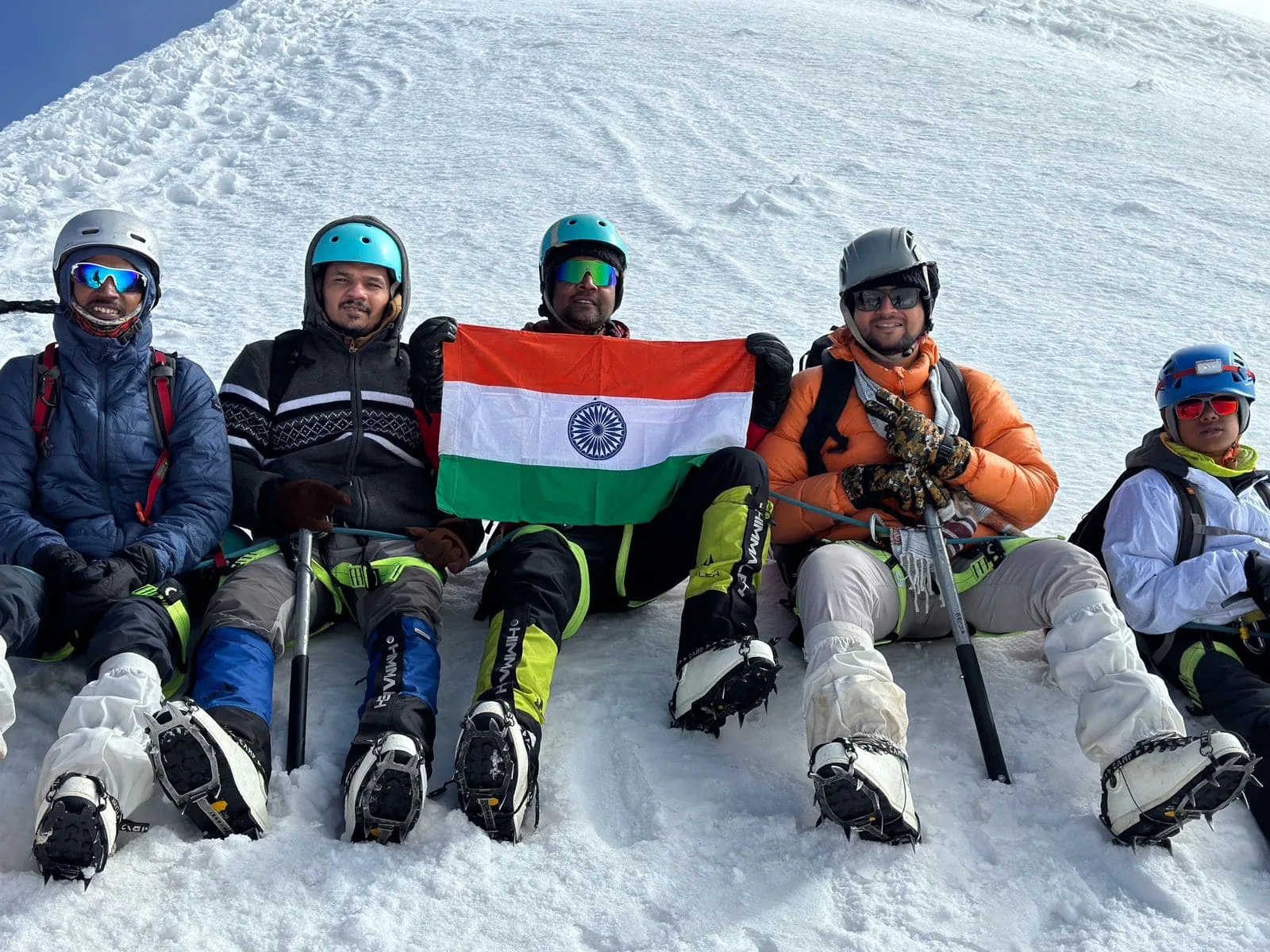
Friendship Peak Trek Difficulty: How Hard Is It?
Friendship Peak is a tough climb in the Pir Panjal range. It stands at 5,289 meters. You need to be very fit to reach the top. The route involves crossing glaciers and walking up steep snow slopes. You will need to learn some basic mountaineering skills before you go. Taking time to adjust to the altitude is necessary. The view from the summit includes peaks like Hanuman Tibba and the Seven Sisters.
Friendship Peak Trek Difficulty Overview
The Friendship Peak Trek covers about 40 to 50 kilometers. It usually takes 8 to 10 days to finish. You start in Solang Valley near Manali at an elevation of 2,700 meters.
Each day involves climbing between 500 and 800 meters. The path moves through meadows and rocky fields. You will also face steep snow sections with slopes up to 45 degrees. The total climb is more than 3,000 meters. Summit day requires 6 to 8 hours of steady movement.
Guides give this trek a Grade II or Grade III rating. It works best for people who have hiked at high altitudes before. It is not a good choice for beginners. Weather changes fast once you get above 4,000 meters. It is often calm in the morning. Wind usually picks up in the afternoon.
Is Friendship Peak Expedition Difficult for Beginners?
Friendship Peak Expedition is a good choice for people who have finished treks like Beas Kund or Hampta Pass. You should have experience at altitudes around 15,000 feet before trying this climb. Total beginners often fail because the snow and physical demands are difficult.
Some guides call the peak beginner-friendly because they include training days. You will spend a few days learning to use ice axes and crampons. You must be in good shape before you arrive. Groups with guides see a much higher success rate than people who try it alone without enough preparation.
Technical Difficulty of Friendship Peak Trek
Technical climbing starts past Camp II at 4,200 meters. You will find snow slopes between 200 and 300 meters long. These pitches sit at 30 to 40 degrees. You need to know how to use front-pointing crampons. You should also practice self-arrest techniques.
The summit ridge has a 50-meter traverse with high exposure. Fixed ropes are used here. There are no vertical rock walls on this route. You will encounter glacier crevasses between 1 and 2 meters wide. Roped travel is required for safety.
Basic climbing skills are enough for this peak. Using a jumar for belays is an option but not required. Whiteouts can hide all landmarks. You must rely on your compass in those conditions. Avalanches are a risk during afternoon climbs.
Altitude Gain and Its Impact on Difficulty
- Steep gains from Solang (2,700m) to Dhundi (3,500m Day 1), Bakara (4,200m Day 3), and Camp III (4,500m Day 5) test acclimatization protocols.
- Rest days at 3,500m and 4,200m mitigate Acute Mountain Sickness (AMS), yet 15-25% experience headaches, nausea above 4,500m.
- Diamox prophylaxis helps, but hydration (4-5L/day) and carb-heavy meals prove crucial. Descent feels easier, but knee strain builds over 7 days.
Snow, Ice, Glacier Challenges
- Perpetual snowfields start at 3,800m; May-June brings 2-4 ft powder, slowing steps but offering stable platforms.
- Post-monsoon (Sep-Oct) yields hard ice—sharper crampons essential, with kick-steps tiring quads.
- The upper glacier hides blue-ice patches and crevasses; probes detect voids during training.
- Night temps drop to -10°C, demanding 8000m down suits and vapor barriers. Sun glare triggers snow blindness without glacier glasses.
Friendship Peak Trek Difficulty by Season
- Pre-Monsoon (May-June): Optimal for Friendship Peak Trek Himachal Pradesh—firm snow bridges, 80% summit success, wildflowers below treeline. Longer days aid glacier work.
- Post-Monsoon (Sep-Oct): Crisp air, minimal clouds, hardest ice but fastest ascents. Fall colors enhance trekking in Himachal; cooler nights (-15°C summit).
- Winter (Dec-Feb): Extreme cold (-25°C), deep powder; expert-only with ski touring.
- Monsoon skips due to rockfall; shoulder seasons risk unstable cornices.
Required Fitness Level
Prep 8-12 weeks: Run 8-10km thrice weekly (under 50 mins), squats/lunges (3x20), stair sprints (20 floors x3), and 5-8kg backpack hikes. Test endurance with 12km trails carrying 12kg in 5 hours. Target resting HR under 70bpm, VO2 max 40+, BMI 18-24. Yoga builds balance for snow; no recent illnesses. Women match men with hormone-adjusted training.
| Fitness Test | Target | Purpose |
| 1.5-mile run | 12 mins | Cardio base |
| 50 squats | No rest | Leg strength |
| Plank | 3 mins | Core stability |
| Ruck march | 10km/10kg/4hrs | Trek simulation |
Who Should Attempt?
Ages 16-55 with 15+ days of Himalayan exposure, Excel-think Kedarkantha alumni or fit corporate groups. Guided expeditions welcome motivated amateurs; DIY suits IFMGA-certified leaders only. Families skip it; solo females thrive in all-women batches. Cardiac/asthma patients avoid; mental grit trumps age. Friendship Peak symbolizes bonds forged in adversity.
This trek builds climbers—many progress to peaks like Rupin or Lamkhaga. Train smart, summit strong.