A History Of Exploration Of The Great Himalayan Trek Range
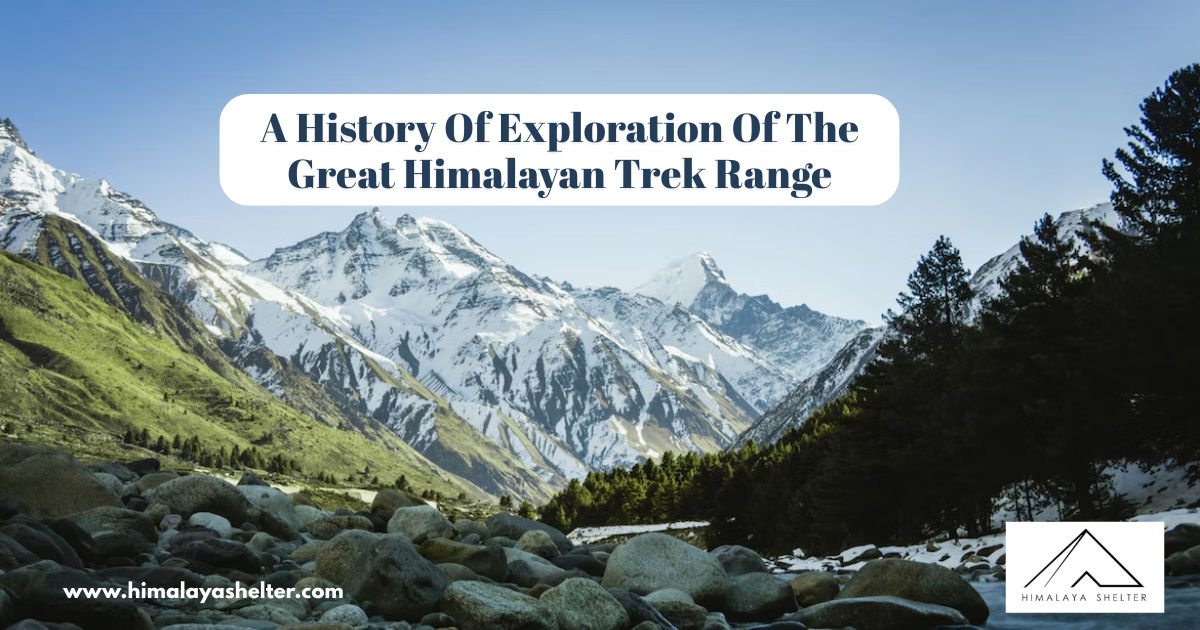
The enormous Great Himalayan Trek chain tends to stretch from the far east, Arunachal Pradesh, to the country’s pride head, Jammu & Kashmir. Typically, the Himalayas, the Hindu Kush, and the Karakoram are considered one single chain of mountains threaded together in tandem. However, when it comes to making a reference to the Indian Himalayas, it refers to a range that falls under the Indian territory. Ranging from the country’s far east, the Indian part originates from a knot between India and China, where you can see the Brahmaputra river entering Arunachal.
Well, in brief terms, the chain continues until the Bhutan border. On the other hand, Sikkim is home to several peaks, comprising the third-highest peak, Kanchenchunga. Moving on, the Great Himalayan Trek range stretches to the west of the Nepalese territory up until the Kumaon and Garhwal borders. From there, the range extends further without breaking into Indian territory – Spiti, Kullu, Kinnaur, Ladakh, Lahaul, Zanskar, and East Karakoram.
Well, if we talk about the intricacies of climbing Himalayan peaks in general, we would never be able to come to an agreement. The experience of performing expeditions, or traveling through this gigantic range, is a haven. However, before proceeding, it would be a shame if we did not discuss the history of these mountains.
What do the history books say?
Did you know the Himalayas have acted as an anchor in establishing Indian history in several ways? Also, the two are coherently linked. For centuries, the Himalayas have protected the subcontinent from marauding Asian tribes. The height of the range prevents the moistened clouds of the southwestern monsoon from entirely going through the country.
When it comes to climbing and exploration, as we understand it today, it commenced with the very well-known great game. It’s a term used to accommodate the rivalry between the Russian and British empires. Both sought to gain significant control over Afghanistan, where the British protected the Jewel in their Crown. Surveyors operating for the British regimen systematically sketched maps of every area. This led to the discovery of the highest peak anyone has ever seen – Mount Everest. Through multiple expeditions from the mountain’s north side, the Himalayan Club got its first moment of existence in 1928 to assist British mountaineers in scaling the peak.
In the mid-1900s. Charles Bruce and Arnold Mumm spent almost 6 months in Garhwal Himalayas and accented many peaks. Meanwhile, Dr. Longstaff climbed Mt. Trishul in 1907, which served as a record for 7 years. But, when you talk about post-Indian independence, the dispute over the Kashmir region began, and it continues to be the focal point of some discussions. However, that does not take away anything from the state’s snow-clad richness to several international enthusiasts.
The trekking concept for pleasure developed in the far west in the early 20th century. Post-independence, there was severe doubt about whether climbing mountains would continue to adapt in India. Some people who stayed back encouraged Indians to take the sport and be the ones to acclaim the peak by reaching the summit.
Home to nearly 50 million locals, this is not any alpine wilderness. Instead, it’s a vibrant mosaic of cultures, people, and several diverse communities, crisscrossed by pilgrimage routes and ancient trading that provide you with their distinctive inspiration. You can test your mettle through the range against the world’s most challenging and audacious routes. Plus, you can even set a measured pace while trekking through prayer flag-strewn passes and yak pastures haunted by red pandas and snow leopards.
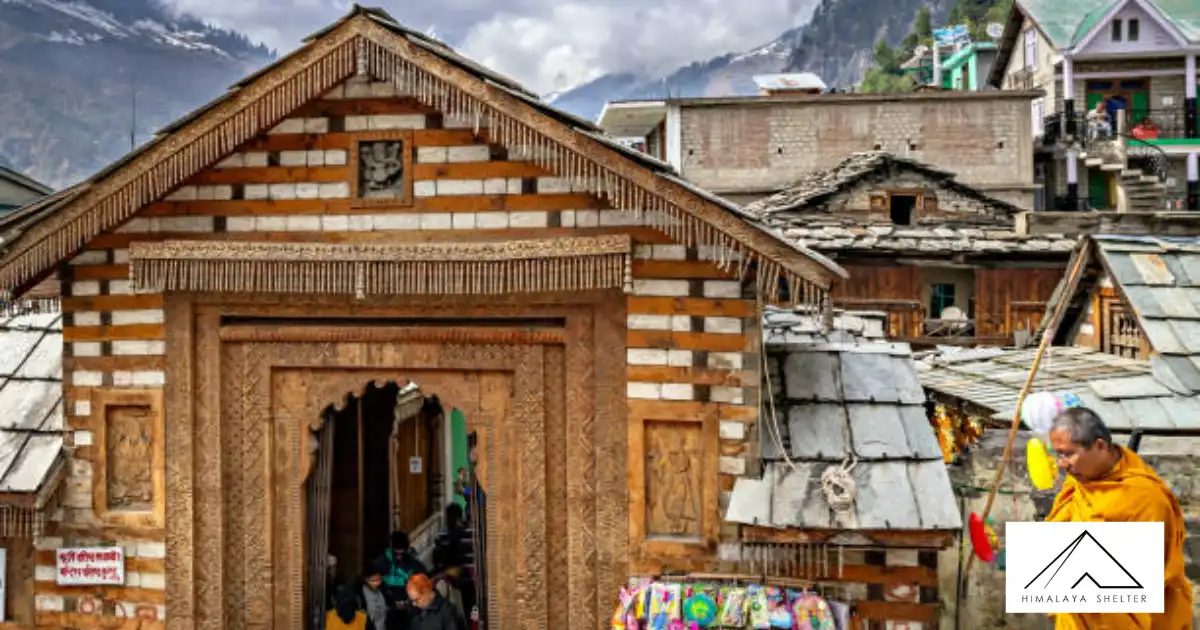
Beautiful View Of A Temple
Stretching across the mark of 2500 kilometers across Kashmire, Asia, Lhasa, and Kathmandu, along with Ladakh, this humongous range is an enormous thing.
It’s time to lay our eyes on some of the best Himalayan regions, cities, areas, or ranges. So, let’s get started with phase 2 of the blog.
Ladakh – India’s little Tibet
Concealed over massive passes in an arid, significantly treeless rain shadow, this destination promotes classic Himalayan scenery with sights of khaki-colored valleys and rock walls brought to life by the scant splash of irrigated green. Conventional Tibetan Buddhist traditions also remain intact in these regions, with remarkably located havens called monasteries that tend to burst into life during medieval dance festivities that have transformed a little in the last 500 years.
If you’re one of the travelers visiting the high-rise side of Ladakh, you should expect humongous treks, sparkling mountain lakes stationed on high altitudes, and a holy infrastructure with inexpensive places for shuteye around Leh.
Note: you should visit the place between June and September.
How to get there: There are daily flights from Delhi to Leh. And, if you have the nudge of going rough and high, take the high roads and pass over the Himalayas from Srinagar or Manali. The decision is entirely yours.
Tibet – the roof of the world
Did you know that Tibet is reckoned as the rooftop of Asia, masked from the subcontinent in the wake of the Great Himalayan Trek ramparts? Despite the modernization done by the Chinese forces, Tibet’s massive monasteries still hum with the murmured mantras and the yak butter lamp flickers. Moreover, the sublime landscapes stretching from rolling grasslands to high turquoise lakes, a feel-good culture, and the resilient and friendly arm of the local people are some of the highlights here. This can surpass the views of Everest’s north face or anything that you’ll ever witness in Nepal.
Note: you must visit Tibet between mid-May and September.
How to get here: This place is easily accessible. You can get a quick flight from Chengdu, Beijing, or any other major city in China. If you’re one of a kind, experience the world’s highest train with a route from China to Lhasa.
PS: Well, if you’re all up for the Everest Base Camp, you need at least 2 spare weeks.
Nepal – a trekker’s paradise
An ideal way to experience the massive range is on foot. With that said, the Great Himalayan trek expeditions do not get any more convenient and fascinating than in Nepal. Embark on a journey that takes you through the mystic prayer wheels and stone Sherpa to the foot of relishing 8000-meter peaks like Everest or Annapurna, knowing that towards the end of your hike, you’ll find hot dinner and a warm bed to get into. Once you have made it to the following day, add the visit to Kathmandu Valley’s medieval cities, which were once an artistic powerhouse.
Note: You must visit the place in the months of March, April, October, and November.
How to get here: You can fly to Kathmandu and further get on a domestic flight that goes directly to Lukla. If you’re willing to experience the Annapurna circuit, Pokhara is the launchpad.
Treks you just can’t ignore when in the arms of the Himalayas!
The Pin Bhaba Pass – Himachal Pradesh
Distance: 30 miles
Walking Time: 5-6 days
If you’re unaware, Spiti is a rocky, dry, high-altitude desert in Himachal, where the locals mainly follow the Buddhism of Tibet. Here, you can witness the spectacular white-clad monasteries cut into cliffs and perched atop peaks with bunches of colored prayer flags offering mantras off into the breeze. The region covers most of the high-altitude regions, whereas the headquarters, Kaza, is located at the height of 3,800 meters.
This trek tends to introduce you to a couple of unique Himalayan cultures – a lunar-like landscape region of Spiti and the verdant Bhaba valley situated in Kinnaur.
The Singalila Ridge – West Bengal
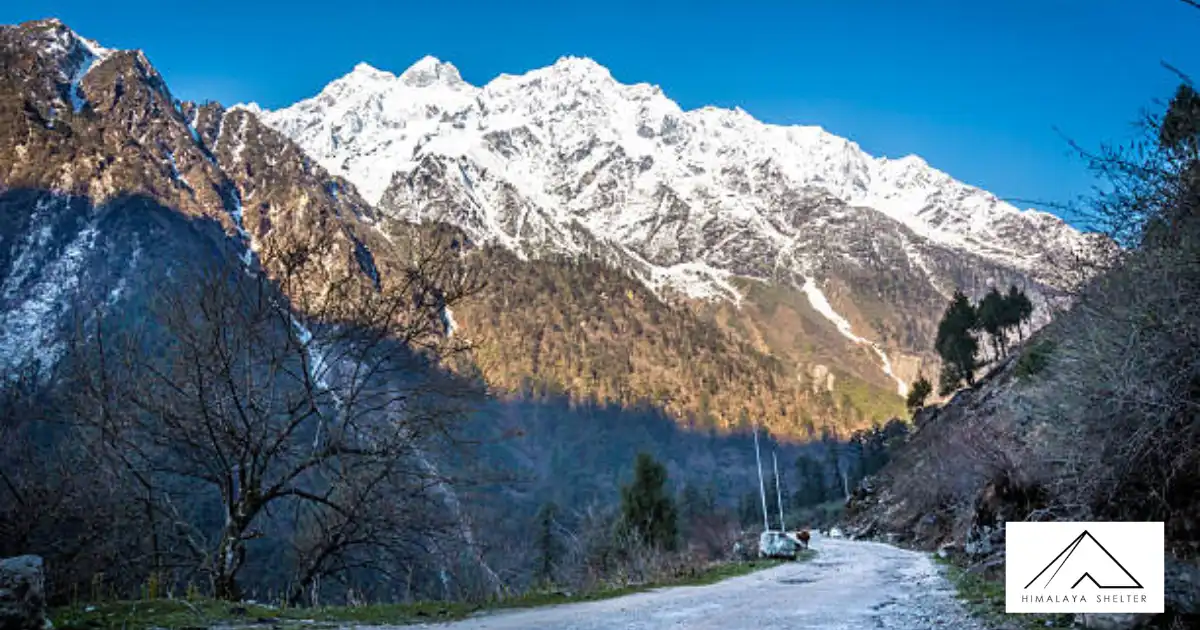
Beautiful View Of High Mountain Peaks
Distance: 53 miles
Walking Time: 6-7 days
The ridge is a significant part of the Indian Himalayas that happens to run from the Northwestern parts of West Bengal to Sikkim. Known as one of the ideal ways to experience the local town of Darjeeling, you’ll get to cross the famous tea plantation. The trek culminates at Sandakphu, which is known as the highest mountain in West Bengal, standing at the highest of 3,636 meters.
While you embark on the journey of enduring this trek, you’ll come across a viewpoint with views of the High Ranges, comprising Lhotse (Nepal, 8,516m), Kanchenjunga (on the Nepal-India border, 8,586m), and even Everest (on the Tibet and Nepal border, 8,848m).
Markha Valley – LADAKH, JAMMU & KASHMIR
Distance: 40 miles
Walking Time: 6-7 days
As already discussed, Ladakh is the land of high passes of the world and includes regions of the Karakoram Range, coupled with the Great Himalayan Trek Range. As it is quite seamless in the modern age to reach Ladakh, the adventurous route is still to go over high passes overland from Srinagar or Manali.
Talking about the trek, the Markha Valley is sandwiched into the Hemis National Region, popular for owning the highest assemblage of snow leopards. Well, trekkers might not witness the elusive creatures, but they might find sights of the Zanskar ranges, hill views streaked with purple and green from the rock minerals.
Talle Valley – Arunachal Pradesh
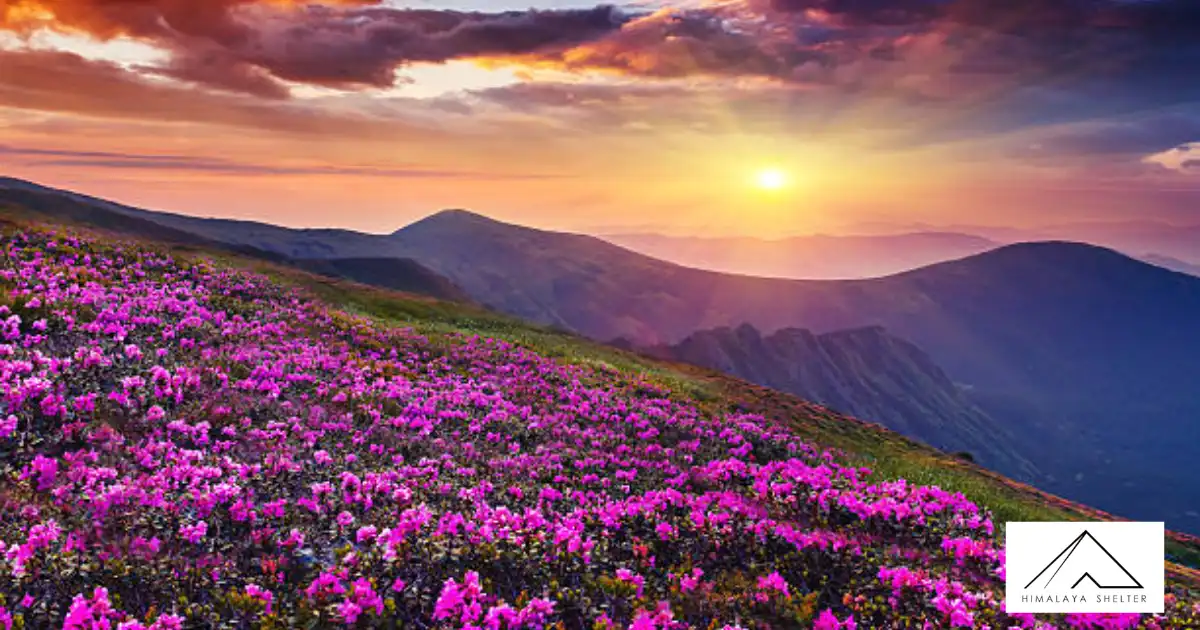
Flowers Blooimg In Talle Valley
Distance: 25 miles
Walking Time: 4-7 days
If you didn’t know, Arunachal is as far northeast as it can get in India. This state touches borders with Bhutan, Myanmar to its east, China to its north, and various other northeast sisters to its south. The Talle valley starts in Guwahati and is a superb way to acclimate the state. Moreover, the valley’s Wildlife Sanctuary, where the great himalayan trek concludes, is an exciting biodiversity hot spot for bird watchers.
For high-altitude trekkers, this trek is not for you. The highest point of the trek is around 2,400 meters and is stacked with subtropical rainforests, making it considerably different from some other treks that have entered the list of this text.
So, what are you waiting for? Let the endurance levels of your conscience take a step towards achieving the inevitable of the Mighty Himalayas.