We began our adventure to Nag Tibba in the early morning (by 7:30 am), heading on the route to Pantwari. The drive itself was beautiful, taking us away from large crowds and through winding mountain roads, eventually ending over 56 km from the main road. On the way, we had breakfast at a local restaurant along the roadside, enjoying hot aloo parathas with curd and chole, and our clients (a couple who come from California) had tea and paneer pakoras. This was a nice, calm beginning to the journey ahead.
Upon our arrival at Pantwari Village
We dropped our belongings, freshened up and had a quick meal before the beginning of our trek to Nag Tibba, the base village of the trek. We served our clients' dry rations—juice and chocolates—before leaving the village and made sure to fill their water bottles before leaving.
Starting the Trek to Nag Tibba Base Camp
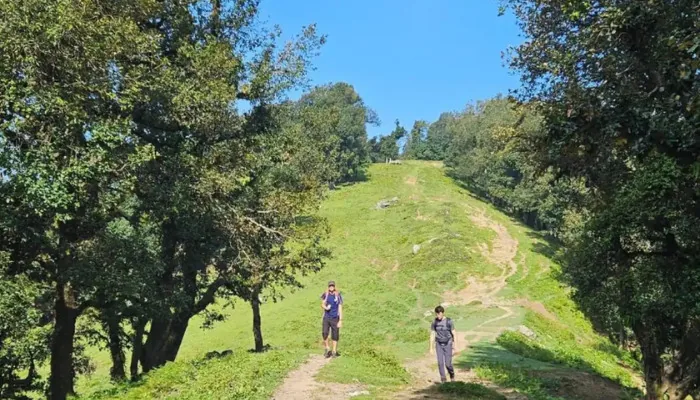
Once we had completed our meal, we rested for about 15 minutes and prepared for our hike at 2 pm. We had two trek leaders (including me) and our small group of two, and we started to hike at a comfortable pace through the village, surrounded by local homes and cattle (cows, mules, dogs, and sheep). While we were hiking through the village, people were sitting outside, playing cards, or doing their daily work. It was a very peaceful place to begin hiking, with very few people on the trail.
As our clients were experienced hikers (they had done a couple of treks), we were able to maintain a steady pace, and we were ahead of our schedule when we stopped at the tea point before continuing. When we reached the halfway point of the 4 km trail, we started to see a few other hikers on the trail, but the trail remained mostly quiet.
Reaching the Campsite
By 4 pm, we were at base camp, and the first reaction from our guest was just how great the campsite is. Once I had issued out tents, we went through a short stretch to loosen up our muscles.
By 5 pm, we provided evening tea and loaded in the pakoras while watching a lovely sunset as colours in the sky kept changing. The temperature started to drop, and at 6 pm, we served popcorn and hot soup alongside a bonfire that provided some heat and ambience for the evening.
Dinner and Deep Conversations
Dinner was served at 7 pm inside an actual mud house, creating a truly authentic Indian dining experience for our clients. Our meal consisted of paneer, roti, dal, rice, salad and a local dessert called Mandwa Halwa, which is a sweet made from finger millet.
At the end of the meal, we gathered around the bonfire and enjoyed some deep conversations about travel, life, and the various cultures we all come from. Since both clients in our group were very strong hikers, we decided to organise an early summit push. The plan for tomorrow was gone over, and we agreed to an early wake-up call of 2:45 am.
Summit Day – Nag Tibba Top
At 2:45 am, we served our guest with tea, buns, and jam. By 3:30 am, everyone had a chance to get up and get ready. While there were a few other teams that started around 2:30-3 am, we passed all of them pretty quickly.
When we got to the top of Nag Tibba (6:30 am), we waited patiently for the sun to rise. At 7:15 am, we watched the sun rise and slowly illuminate the entire Himalayan range. It was worth the effort. After taking a couple of photos, we started our descent back down to our campsite.
Descent and Return Journey
On the descent, we made a stop at the Nag Devta Temple, which added a cultural and spiritual element to our trekking experience. We arrived at Base Camp around 10:00 am, where we again participated in stretching and were served hot chai without sugar. At approximately 11:00 am, we had lunch consisting of rice and rajma, then took a short break.
At 12:20 pm, we started the final descent down to Pantwari, arriving at approximately 2:00 pm. After changing clothes and having tea, we began the return journey to Rishikesh at 2:20 pm. During the drive, our clients slept comfortably, demonstrating their satisfaction with the trip.
By 6:00 pm, we had no other stops on our way back to deliver the clients back to their drop-off point in Rishikesh and concluded our trek.
Final Thoughts
While the distance travelled on the Nag Tibba Trek was short, it offered many opportunities for rich experiences. Some experiences, such as quiet trails through small rural villages accompanied by culturally significant food, sharing sunrise with friends, or exchanging heartfelt thoughts after completing the trek—a trek is not solely about reaching the summit itself. The journey is also about the connection formed between everyone on the trail—the fellow trekkers, the mesmerising moments, the pace of each trekker, and everything else that happens along the trail.